
- Oct 9, 2026
- Varicose Vein
- 0 Comments
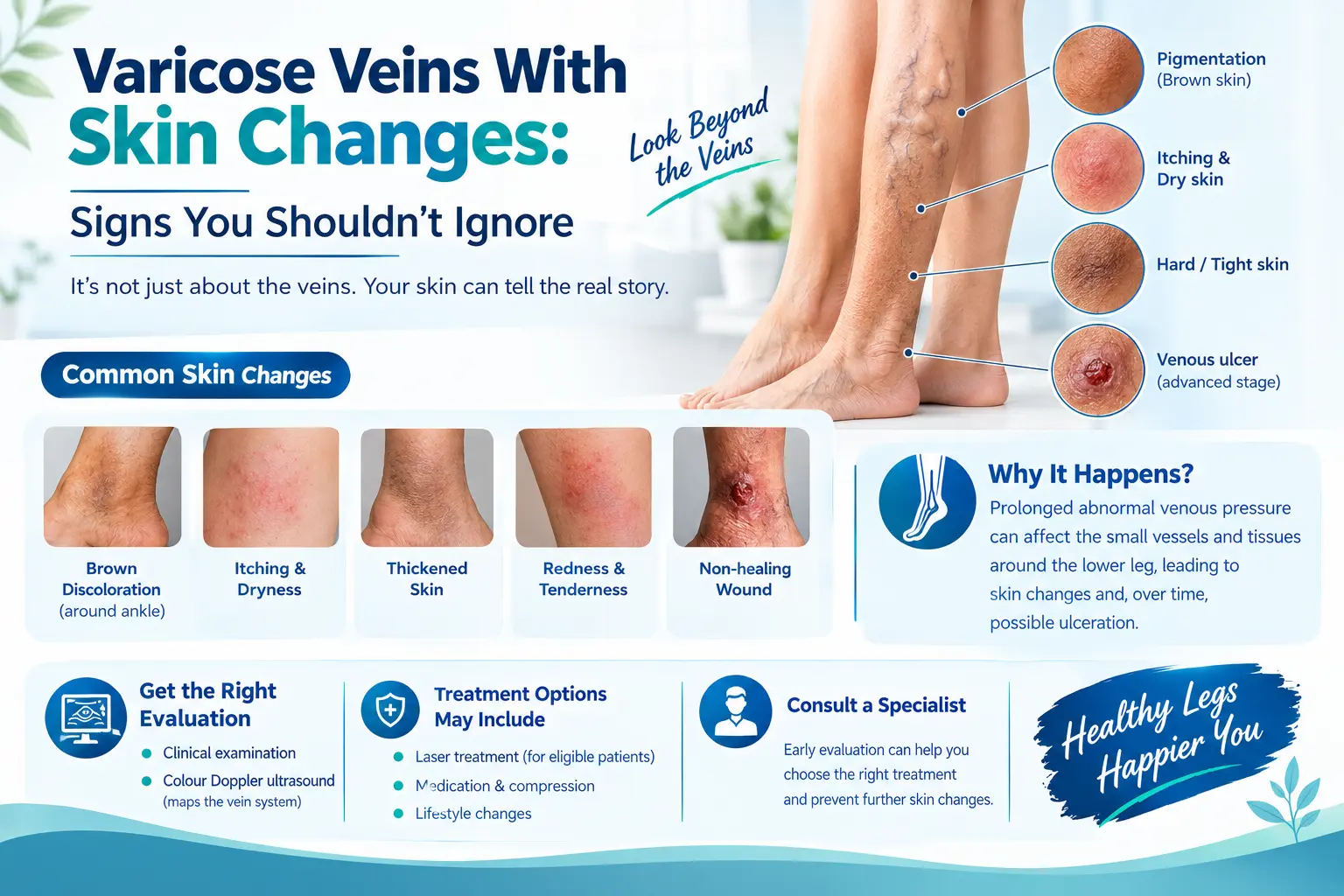
Many people judge varicose veins by their size. If the veins are not very large or painful, they may assume the condition is still mild. But sometimes the skin around the ankle and lower leg tells a more important story than the visible veins themselves.
A small patch of itching may gradually become dry and irritated. The skin around the ankle may start turning brown. Later, the area may feel unusually firm or tight. In advanced venous disease, a wound may appear and become difficult to heal.
These changes should not be viewed as cosmetic problems alone.
When varicose veins are accompanied by skin changes, it can indicate that prolonged abnormal venous pressure is beginning to affect the surrounding tissues. Recognizing these signs early can help patients seek appropriate evaluation before the problem becomes more difficult to manage.
Why Can a Vein Problem Change the Skin?
Leg veins are responsible for returning blood toward the heart.
One-way valves inside the veins help prevent blood from flowing backward. When these valves become incompetent, blood may reflux downward and increase pressure within affected veins.
This condition is known as chronic venous insufficiency when persistent venous dysfunction produces clinical problems.
Over time, increased venous pressure can affect the tiny vessels and tissues around the lower leg. Fluid may accumulate, inflammatory changes can develop, and the skin may gradually change in appearance and texture.
That is why the progression may move from:
Visible veins → swelling → skin changes → tissue damage
Not every patient follows this exact pathway, but new skin changes in a leg with varicose veins deserve attention.
Consulting a Varicose Vein Doctor In Jaipur can help patients understand whether these skin changes require further vascular evaluation.
Brown Skin Around the Ankle Is More Than a Tan
One of the most recognizable changes in chronic venous disease is brown or darker pigmentation, particularly around the ankle.
This discoloration can develop when prolonged venous hypertension allows red blood cells and their breakdown products to affect surrounding tissues. Iron-containing pigment can remain in the skin, contributing to the brown appearance.
Patients sometimes ignore pigmentation because it does not initially hurt.
However, a gradually darkening ankle in a person with varicose veins or recurring swelling can be a clue that venous disease has progressed beyond a purely cosmetic stage.
Why Do Varicose Veins Sometimes Cause Itching?
Persistent itching can be surprisingly important.
Venous hypertension may contribute to inflammatory skin changes sometimes described as venous or stasis dermatitis.
The affected skin may become itchy, dry, scaly, red or irritated.
Because itching feels like a skin problem, patients may repeatedly apply moisturizers or anti-itch creams. These may help certain symptoms, but if underlying venous hypertension is contributing to the dermatitis, skin treatment alone may not address the complete problem.
Persistent itching around the lower leg combined with swelling or visible varicose veins therefore deserves vascular evaluation.
What Does Hard or Tight Skin Mean?
Another change patients may notice is that the lower leg no longer feels as soft as it once did.
The tissues around the ankle can become firm, thickened or tight due to chronic inflammation and fibrosis associated with advanced venous disease.
This is more significant than ordinary evening swelling.
Once tissue structure begins changing, the condition may be more difficult to reverse completely. That is why waiting until severe skin hardening develops is not an ideal strategy.
A useful rule is:
Do not wait for a varicose vein to become painful if the surrounding skin is already changing.
Redness and Tenderness Need Proper Assessment
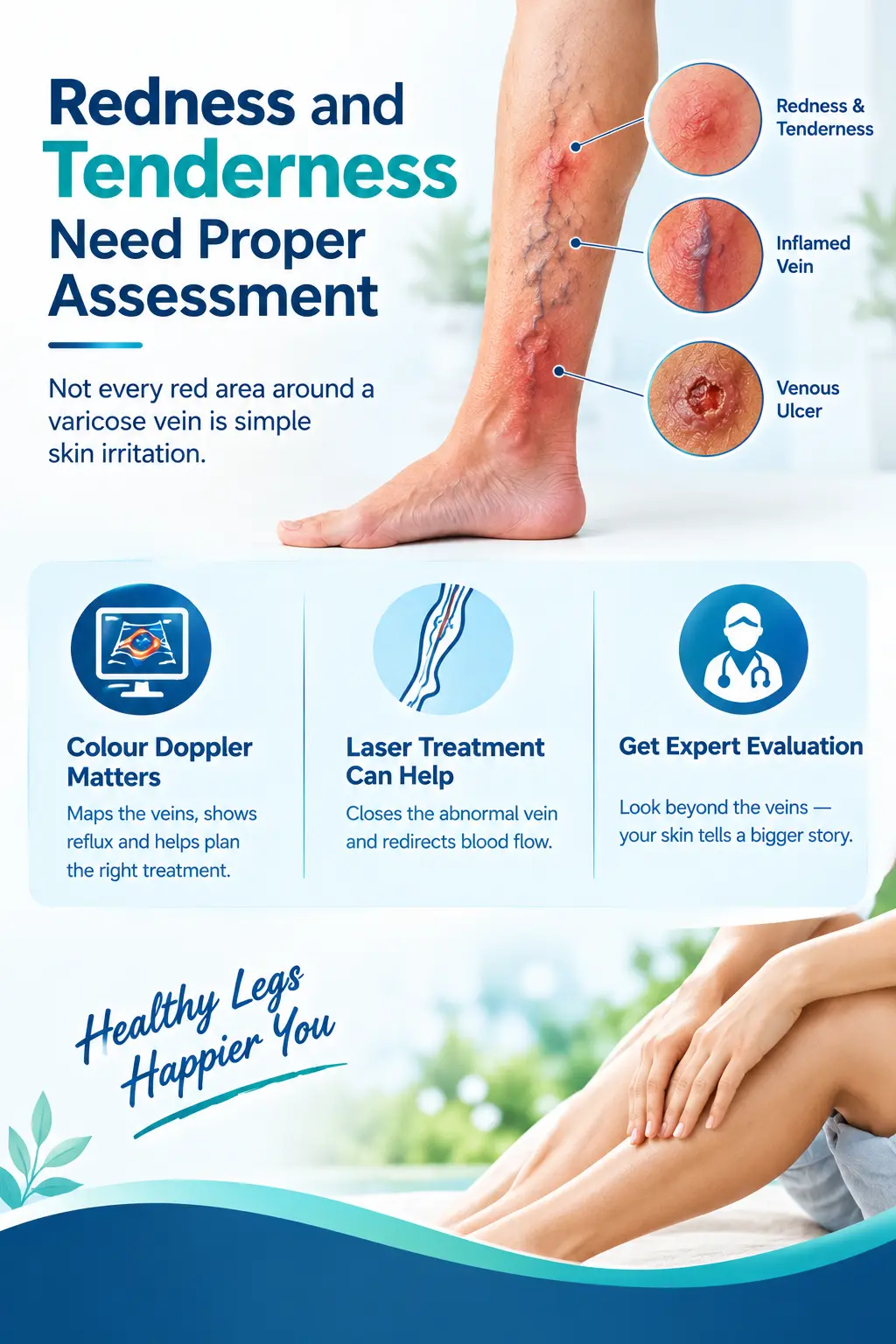
Not every red area around a varicose vein is simple skin irritation.
A superficial vein can sometimes become inflamed and thrombosed, producing a tender, firm and reddened area along the course of the vein.
Other conditions, including skin infections, can also cause redness and warmth.
More importantly, sudden significant one-sided swelling, pain, warmth or redness can require prompt medical assessment to exclude conditions such as Deep Vein Thrombosis (DVT).
Patients should therefore avoid diagnosing every new red or painful area as “just varicose veins.”
When Does a Skin Change Become a Venous Ulcer?
Long-standing venous hypertension can eventually interfere with tissue health enough for the skin to break down.
A venous leg ulcer commonly develops around the lower leg or ankle.
The wound may initially look small but can become persistent or recurrent.
At this stage, simply applying dressings may not be enough. Wound care is important, but the underlying circulation also needs assessment.
If venous reflux is maintaining high pressure in the lower leg, treating only the wound surface may leave an important part of the problem unresolved.
Why Colour Doppler Matters When Skin Changes Appear
A visual examination can show pigmentation, eczema, swelling or an ulcer, but it cannot map the entire venous system.
Colour Doppler or duplex ultrasound can help assess blood flow and determine whether venous reflux is present.
It may help identify:
-
Which veins are incompetent
-
Where reflux begins
-
How extensive the abnormal flow is
-
Whether relevant superficial or deeper veins require assessment
-
Which venous pathway may need treatment
This is especially important before planning Varicose Vein Treatment in Jaipur, because the largest visible surface vein may not be the actual source of the problem.
Can Laser Treatment Help Once Skin Changes Have Started?
For appropriately selected patients with significant superficial venous reflux, endovenous laser treatment may be considered.
During the procedure, a thin laser fibre is placed inside the targeted vein under ultrasound guidance. Controlled thermal energy closes the refluxing vein, and blood is redirected through other functioning venous pathways.
However, patients should have realistic expectations.
Closing an abnormal vein does not guarantee that years of pigmentation, fibrosis or other skin changes will disappear immediately or completely.
This is another reason why earlier evaluation can be valuable.
Varicose Vein Treatment in Jaipur
At VascuCare Diagnostics & Interventions, patients with varicose veins, leg swelling, pigmentation, itching and other suspected signs of chronic venous insufficiency can be evaluated clinically and with Colour Doppler when indicated.
Dr. Rakesh Kumawat – Best Interventional Radiologist and Pain Management Specialist In Jaipur provides minimally invasive image-guided vascular treatment options for appropriately selected patients.
For anyone searching for a Varicose Vein Doctor In Jaipur, Vein Specialist Doctor in Jaipur, or Varicose Vein Laser Treatment in Jaipur, the important point is to look beyond the veins themselves.
Your skin can act like a visible record of what prolonged venous pressure has been doing underneath.
If the colour, texture or integrity of the skin around your ankle is changing, it may be time to investigate the circulation rather than simply treating the skin.
Patients looking for a Knee Pain Doctor In Jaipur should also ensure that knee pain and venous symptoms are evaluated separately, as they may require different diagnostic approaches and treatment plans.
Frequently Asked Questions (FAQs)
1. Why is the skin around my varicose veins becoming brown?
Chronic venous hypertension can lead to changes in small vessels and deposition of blood-breakdown pigments in surrounding tissues, producing brown or darker discoloration, particularly near the ankle.
2. Can varicose veins cause itching and dry skin?
Yes. Chronic venous insufficiency can contribute to inflammatory skin changes, including itching, dryness and eczema-like irritation. Other skin conditions can cause similar symptoms, so persistent changes should be evaluated.
3. Will ankle pigmentation disappear after varicose vein treatment?
Not always. Treating significant venous reflux may address an underlying cause, but longstanding pigmentation or tissue changes can take time to improve and may not disappear completely.
4. Is a wound near the ankle related to varicose veins?
It can be. Advanced chronic venous insufficiency can contribute to venous leg ulcers, commonly around the ankle or lower leg. A persistent wound requires assessment of both the wound and underlying circulation.
5. When should skin changes with varicose veins be checked by a specialist?
Seek evaluation when you notice persistent pigmentation, itching, eczema-like changes, hardening of the skin, recurring swelling, bleeding or a slow-healing wound. Sudden significant one-sided swelling, warmth, redness or pain requires more prompt medical assessment.