
- Nov 16, 2026
- Varicose Vein
- 0 Comments
Have you recently noticed blue, green, or purple veins becoming more prominent on your legs? Perhaps they appear around your calves, behind your knees, or near your ankles. While visible leg veins are often harmless, they can sometimes indicate changes in blood circulation.
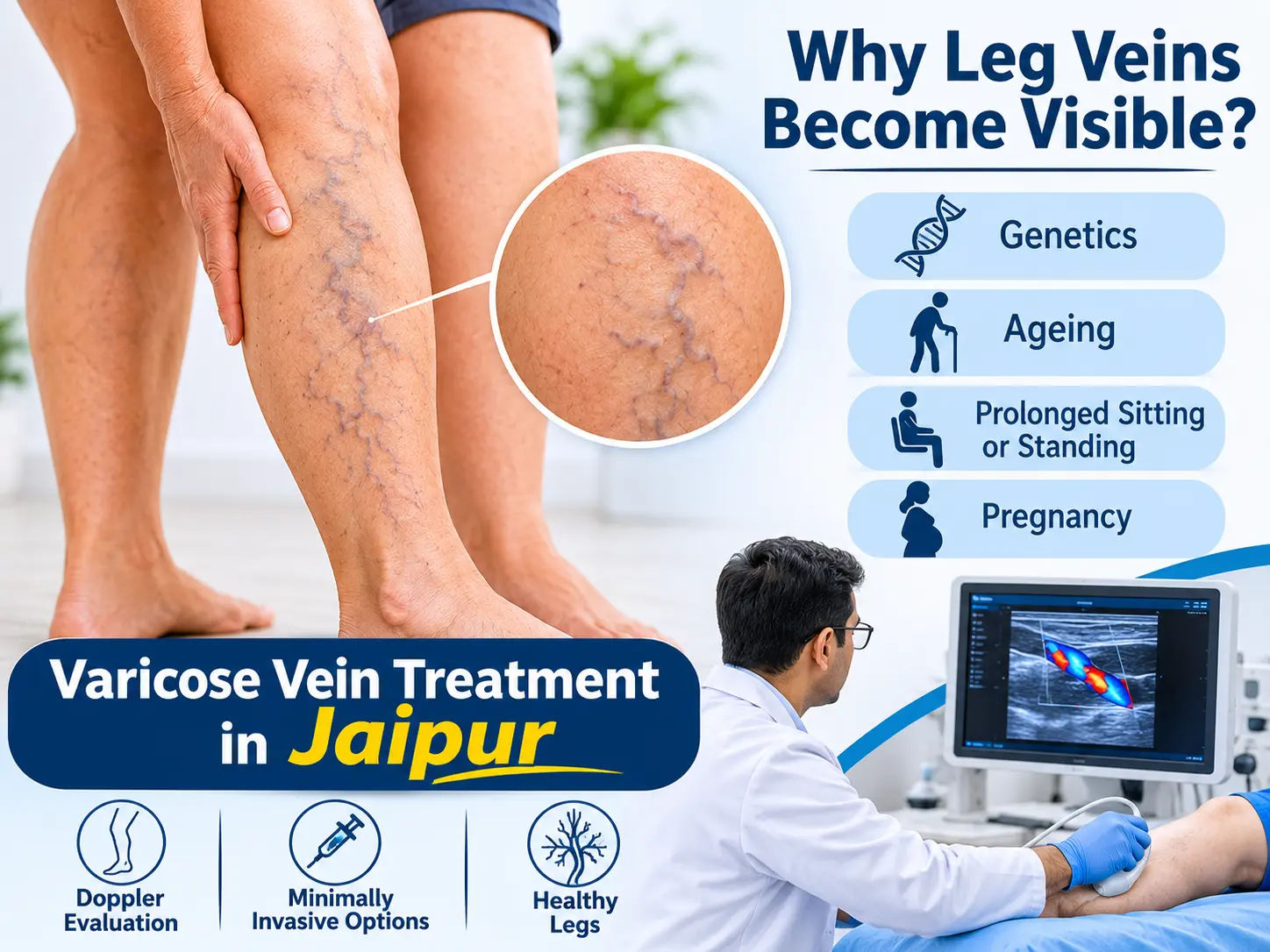
Leg veins may become more visible due to thin skin, genetics, ageing, exercise, pregnancy, or increased pressure within the veins. In some cases, prominent veins are associated with varicose veins or chronic venous insufficiency.
Understanding the difference between normal visible veins and signs of venous disease can help you decide when medical evaluation is necessary.
For people considering Varicose Vein Treatment in Jaipur, recognizing the cause of visible veins is the first step toward appropriate care. Consulting a Varicose Vein Doctor in Jaipur can help determine whether visible veins are normal or related to an underlying venous condition.
How Do Healthy Leg Veins Work?
Leg veins carry blood from the lower limbs back toward the heart.
Because blood must travel upward against gravity, veins contain one-way valves that help prevent backward flow.
The calf muscles also support circulation. When you walk, these muscles contract and help push blood upward through the veins.
If the valves become inefficient, blood may flow backward and increase pressure within certain veins.
This condition is called venous reflux.
Over time, increased venous pressure can cause superficial veins to enlarge, twist, or become more noticeable.
However, not every visible vein indicates venous reflux.
Why Do Leg Veins Become More Visible?
- Naturally Thin Skin
People with thinner skin or less fat beneath the skin may notice superficial veins more easily.
These veins can appear blue or green because of how light interacts with the skin and underlying blood vessels.
If the veins are flat and there are no other symptoms, their visibility may simply reflect normal anatomy.
- Age-Related Skin Changes
As people grow older, the skin may become thinner and lose some of its elasticity.
This can make previously unnoticed veins easier to see.
Ageing can also contribute to changes in vein walls and valves, increasing susceptibility to venous disease in some individuals.
- Family History
Genetics influence vein structure and the likelihood of developing varicose veins.
If close family members have prominent or varicose veins, you may have a higher risk of developing similar problems.
However, visible veins alone do not confirm an inherited venous disorder.
- Exercise and Physical Activity
Veins may temporarily become more noticeable during or after exercise.
Increased blood flow, muscle activity, and changes in superficial circulation can contribute to this appearance.
Prominent veins in physically active individuals are not necessarily a sign of disease.
- Pregnancy and Hormonal Changes
Pregnancy increases blood volume and changes pressure within the venous system.
Hormonal influences can also affect vein walls.
Some pregnancy-related visible veins improve after delivery, while others may persist.
- Prolonged Standing
Standing for extended periods increases pressure in the veins of the lower limbs.
In susceptible individuals, repeated prolonged standing may contribute to venous symptoms and the development of varicose veins.
Visible Veins, Spider Veins, and Varicose Veins: What Is the Difference?
These terms are often used interchangeably, but they describe different appearances.
Visible superficial veins may be normal veins seen through the skin. They are often flat and do not cause discomfort.
Spider veins are small red, blue, or purple vessels that form fine branching patterns near the skin surface.
Varicose veins are enlarged, frequently twisted superficial veins that may bulge above the skin.
Spider veins are not always associated with significant underlying venous reflux, while larger varicose veins more commonly warrant assessment for abnormal valve function.
The appearance of a vein provides useful clues, but it cannot establish the complete diagnosis.
When Are Visible Leg Veins a Medical Concern?
Visible veins deserve closer attention when accompanied by symptoms such as:
- Persistent leg heaviness or aching
- Swelling around the ankles
- Burning, throbbing, or itching
- Pain after prolonged standing
- Bulging or twisted veins
- Brownish skin pigmentation
- Skin irritation or slow-healing wounds
These symptoms may indicate increased venous pressure or chronic venous insufficiency.
Sudden swelling or pain in one leg, particularly with warmth or redness, requires prompt medical assessment because a blood clot must be considered.
Sudden chest pain or breathlessness requires emergency care.

How Can Colour Doppler Identify Venous Problems?
A Colour Doppler or duplex ultrasound is commonly used to evaluate suspected venous disease.
This non-invasive examination combines ultrasound imaging with blood-flow assessment.
It can help doctors identify:
- Abnormal backward blood flow
- Incompetent venous valves
- Enlarged superficial veins
- Relevant deep-vein abnormalities
- Veins contributing to symptomatic varicose veins
For patients seeking a Varicose Vein Doctor in Jaipur, Doppler evaluation may be recommended when symptoms or examination findings suggest venous insufficiency.
Not every person with visible veins needs an ultrasound.
Can Visible Leg Veins Be Prevented?
Some causes, such as genetics and naturally thin skin, cannot be changed.
However, healthy habits can support venous circulation.
Regular walking activates the calf-muscle pump. Taking movement breaks during prolonged sitting or standing may also help.
Maintaining an appropriate body weight, staying physically active, and elevating the legs when appropriate may reduce certain venous symptoms.
Compression stockings can help selected patients, but their suitability and compression level should be discussed with a healthcare professional.
These measures may improve comfort but cannot necessarily reverse established venous reflux.
When Is Varicose Vein Treatment Necessary?
Treatment is not required simply because a vein is visible.
Medical intervention may be considered when confirmed venous reflux causes persistent symptoms, swelling, skin changes, bleeding, or other complications.
For selected patients, Varicose Vein Laser Treatment in Jaipur may be an option.
Endovenous laser treatment uses ultrasound guidance to deliver heat inside a refluxing superficial vein, causing it to close.
Other treatment options may be appropriate depending on the vein anatomy and clinical findings.
The choice should be based on symptoms, examination, Doppler results, and individual health considerations. A Varicose Vein Doctor in Jaipur can help assess suitable treatment options based on these findings.
Venous Health Evaluation in Jaipur
At VascuCare Diagnostics & Interventions, patients experiencing prominent leg veins, swelling, heaviness, or suspected venous insufficiency can be evaluated for appropriate diagnostic and treatment options.
Dr. Rakesh Kumawat, Interventional Radiologist and Pain Management Specialist in Jaipur, provides image-guided interventions for selected venous conditions.
For individuals searching for Varicose Vein Treatment in Jaipur, Varicose Vein Laser Treatment in Jaipur, or a Varicose Vein Doctor in Jaipur, understanding the reason behind visible veins can help prevent unnecessary treatment while ensuring significant venous problems are recognized.
Frequently Asked Questions (FAQs)
1. Why are the veins in my legs suddenly more visible?
Leg veins may become more noticeable because of exercise, temperature changes, reduced fat beneath the skin, ageing, or venous pressure. New visibility accompanied by swelling, pain, or bulging should be medically assessed.
2. Are visible blue veins on the legs dangerous?
Not necessarily. Many visible superficial veins are normal. However, enlarged veins associated with aching, swelling, or skin changes may indicate venous insufficiency.
3. How can I tell whether I have spider veins or varicose veins?
Spider veins are usually small, fine, branching vessels near the skin surface. Varicose veins are generally larger, twisted, and may bulge. A medical examination can clarify the diagnosis.
4. Do all visible leg veins require Colour Doppler testing?
No. Doppler testing is generally considered when symptoms, bulging veins, swelling, or examination findings suggest abnormal venous circulation.
5. Can visible leg veins disappear without treatment?
Some temporarily prominent veins may become less noticeable, and certain pregnancy-related veins may improve after delivery. Established varicose veins caused by venous reflux generally do not disappear through lifestyle changes alone.