- May 7, 2026
- Varicose Vein
- 0 Comments
Varicose veins are a common yet often misunderstood condition affecting millions of people. They appear as enlarged, twisted veins—usually on the legs—and can cause discomfort, pain, swelling, and even complications if left untreated. The good news is that varicose veins can often be treated effectively without traditional surgery, thanks to modern medical advancements.
If you’re wondering whether you can avoid surgery for varicose veins, this guide will help you understand your options, benefits, and when to seek expert care.
What Are Varicose Veins?
Varicose veins occur when the valves inside your veins stop functioning properly. Normally, these valves ensure that blood flows in one direction—back toward the heart. When they weaken or fail, blood pools in the veins, causing them to enlarge and become visible under the skin.
Common Symptoms of Varicose Veins
- Bulging, twisted veins (usually blue or purple)
- Leg pain or heaviness
- Swelling in legs and ankles
- Burning or throbbing sensation
- Itching around veins
- Muscle cramps, especially at night
- Skin discoloration in advanced cases
If you notice these symptoms, it’s important to consult a specialist early to avoid complications.
Can Varicose Veins Be Treated Without Surgery?
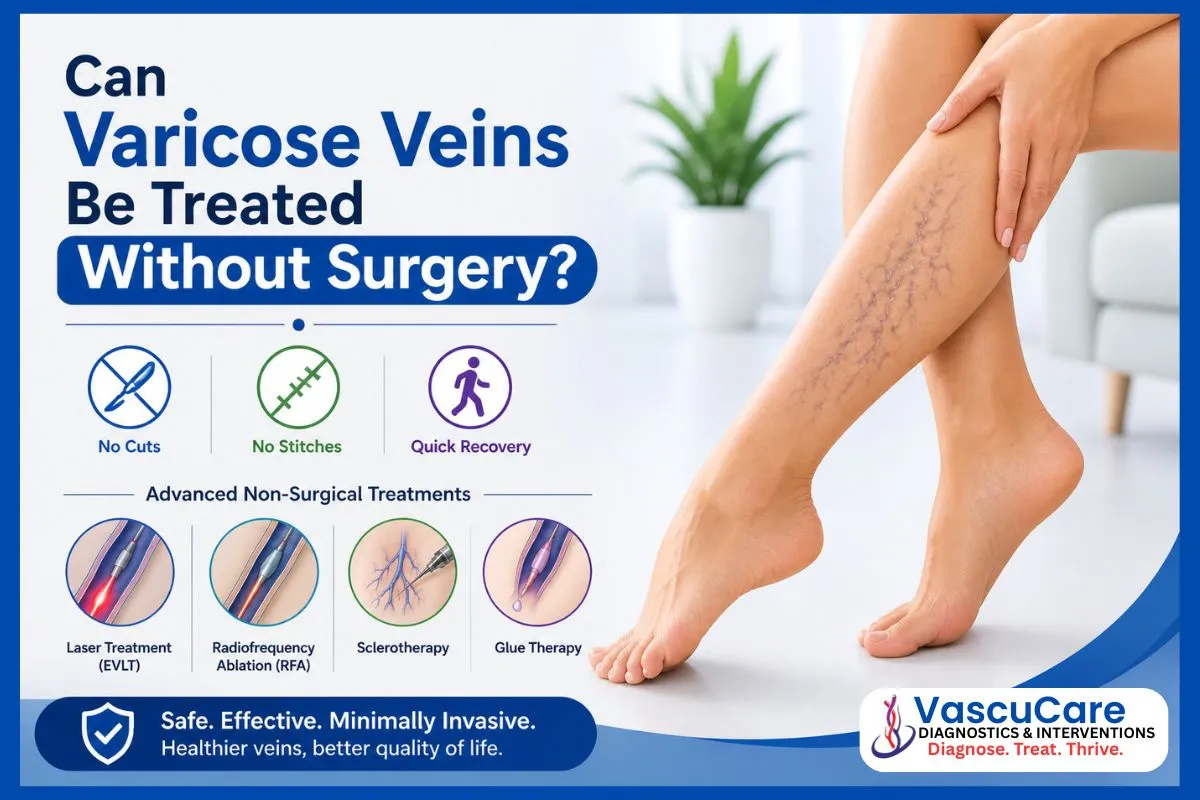
Yes, many cases of varicose veins can be treated without surgery. Today, minimally invasive and non-surgical treatments are highly effective, safer, and offer faster recovery compared to traditional surgical procedures.
Non-Surgical Treatment Options for Varicose Veins
1. Compression Therapy
Compression stockings are often the first line of treatment. They help improve blood circulation by applying gentle pressure on the legs.
Benefits:
- Reduces swelling
- Improves blood flow
- Relieves discomfort
However, this is more of a management approach rather than a permanent cure.
2. Lifestyle Changes
Simple lifestyle modifications can significantly help manage symptoms:
- Regular exercise (walking, cycling)
- Elevating legs while resting
- Avoiding long periods of standing or sitting
- Maintaining a healthy weight
These steps can slow progression but may not eliminate existing varicose veins.
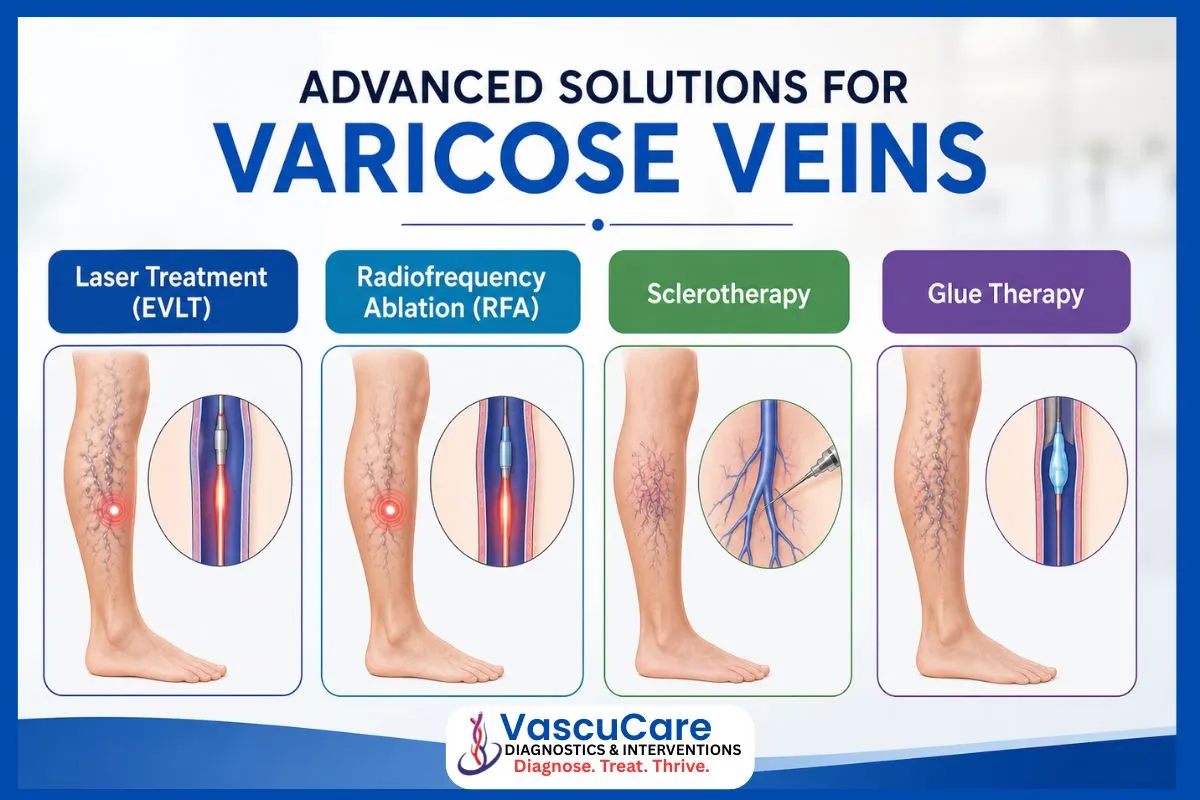
3. Laser Treatment (EVLT)
Endovenous Laser Treatment (EVLT) is one of the most advanced and popular non-surgical treatments.
How it works:
A laser fiber is inserted into the affected vein, which uses heat to seal it shut.
Advantages:
- No cuts or stitches
- Performed under local anesthesia
- Quick recovery
- High success rate
4. Radiofrequency Ablation (RFA)
Similar to laser treatment, RFA uses radiofrequency energy instead of laser heat.
Benefits:
- Minimal pain
- Faster healing
- Effective for large veins
5. Sclerotherapy
This involves injecting a special solution into the vein, causing it to collapse and fade over time.
Best for:
- Smaller varicose veins
- Spider veins
6. Glue Therapy (VenaSeal)
A newer technique where a medical adhesive is used to close the affected vein.
Key advantages:
- No heat or injections
- Minimal discomfort
- Immediate results
Why Choose Non-Surgical Treatment?
Non-surgical options are becoming the preferred choice due to:
- No hospitalization
- Minimal downtime
- Less pain and scarring
- Quick return to daily activities
- High success rates
When Is Surgery Required?
In rare or advanced cases where veins are severely damaged, traditional surgery may be recommended. However, with modern techniques, most patients do not need surgery anymore.
Importance of Early Diagnosis
Delaying treatment can lead to complications such as:
- Skin ulcers
- Blood clots
- Severe swelling
- Chronic pain
Early consultation ensures simpler, non-surgical solutions.
Best Place for Varicose Vein Treatment
When it comes to advanced, non-surgical vein treatments, VascuCare Diagnostics & Interventions is the best place.
They specialize in modern, minimally invasive procedures like laser therapy, RFA, and interventional radiology-based treatments. With expert doctors, advanced technology, and patient-focused care, they ensure accurate diagnosis and effective treatment without unnecessary surgery.
Conclusion
Varicose veins are not just a cosmetic issue—they can impact your quality of life if ignored. The encouraging news is that you don’t always need surgery to treat them. With today’s advanced non-surgical treatments, you can get relief quickly, safely, and effectively.
If you are experiencing symptoms, don’t wait. Seek expert advice and explore the best treatment options available.
FAQs
1. Can varicose veins go away without treatment?
No, they usually don’t disappear on their own but can be managed with treatment.
2. Is laser treatment for varicose veins painful?
No, it is minimally painful and performed under local anesthesia.
3. How long does recovery take?
Most patients resume normal activities within 1–2 days.
4. Are non-surgical treatments permanent?
Yes, treated veins are permanently closed, but new veins may develop over time.
5. Is varicose vein treatment expensive?
Costs vary, but non-surgical treatments are cost-effective compared to surgery.