
- Aug 14, 2026
- Pain Management
- 0 Comments
Living with persistent pain can affect much more than physical comfort. Chronic knee pain, back pain, shoulder pain, nerve pain, or joint pain can make everyday activities difficult and may interfere with sleep, work, exercise, and overall quality of life.
Many people manage recurring pain by repeatedly taking painkillers without identifying the actual cause. A specialized Pain Clinic takes a different approach. The focus is on finding the source of pain and creating an individualized treatment plan that may include lifestyle changes, rehabilitation, medications, and advanced minimally invasive procedures.
Dr. Rakesh Kumawat – Best Interventional Radiologist and Pain Management Specialist Doctor In Jaipur, at VascuCare Diagnostics & Interventions, provides advanced evaluation and image-guided pain management treatments for patients experiencing chronic and persistent pain.
When Should You Visit a Pain Clinic?
Occasional pain after physical activity or a minor injury may improve naturally. However, medical evaluation becomes important when pain persists or repeatedly returns.
Consider visiting a pain specialist if you experience:
• Pain lasting several weeks or months
• Chronic knee joint pain
• Persistent back or neck pain
• Shoulder pain
• Nerve-related pain
• Pain that affects walking
• Difficulty climbing stairs
• Pain that disturbs sleep
• Repeated dependence on painkillers
• Pain despite physiotherapy or routine treatment
Early evaluation may provide more treatment options before pain becomes severely limiting.
Why Finding the Cause of Pain Matters
Pain is a symptom, not a diagnosis.
For example, chronic knee pain could result from osteoarthritis, inflammation, cartilage degeneration, an old injury, or pain signals carried by specific nerves.
Simply reducing the pain temporarily may not address the underlying problem.
A pain specialist may use physical examination, X-rays, MRI, ultrasound, or other investigations to understand the cause before recommending treatment.
Personalized Pain Management
There is no single treatment that works for every patient.
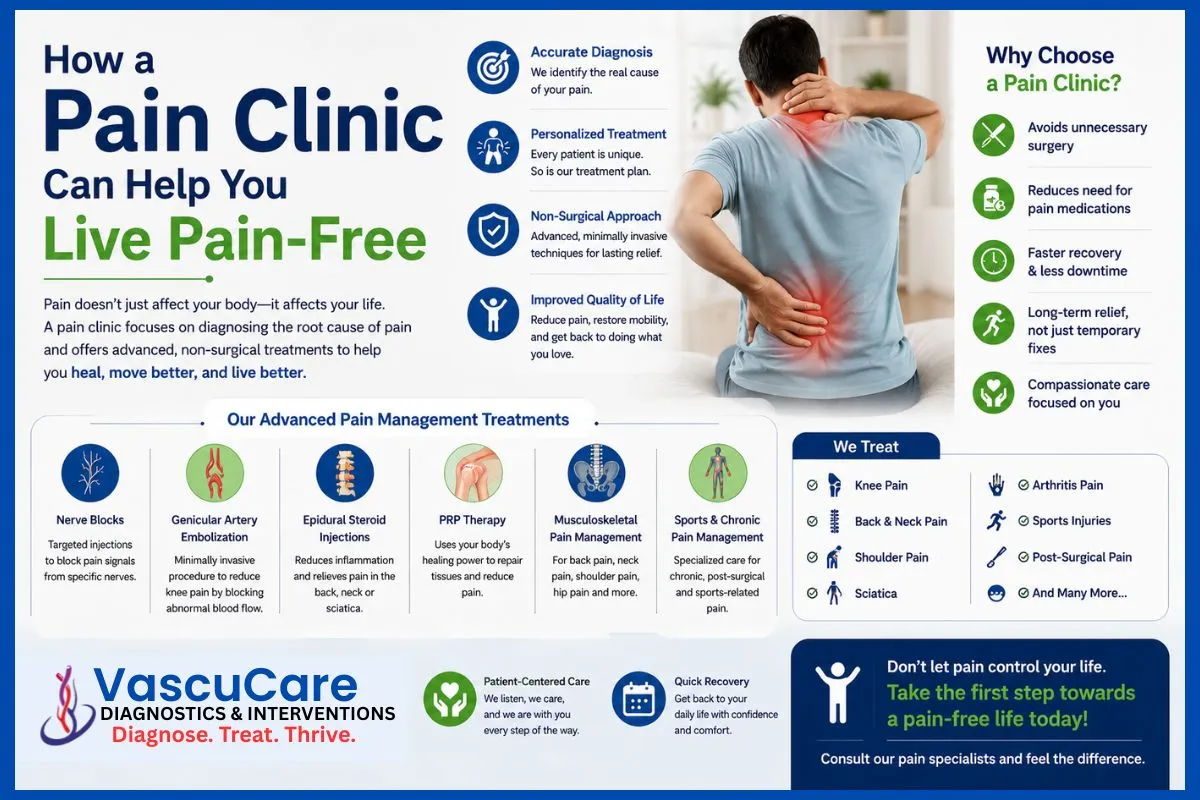
Depending on the diagnosis, a pain management plan may include:
• Physiotherapy
• Exercise and rehabilitation
• Weight management
• Medication
• Lifestyle modification
• Image-guided injections
• Nerve blocks
• Radiofrequency procedures
• PRP Therapy
• Other minimally invasive interventions
The objective is to reduce pain while improving mobility and everyday function.
Advanced Treatment for Chronic Knee Pain
Knee pain is one of the most common reasons patients seek pain management.
Modern treatment options may include:
PRP Therapy
Platelet-Rich Plasma (PRP) Therapy uses concentrated platelets prepared from the patient’s own blood. It may be considered for selected patients with early degenerative changes or certain soft-tissue conditions.
Genicular Nerve Block
A Genicular Nerve Block Treatment In Jaipur targets sensory nerves responsible for carrying pain signals from the knee.
It may provide temporary relief and can also help determine whether a longer-lasting nerve treatment may be appropriate.
Genicular Nerve Ablation
For selected patients who respond positively to a nerve block, Genicular Nerve Ablation uses radiofrequency energy to reduce pain transmission through specific nerves.
Genicular Artery Embolization
Genicular Artery Embolization (GAE) is an advanced minimally invasive procedure for selected patients with knee osteoarthritis where chronic inflammation contributes to pain.
The procedure targets abnormal blood vessels associated with inflammation without requiring open knee surgery.
Role of Image-Guided Pain Procedures
Modern pain management increasingly uses ultrasound, fluoroscopy, and other imaging techniques to guide treatment.
Image guidance allows specialists to accurately target:
• Nerves
• Joints
• Blood vessels
• Inflamed areas
• Specific anatomical structures
This precision can help deliver treatment directly to the suspected source of pain while limiting unnecessary impact on surrounding tissues.
Can a Pain Clinic Help Avoid Surgery?
For some patients, yes.
Depending on the diagnosis and severity of the condition, minimally invasive pain treatments may provide meaningful symptom relief and help delay or avoid major surgery.
However, not every condition can be treated without surgery. Severe structural damage, fractures, advanced joint destruction, or other conditions may still require surgical care.
A good pain management plan therefore focuses on selecting the right treatment rather than simply avoiding surgery.
Why Choose Dr. Rakesh Kumawat?
Dr. Rakesh Kumawat – Best Interventional Radiologist and Pain Management Specialist Doctor In Jaipur, at VascuCare Diagnostics & Interventions, provides advanced image-guided pain management for patients with chronic knee, joint, and other pain conditions.
Treatment options may include:
• PRP Therapy
• Genicular Nerve Block
• Genicular Nerve Ablation
• Genicular Artery Embolization
• Image-guided pain procedures
• Personalized pain management plans
Each patient’s condition is evaluated individually before recommending a procedure.
Frequently Asked Questions (FAQs)
1. What does a pain clinic treat?
A pain clinic evaluates and manages chronic conditions such as knee pain, back pain, joint pain, nerve pain, shoulder pain, and other persistent pain problems.
2. When should I visit a pain specialist?
Consider specialist evaluation when pain lasts several weeks, repeatedly returns, affects daily activities, or does not improve with routine treatment.
3. Can a pain clinic help with chronic knee pain?
Yes. Depending on the cause, treatments may include rehabilitation, PRP Therapy, Genicular Nerve Block, Genicular Nerve Ablation, or Genicular Artery Embolization.
4. What is a Genicular Nerve Block?
It is an image-guided procedure that targets specific sensory nerves around the knee to temporarily reduce pain signals.
5. What is Genicular Nerve Ablation?
It uses radiofrequency energy to reduce pain transmission through selected genicular nerves and may provide longer-lasting relief for suitable patients.
6. What is Genicular Artery Embolization?
GAE is a minimally invasive procedure that targets abnormal blood vessels associated with inflammation in selected patients with knee osteoarthritis.
7. Does pain management only involve painkillers?
No. Modern pain management may combine rehabilitation, lifestyle changes, image-guided procedures, nerve treatments, and other targeted therapies.
8. Can pain treatment help me avoid surgery?
In selected cases, minimally invasive treatments can improve symptoms and potentially delay or avoid surgery. However, this depends on the underlying condition.
9. Are image-guided pain procedures safe?
These procedures are generally considered safe when appropriately selected and performed by trained specialists, although every medical procedure has potential risks.
10. Where can I find a Pain Clinic Centre in Jaipur?
Patients seeking advanced pain management can consult Dr. Rakesh Kumawat – Best Interventional Radiologist and Pain Management Specialist Doctor In Jaipur at VascuCare Diagnostics & Interventions for personalized evaluation and treatment options.