
- Aug 13, 2026
- Pain Management
- 0 Comments
Knee Joint Pain Treatment In Jaipur can make everyday activities such as walking, climbing stairs, standing for long periods, or getting up from a chair difficult. For many patients, especially those with osteoarthritis, the first concern after persistent knee pain is whether they will eventually need surgery or knee replacement.
The answer is encouraging: many cases of knee joint pain can be managed without surgery, particularly when the underlying cause is identified early and the right treatment is selected.
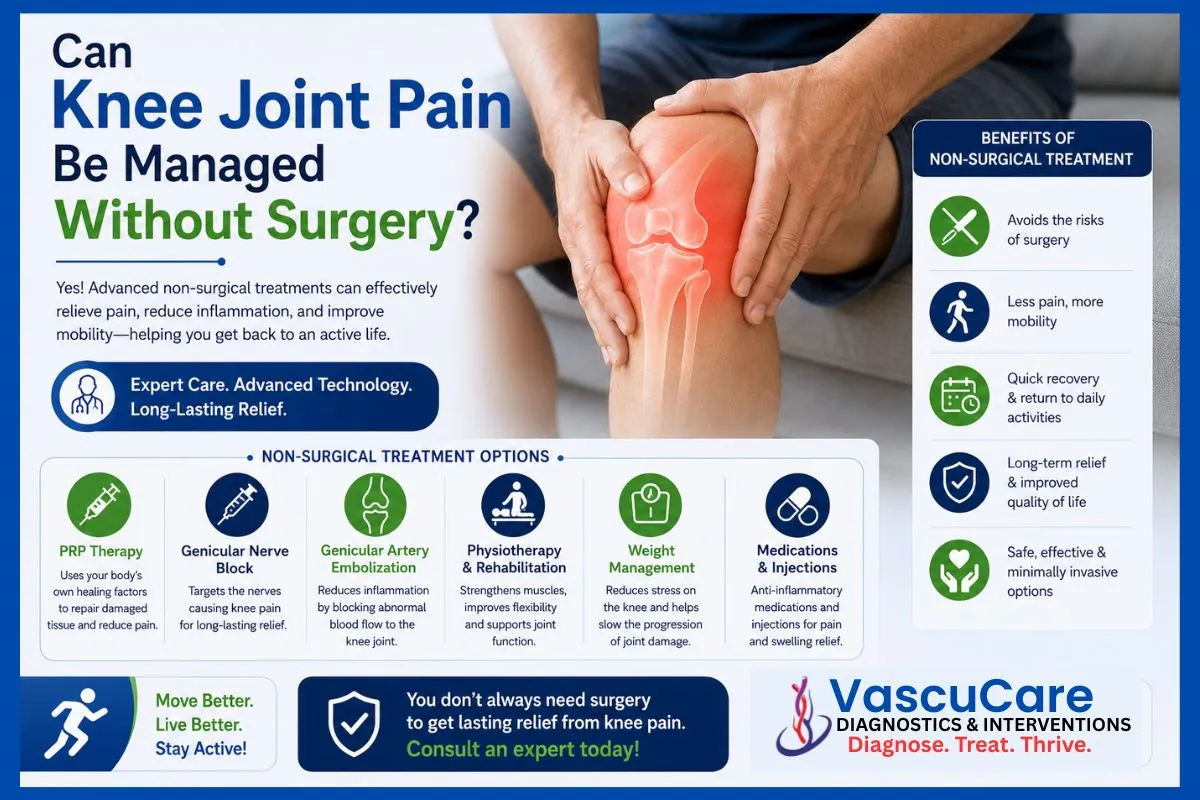
Modern pain management and Interventional Radiology offer several minimally invasive options, including PRP Therapy, Genicular Nerve Block, Genicular Nerve Ablation, and Genicular Artery Embolization (GAE).
Dr. Rakesh Kumawat – Best Interventional Radiologist and Pain Management Specialist in Jaipur, at VascuCare Diagnostics & Interventions, provides personalized, image-guided treatment options for patients experiencing chronic knee joint pain.
What Causes Knee Joint Pain?
Knee pain is not a single condition. It can develop because of problems involving cartilage, bones, ligaments, tendons, nerves, or inflammation around the joint.
Common causes include:
• Osteoarthritis
• Age-related cartilage degeneration
• Meniscus injuries
• Ligament injuries
• Chronic inflammation
• Previous knee trauma
• Tendon problems
• Excess body weight
• Repetitive stress on the joint
Because there are multiple possible causes, successful treatment should begin with an accurate diagnosis rather than repeated use of painkillers.
When Can Knee Pain Be Treated Without Surgery?
Non-surgical management may be considered when Knee Pain Doctor In Jaipur is mild to moderate, joint damage is not severe enough to require replacement, or the patient wants to explore conservative and minimally invasive treatments first.
It may also be useful for patients who are not suitable candidates for major surgery because of age or other medical conditions.
However, whether surgery can be avoided depends on the individual diagnosis and severity of joint damage.
Start With Conservative Knee Pain Treatment
For many patients, treatment begins with simple measures such as:
• Physiotherapy
• Strengthening exercises
• Weight management
• Activity modification
• Low-impact exercise
• Medication when medically appropriate
• Supportive devices when required
Strengthening the muscles around the knee can improve stability and reduce stress on the joint.
When these measures are insufficient, minimally invasive procedures may be considered.
PRP Therapy for Knee Pain
Platelet-Rich Plasma (PRP) Therapy uses a concentrated preparation of platelets obtained from the patient’s own blood.
These platelets contain growth factors involved in the body’s healing processes. PRP may be considered for selected patients with early or moderate degenerative joint changes or certain soft-tissue injuries.
PRP Therapy may help with:
• Pain reduction
• Joint function
• Inflammation management
• Supporting tissue healing in selected conditions
Results vary depending on the patient’s condition and severity of joint damage.
Genicular Nerve Block
Chronic knee pain signals are transmitted through sensory nerves around the knee called genicular nerves.
A Genicular Nerve Block Treatment In Jaipur involves placing medication near selected nerves under image guidance to temporarily reduce pain signals.
The procedure can serve two purposes: providing short-term pain relief and helping determine whether the patient may benefit from a longer-lasting nerve procedure.
Genicular Nerve Ablation
If a patient experiences meaningful relief after a Genicular Nerve Block, Genicular Nerve Ablation may be considered.
This minimally invasive procedure uses radiofrequency energy to reduce the ability of selected genicular nerves to transmit pain signals.
It may be useful for certain patients with chronic knee pain, including some people with osteoarthritis who want to postpone surgery or are not suitable candidates for knee replacement.
Importantly, nerve ablation manages pain signals; it does not rebuild damaged knee cartilage.
Genicular Artery Embolization (GAE)
For some patients with knee osteoarthritis, chronic inflammation plays an important role in ongoing pain.
Genicular Artery Embolization is an advanced, minimally invasive procedure performed by an Interventional Radiologist.
During GAE, a small catheter is guided through the blood vessels to abnormal branches supplying inflamed tissue around the knee. Tiny particles are then used to reduce excessive blood flow associated with inflammation.
For appropriately selected patients, GAE may help reduce osteoarthritis-related pain and improve mobility without open surgery.
Which Treatment Is Right for You?
There is no single non-surgical knee treatment that works for everyone.
The right option depends on:
• Cause of knee pain
• Severity of osteoarthritis
• X-ray or MRI findings
• Level of inflammation
• Previous treatments
• Age and activity level
• Overall medical condition
One patient may benefit from physiotherapy or PRP, while another may be more suitable for a Genicular Nerve procedure or GAE.
This is why a personalized evaluation is essential.
Advanced Knee Pain Care at VascuCare Diagnostics & Interventions
At VascuCare Diagnostics & Interventions, patients with chronic knee pain can receive individualized assessment and advanced minimally invasive treatment options.
Dr. Rakesh Kumawat – Best Interventional Radiologist and Pain Management Specialist in Jaipur provides image-guided procedures including:
• PRP Therapy
• Genicular Nerve Block
• Genicular Nerve Ablation
• Genicular Artery Embolization
• Personalized chronic pain management
The goal is to identify the source of pain, improve mobility, and choose an appropriate treatment while avoiding unnecessary surgery whenever possible.
Frequently Asked Questions (FAQs)
1. Can knee pain really be treated without surgery?
Yes. Many causes of knee pain can be managed with physiotherapy, lifestyle changes, medications, injections, and minimally invasive procedures.
2. Can osteoarthritis be managed without knee replacement?
Many patients with mild to moderate osteoarthritis can manage symptoms without immediate replacement surgery. Treatment depends on disease severity.
3. What is PRP Therapy for knee pain?
PRP uses concentrated platelets from the patient’s own blood and may support healing and symptom improvement in selected knee conditions.
4. What is a Genicular Nerve Block?
It is an image-guided procedure that temporarily reduces pain signals transmitted by selected nerves around the knee.
5. How is Genicular Nerve Ablation different?
Genicular Nerve Ablation uses radiofrequency energy to reduce pain transmission for a longer period in appropriately selected patients.
6. What is Genicular Artery Embolization?
GAE is a minimally invasive procedure that targets abnormal blood flow associated with inflammation in selected patients with knee osteoarthritis.
7. Does Genicular Artery Embolization require surgery?
No. GAE is performed through a small catheter inserted into a blood vessel and does not require open knee surgery.
8. Can these treatments rebuild damaged cartilage?
Not all treatments rebuild cartilage. Many are designed primarily to manage pain, inflammation, or function. Your doctor can explain the realistic goal of each treatment.
9. Can non-surgical treatment permanently prevent knee replacement?
Not necessarily. It may delay or reduce the need for surgery in selected patients, but severe joint damage may eventually require knee replacement.
10. Where can I get non-surgical knee pain treatment in Jaipur?
Patients can consult Dr. Rakesh Kumawat – Best Interventional Radiologist and Pain Management Specialist Doctor In Jaipur at VascuCare Diagnostics & Interventions for evaluation and advanced minimally invasive knee pain treatment options.