
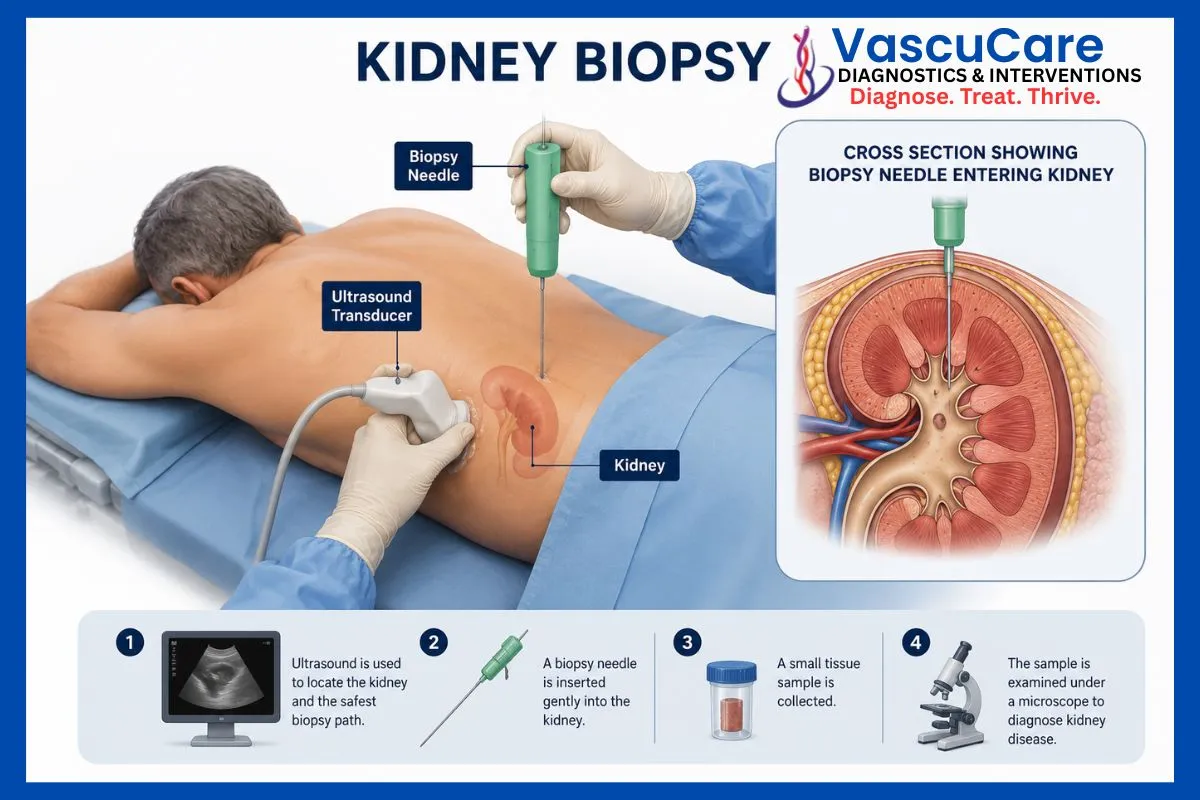
- May 16, 2026
- Diagnostics
- 0 Comments
Hearing the word “biopsy” can make many people anxious, but in reality, a biopsy is a common and important medical procedure used to diagnose various health conditions accurately. Doctors often recommend a biopsy when imaging tests or symptoms indicate that further evaluation is necessary.
A biopsy helps specialists understand the exact nature of a tissue abnormality, allowing them to plan the most appropriate treatment. Whether it is related to swelling, lumps, infections, inflammation, or suspected tumors, biopsy testing plays a major role in modern diagnosis.
If you are looking for a Biopsy Test in Jaipur, understanding why doctors recommend it and what happens after the procedure can help reduce fear and confusion.
What Is a Biopsy Test?
A biopsy is a medical procedure in which a small sample of tissue or cells is removed from the body for laboratory examination.
The sample is carefully analyzed under a microscope to identify:
- Infections
- Inflammation
- Abnormal tissue growth
- Benign or malignant conditions
A biopsy helps doctors make a more accurate diagnosis compared to imaging tests alone.
Why Do Doctors Recommend a Biopsy?
Doctors may recommend a biopsy when they notice unusual findings during:
- Ultrasound
- CT scan
- MRI
- X-ray
- Physical examination
A biopsy is usually advised when a condition requires confirmation before treatment planning.
Common Reasons for a Biopsy
Unexplained Lumps or Swelling
If a lump or swelling is found in the body, a biopsy helps determine whether it is harmless or requires medical treatment.
Persistent Pain or Inflammation
Chronic inflammation or unexplained tissue changes may need further evaluation through biopsy testing.
Abnormal Imaging Reports
Sometimes scans show suspicious areas that cannot be fully diagnosed without examining tissue samples.
Suspected Infections
Certain infections or inflammatory conditions may also require biopsy for accurate diagnosis.
Organ or Soft Tissue Evaluation
Biopsies may be performed for organs such as:
- Liver
- Thyroid
- Lymph nodes
- Soft tissues
- Bone lesions
Types of Biopsy Procedures
The type of biopsy depends on the location and nature of the abnormality.
Needle Biopsy
This is one of the most commonly used minimally invasive biopsy methods.
A thin needle is used to collect tissue samples from the affected area using imaging guidance.
Advantages:
- Minimal discomfort
- No major cuts
- Faster recovery
Fine Needle Aspiration (FNAC)
FNAC uses a very thin needle to collect cells from lumps or swellings.
It is commonly used for:
- Thyroid swelling
- Lymph node evaluation
- Soft tissue masses
Core Needle Biopsy
A slightly larger needle is used to collect a deeper tissue sample for detailed analysis.
This provides more information than FNAC Test in some cases.
Image-Guided Biopsy
Modern biopsies are often performed using:
- Ultrasound guidance
- CT guidance
- Fluoroscopy
This improves precision and safety while reducing complications.
What Happens During a Biopsy?
Most minimally invasive biopsies are simple outpatient procedures.
Step-by-Step Process
Preparation
The doctor reviews:
- Medical history
- Imaging reports
- Blood tests if required
Patients are given instructions before the procedure.
Local Anesthesia
The area is numbed to reduce discomfort during the procedure.
Tissue Sampling
Using imaging guidance, the doctor carefully inserts the needle and collects tissue samples.
Completion
After sample collection:
- Pressure dressing may be applied
- Observation for a short period may be advised
- Most patients return home the same day
Is Biopsy Painful?
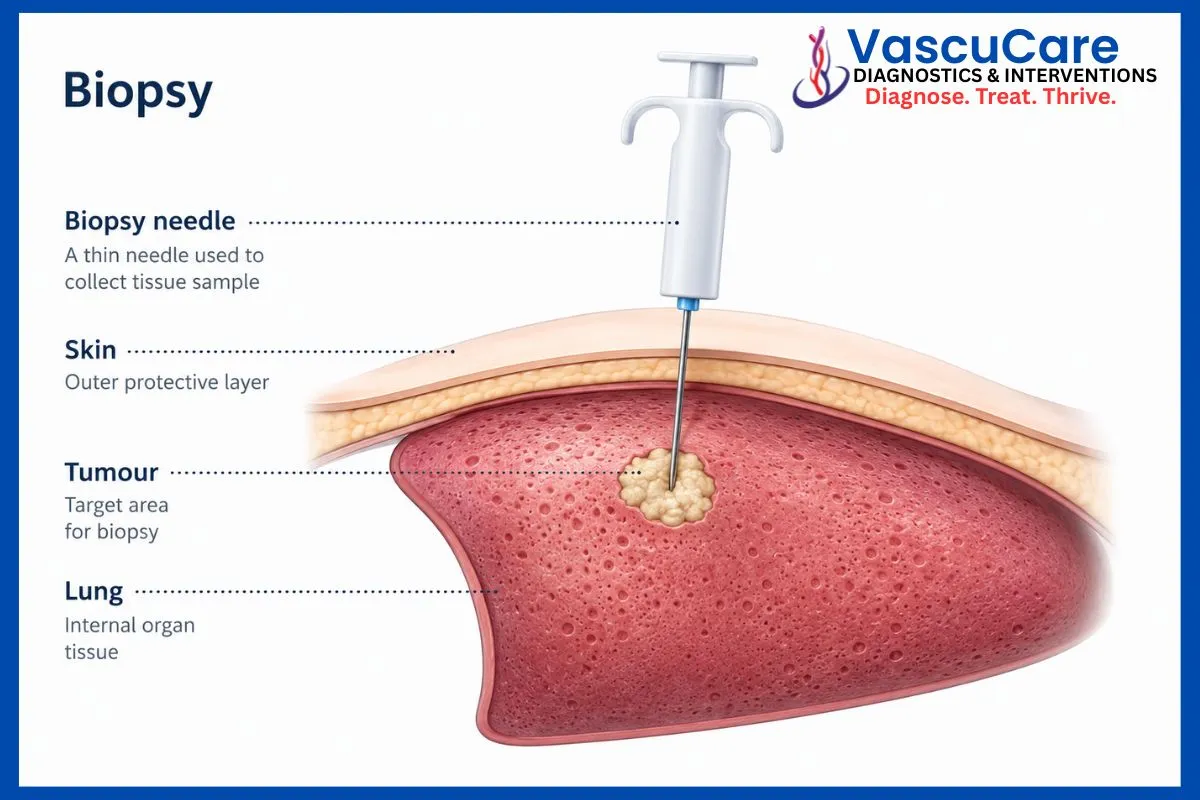
Most modern biopsy procedures cause minimal discomfort because:
- Local anesthesia is used
- Minimally invasive techniques are performed
- Image guidance improves precision
Patients usually experience mild soreness temporarily after the procedure.
What Happens After the Biopsy?
The collected sample is sent to a laboratory where specialists analyze the tissue.
The report helps doctors:
- Confirm diagnosis
- Identify the exact condition
- Plan further treatment if needed
Results may take a few days depending on the type of analysis required.
Are There Any Risks?
Biopsy procedures are generally safe, especially when performed using image-guided techniques.
Minor risks may include:
- Mild pain
- Temporary swelling
- Bruising
Serious complications are uncommon in minimally invasive procedures.
Importance of Accurate Diagnosis
A biopsy helps avoid unnecessary treatments and ensures that the right medical approach is chosen.
Early diagnosis through biopsy testing can:
- Improve treatment outcomes
- Detect conditions at an early stage
- Reduce uncertainty for patients
Modern Image-Guided Biopsy Procedures
Today, many biopsy procedures are performed using advanced imaging technology, which offers:
- Greater precision
- Smaller punctures instead of large cuts
- Faster recovery
- Reduced discomfort
This approach is widely preferred over traditional surgical biopsies in many cases.
VascuCare Diagnostics & Interventions – Advanced Biopsy & Diagnostic Care
For patients seeking advanced diagnostic and minimally invasive procedures, VascuCare Diagnostics & Interventions offers modern image-guided biopsy services in Jaipur.
The center focuses on:
- Needle biopsies
- FNAC procedures
- Image-guided diagnostics
- Minimally invasive interventions
Using advanced imaging technology, the goal is to provide accurate diagnosis with improved patient comfort and safety.
Tips Before a Biopsy
- Follow your doctor’s instructions carefully
- Inform the doctor about medications or allergies
- Carry previous medical reports and scans
- Stay relaxed and ask questions if unsure
Proper preparation helps ensure a smoother procedure.
FAQs
1. Why do doctors recommend a biopsy?
A biopsy helps identify abnormal tissues, infections, inflammation, or other medical conditions accurately.
2. Is a biopsy painful?
Most biopsies cause minimal discomfort because local anesthesia is used during the procedure.
3. How long does a biopsy take?
Many minimally invasive biopsy procedures take around 20–40 minutes.
4. Is hospitalization required after biopsy?
Most image-guided biopsies are outpatient procedures, and patients return home the same day.
5. How long do biopsy reports take?
Results usually take a few days depending on the type of analysis required.