- May 15, 2026
- Interventional Radiologist
- 0 Comments
Varicose veins are a common condition affecting millions of people worldwide. These enlarged, twisted veins usually appear on the legs and can cause pain, swelling, heaviness, and discomfort in daily life. While many people once believed surgery was the only solution, modern medicine has transformed varicose vein treatment through Interventional Radiology — offering advanced procedures without major cuts or stitches.
Today, patients can receive effective treatment with minimal pain, faster recovery, and little downtime. Understanding how interventional radiology works can help individuals choose safer and more comfortable treatment options for varicose veins.
What Are Varicose Veins?
Varicose veins occur when the valves inside veins become weak or damaged. Normally, these valves help blood flow back toward the heart. When they stop working properly, blood starts pooling inside the veins, causing them to enlarge and become visible under the skin.
Common symptoms include:
- Swollen, twisted veins
- Leg heaviness
- Burning or aching pain
- Swelling in ankles or feet
- Fatigue after standing
- Skin discoloration
If left untreated, varicose veins may worsen over time and lead to complications such as ulcers or blood clots.
Traditional Surgery vs Modern Treatment
Earlier, varicose veins were commonly treated with surgical vein stripping, which involved:
- Large cuts
- Stitches
- Hospital stay
- Longer recovery time
Many patients avoided treatment because of fear of surgery and pain.
However, advances in Interventional Radiology have completely changed the approach to varicose vein treatment.
What Is Interventional Radiology?
Interventional Radiology (IR) is a specialized medical field that uses advanced imaging techniques to perform minimally invasive procedures inside the body.
Instead of large surgical cuts, doctors use:
- Tiny punctures
- Thin catheters
- Imaging guidance like ultrasound or fluoroscopy
This allows precise treatment with minimal damage to surrounding tissues.
How Interventional Radiology Treats Varicose Veins
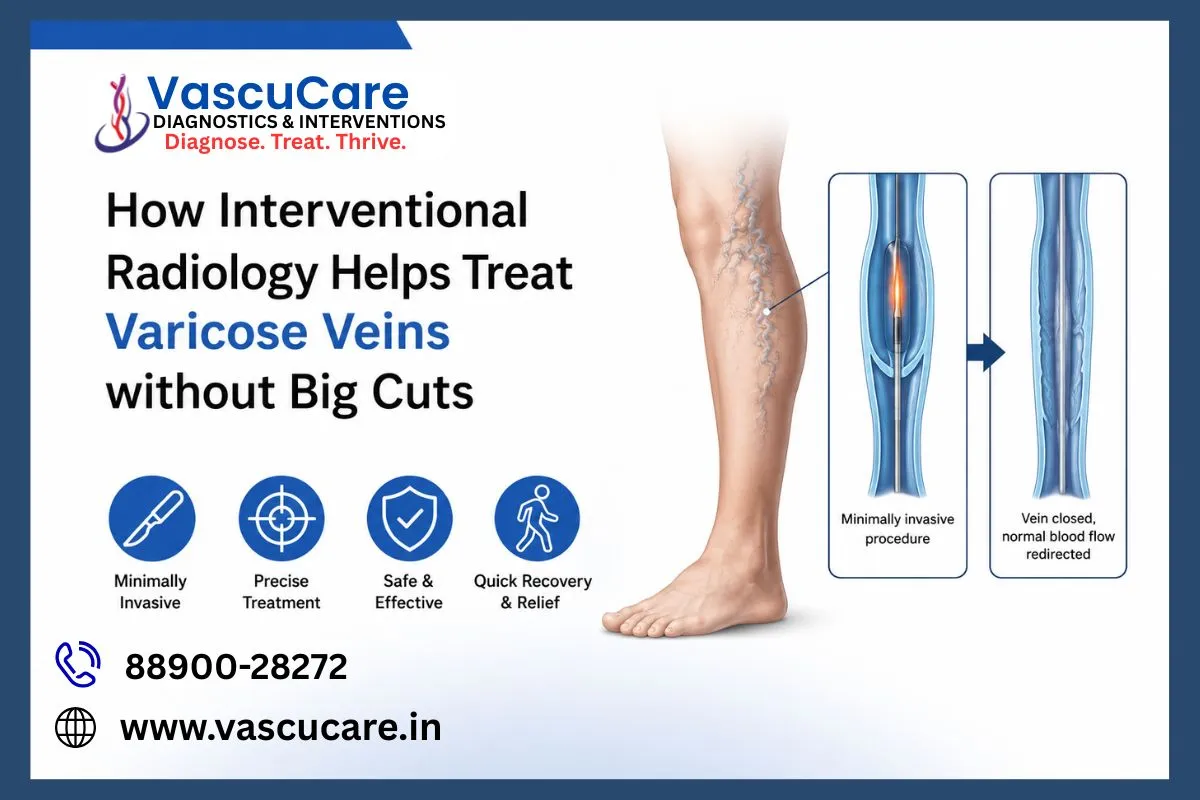
Modern varicose vein treatments focus on closing the damaged veins so blood can naturally reroute through healthy veins.
These procedures are performed using image guidance and usually require only small needle-sized openings instead of major cuts.
Endovenous Laser Treatment (EVLT)
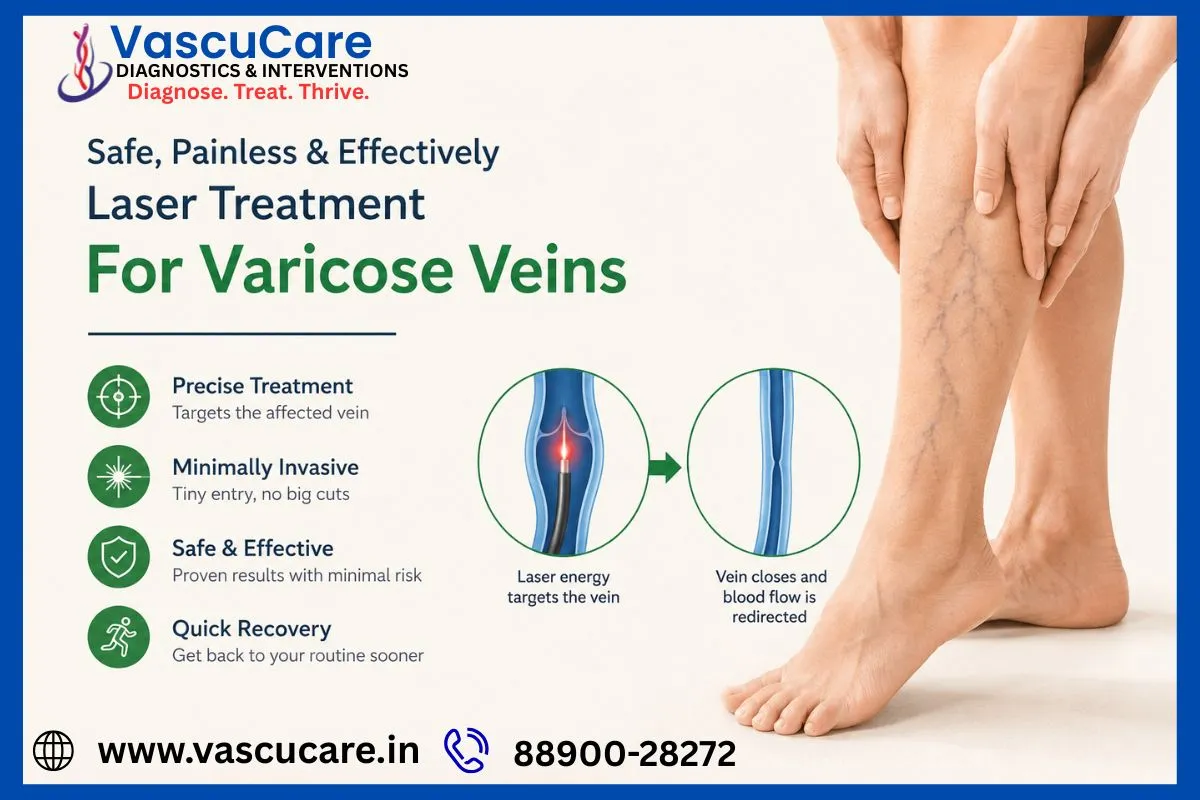
EVLT is one of the most popular minimally invasive treatments for varicose veins.
How It Works:
- A thin laser fiber is inserted into the affected vein
- Laser energy heats and seals the vein from inside
- Blood flow shifts to healthy veins
Benefits:
- No major cuts or stitches
- Minimal pain
- Quick recovery
- Same-day discharge
Radiofrequency Ablation (RFA)
RFA works similarly to laser treatment but uses radiofrequency energy instead of laser heat.
Advantages:
- Less discomfort
- Effective vein closure
- Faster recovery time
It is widely used for chronic venous insufficiency and varicose veins.
Sclerotherapy
This treatment involves injecting a special solution into smaller varicose or spider veins.
The solution causes the veins to shrink and gradually disappear over time.
Suitable For:
- Small varicose veins
- Spider veins
- Cosmetic vein concerns
Why Patients Prefer Minimally Invasive Treatments
Modern interventional radiology procedures offer several advantages over traditional surgery.
Key Benefits
No Big Cuts or Stitches
The biggest advantage is that treatment is performed through tiny punctures instead of large surgical incisions.
Faster Recovery
Most patients can:
- Walk immediately after treatment
- Return home the same day
- Resume normal activities within a short time
Less Pain & Scarring
Since there are no major cuts, patients experience:
- Minimal discomfort
- Very little scarring
- Reduced risk of infection
High Success Rate
Image-guided procedures are highly precise and effective in treating damaged veins.
Who Needs Varicose Vein Treatment?
You should consult a specialist if you experience:
- Persistent leg pain or heaviness
- Swelling after standing
- Visible enlarged veins
- Burning or throbbing sensation
- Skin discoloration near veins
Early treatment helps prevent complications and improves comfort.
Diagnosis Before Treatment
Before starting treatment, the doctor usually performs:
- Physical examination
- Doppler ultrasound study
- Vein circulation assessment
These tests help identify damaged veins and guide treatment planning.
Is Varicose Vein Treatment Safe?
Modern minimally invasive procedures are generally considered safe when performed by experienced specialists.
Since they are image-guided, the treatment is:
- More precise
- Less invasive
- Associated with faster recovery
Most procedures are performed under local anesthesia.
Role of an Interventional Radiologist
An Interventional Radiologist specializes in performing minimally invasive image-guided procedures.
Their expertise allows them to:
- Diagnose vein disorders accurately
- Treat veins without surgery
- Reduce recovery time
- Improve patient comfort
This is why many patients now prefer interventional radiology over traditional surgical methods.
Dr. Rakesh Kumawat – Best Interventional Radiologist in Jaipur
For advanced minimally invasive treatment of varicose veins, Dr. Rakesh Kumawat is known for providing modern image-guided vascular procedures in Jaipur.
His expertise includes:
- Laser treatment for varicose veins
- Radiofrequency procedures
- Image-guided vascular interventions
- Pain management techniques
His patient-focused approach helps individuals receive effective treatment with minimal downtime and improved comfort.
VascuCare Diagnostics & Interventions – Advanced Vein Care
VascuCare Diagnostics & Interventions offers advanced minimally invasive treatments for vascular and pain-related conditions.
The center focuses on:
- Varicose vein treatment
- Image-guided vascular procedures
- Minimally invasive interventions
- Advanced diagnostics and pain management
The goal is to provide safe, effective, and comfortable treatment solutions for patients.
Tips to Prevent Varicose Veins
- Avoid standing continuously for long periods
- Exercise regularly
- Maintain healthy body weight
- Elevate legs while resting
- Wear compression stockings if advised
Healthy circulation habits help reduce vein stress.
FAQs
1. Can varicose veins be treated without surgery?
Yes, minimally invasive procedures like laser treatment and radiofrequency ablation treat veins without major surgery.
2. Is laser treatment painful?
Most patients experience minimal discomfort during and after the procedure.
3. How long does recovery take?
Most individuals return to normal activities within a few days.
4. Are there any big cuts involved?
No, these procedures use tiny punctures instead of large surgical cuts.
5. Which doctor treats varicose veins without surgery?
An Interventional Radiologist specializes in minimally invasive vein treatments.