
- May 4, 2026
- Diagnostics
- 0 Comments
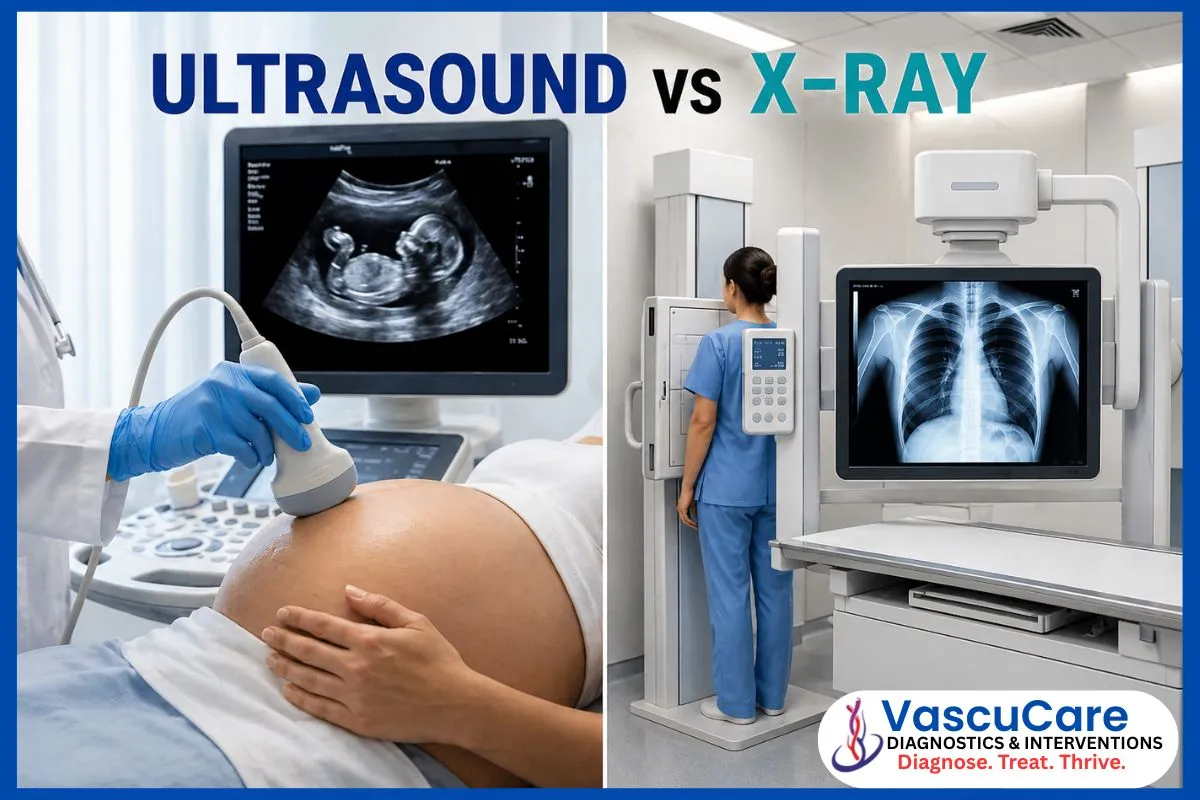
Medical imaging plays a crucial role in diagnosing a wide range of health conditions. Among the most commonly used diagnostic tools are X-rays and Ultrasound scans. While both are widely available and effective, they serve different purposes and are used in different situations.
If you’re unsure which test is right for you, this guide will help you understand the difference, uses, benefits, and limitations of each method.
For accurate and reliable imaging services, choosing a trusted center like VascuCare Diagnostics & Interventions ensures precise diagnosis and expert care.
What is an X-Ray?
An X-ray is an imaging technique that uses radiation to capture images of structures inside the body, especially bones.
How It Works:
• X-ray beams pass through the body
• Dense structures like bones absorb more radiation
• This creates a clear image of bones and certain tissues
What is an Ultrasound?
Ultrasound uses high-frequency sound waves to create real-time images of organs and soft tissues.
How It Works:
• A device called a transducer sends sound waves into the body
• The waves bounce back and create images on a screen
• No radiation involved
Key Differences Between X-Ray and Ultrasound
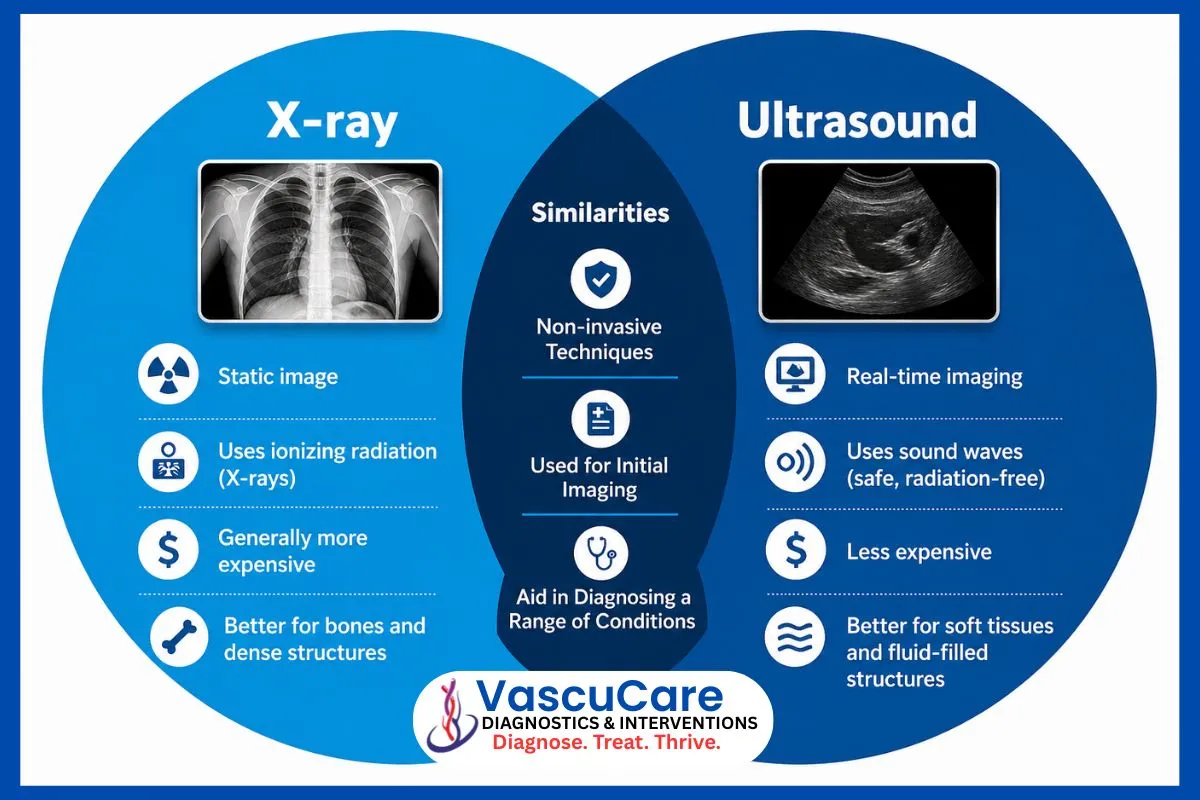
Feature | X-Ray | Ultrasound
Technology | Uses radiation | Uses sound waves
Best For | Bones & fractures | Soft tissues & organs
Safety | Low radiation exposure | Completely safe
Image Type | Static image | Real-time imaging
Pregnancy Use | Usually avoided | Safe and preferred
Uses of X-Ray
X-rays are best suited for:
• Detecting bone fractures
• Identifying joint dislocations
• Diagnosing chest infections (like pneumonia)
• Checking dental problems
• Evaluating lung conditions
✔ Quick and widely available
Uses of Ultrasound
Ultrasound is ideal for examining soft tissues and organs:
• Pregnancy scans
• Abdominal organs (liver, kidney, gallbladder)
• Thyroid and breast evaluation
• Blood flow studies (Doppler)
• Guidance for procedures like injections
✔ Real-time imaging makes it highly versatile
Which is Better: X-Ray or Ultrasound?
There is no one-size-fits-all answer. The choice depends on your medical condition.
Choose X-Ray If:
• You have a suspected bone injury
• You need chest or lung evaluation
• Quick imaging is required
Choose Ultrasound If:
• You need to examine soft tissues or organs
• You are pregnant
• You require real-time imaging
• You want a radiation-free option
✔ Doctors decide the best test based on your symptoms
Safety Comparison
• X-Ray: Uses low levels of radiation; generally safe but limited during pregnancy
• Ultrasound: Completely safe and radiation-free; suitable for all age groups
Advantages of X-Ray
• Fast and widely available
• Excellent for bone imaging
• Cost-effective
Advantages of Ultrasound
• No radiation exposure
• Real-time imaging
• Safe for repeated use
• Useful for guiding procedures
Limitations of Both
X-Ray Limitations:
• Not ideal for soft tissues
• Involves radiation
Ultrasound Limitations:
• Cannot clearly image bones or air-filled organs
• Image quality depends on operator skill
Why Choose a Trusted Diagnostic Center?
Accurate imaging depends not just on the technology but also on the expertise of the professionals.
VascuCare Diagnostics & Interventions offers:
• Advanced imaging technology
• Skilled technicians and specialists
• Accurate and reliable reports
• Patient-friendly services
Choosing the right center ensures better diagnosis and effective treatment planning.
Conclusion
Both X-ray and ultrasound are essential diagnostic tools, each with its own strengths and applications. The right choice depends on the condition being evaluated.
While X-rays are ideal for bones and structural issues, ultrasound is better suited for soft tissues and real-time imaging. Consulting a healthcare professional ensures you undergo the most appropriate test.
For accurate and dependable imaging services, VascuCare Diagnostics & Interventions is a trusted choice for patients seeking quality care.
Frequently Asked Questions (FAQs)
1. What is the main difference between X-ray and ultrasound?
X-rays use radiation to image bones, while ultrasound uses sound waves to view soft tissues and organs safely.
2. Which is safer, X-ray or ultrasound?
Ultrasound is safer as it does not involve radiation, making it suitable for pregnant women and repeated use.
3. Can ultrasound replace X-ray?
No, both serve different purposes, and one cannot completely replace the other in medical diagnosis.
4. Which test is better for bone injuries?
X-ray is the preferred method for detecting fractures and bone-related issues.
5. Is ultrasound useful for detecting tumors?
Yes, ultrasound can help detect and evaluate certain soft tissue tumors and abnormalities.
6. Are X-rays harmful?
X-rays involve minimal radiation and are generally safe when used appropriately under medical supervision.
7. How long does each test take?
X-rays take a few minutes, while ultrasound may take slightly longer depending on the area being examined.
8. Can I eat before an ultrasound?
It depends on the type of ultrasound; some may require fasting for accurate results.
9. Which test is more affordable?
Both are generally affordable, but costs vary depending on the type and location of the test.
10. Where can I get reliable imaging tests done?
You can visit VascuCare Diagnostics & Interventions for accurate and professional diagnostic services.