
- Oct 5, 2026
- Uncategorized
- 0 Comments
Uterine fibroids do not affect every woman in the same way. One woman may experience heavy periods and anemia, another may have pelvic pressure, while someone else may notice frequent urination or symptoms that feel similar to an overactive bladder.
When fibroids begin affecting daily life, treatment may become necessary. This often leads to an important question:
Should fibroids be treated with surgery, or can Uterine Artery Embolization provide a minimally invasive alternative?
Both approaches can be effective for appropriately selected patients, but they work in fundamentally different ways.
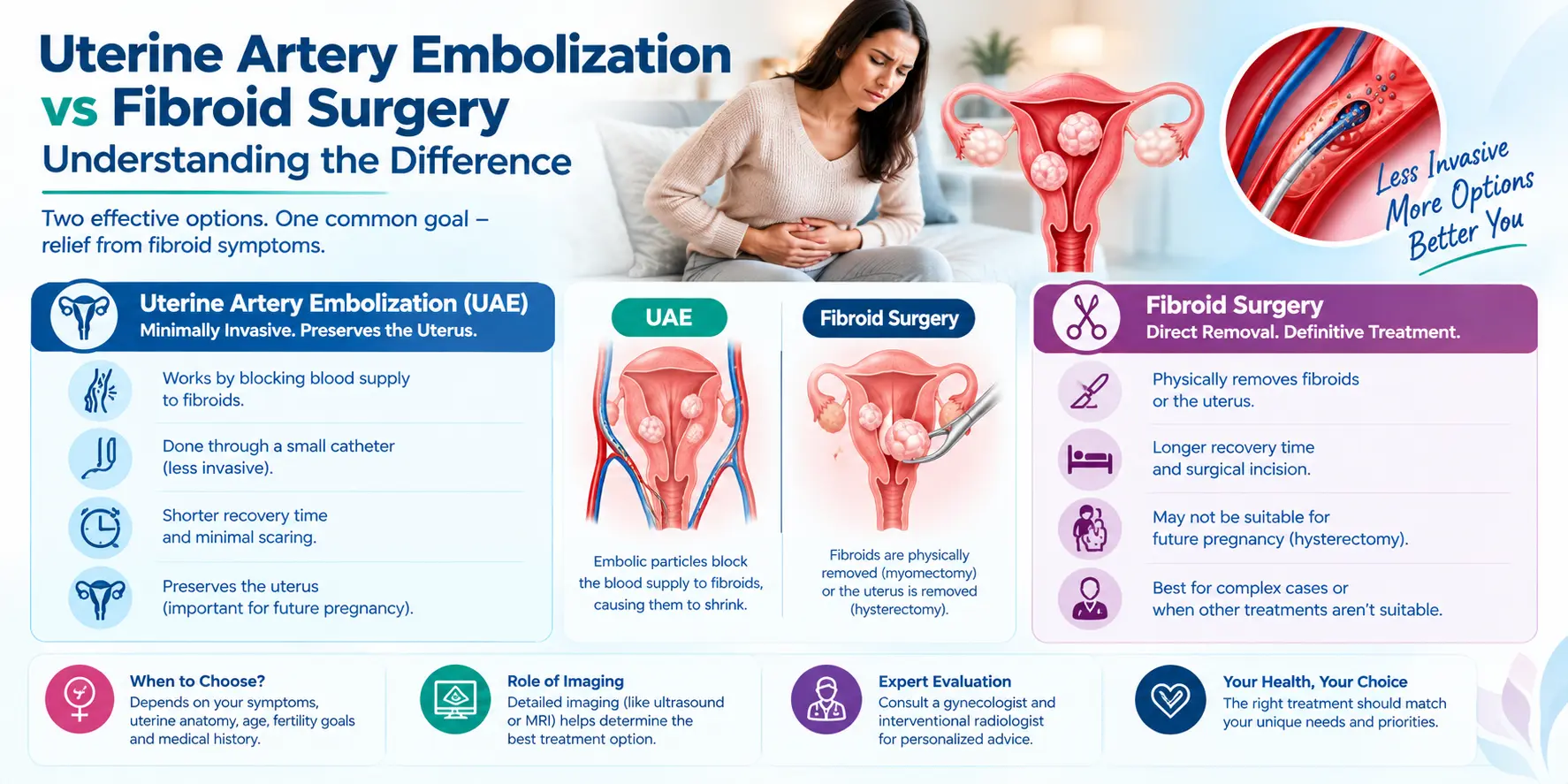
Uterine Artery Embolization (UAE) treats fibroids through their blood supply, while fibroid surgery physically removes fibroids or, in some cases, the uterus.
Understanding this difference can help patients have a more informed discussion with their gynecologist and interventional radiologist. Women searching for a Uterine Fibroid Embolization Doctor In Jaipur can discuss their symptoms, imaging findings, and treatment preferences with an appropriately qualified specialist.
First, Are the Fibroids Actually Causing Your Symptoms?
Finding fibroids on an ultrasound does not automatically mean they need treatment.
Many fibroids cause no significant symptoms and can simply be monitored.
Treatment becomes more relevant when fibroids are associated with problems such as:
-
Heavy or prolonged menstrual bleeding
-
Anemia
-
Pelvic pressure or fullness
-
Abdominal enlargement
-
Pelvic discomfort
-
Frequent urination
-
Constipation
-
Pressure on surrounding organs
-
Significant effects on quality of life
The location, number, and size of fibroids can influence the type of symptoms a woman experiences.
Why Can Fibroids Cause Frequent Urination?
The uterus sits close to the bladder.
When fibroids enlarge the uterus or grow in a position that places pressure on the bladder, bladder capacity or sensation may be affected. A woman may feel the need to urinate more frequently, including at night.
This can sometimes resemble symptoms associated with an overactive bladder.
However, frequent urination should not automatically be blamed on fibroids. Urinary tract infections, diabetes, bladder disorders, pelvic-floor problems, medications, and other conditions may cause similar symptoms.
If urinary symptoms are prominent, identifying their actual cause is important before assuming that fibroid treatment will resolve them.
How Does Fibroid Surgery Work?
There is more than one type of fibroid surgery.
Myomectomy removes fibroids while preserving the uterus. The surgical technique may vary depending on fibroid size, number, and location.
Hysterectomy removes the uterus and therefore provides definitive treatment for uterine fibroids, but pregnancy is no longer possible afterward.
These procedures are different from UAE because the fibroid or uterus is physically removed rather than treated through its blood supply.
The most appropriate surgical option depends heavily on the patient’s symptoms, anatomy, age, fertility goals, and medical history.
How Is Uterine Artery Embolization Different?
Uterine Artery Embolization, also called Uterine Fibroid Embolization (UFE) in the context of fibroid treatment, approaches the problem from inside the blood vessels.
Fibroids require blood flow to maintain their tissue.
During UAE, an interventional radiologist inserts a small catheter into an artery, usually through a small vascular access site. Using imaging guidance, the catheter is carefully navigated toward the uterine arteries.
Tiny embolic particles are then delivered to reduce blood flow supplying the fibroids.
After their blood supply is reduced, the fibroids can gradually shrink, which may improve symptoms over time.
No large abdominal incision is required for the embolization itself.
Women looking for a Uterine Artery Embolization Doctor In Jaipur should discuss whether this image-guided treatment is suitable for their individual condition.
UAE Treats Blood Supply; Myomectomy Removes Tissue
This is the easiest way to understand the difference.
Myomectomy: Find the fibroid and surgically remove it.
UAE: Find the arteries feeding the fibroids and reduce their blood supply.
Because the treatment mechanisms are different, recovery, risks, symptom-improvement timelines, and suitability are also different.
UAE should therefore not simply be described as “surgery without an incision.” It is an entirely different treatment strategy.
What If There Are Multiple Fibroids?
The number of fibroids can influence treatment planning.
With surgery, individual fibroids may need to be removed depending on their number, size, and location.
UAE works through the uterine arterial circulation and may treat multiple fibroids during the same procedure when the anatomy and clinical situation are appropriate.
However, having multiple fibroids does not automatically make UAE the preferred treatment.
Detailed imaging is important for deciding whether embolization is technically and clinically appropriate.
Is Recovery Different?
Recovery is one reason patients frequently compare UAE with surgery.
Because UAE uses a small vascular access point rather than a large surgical incision, appropriately selected patients may experience a different recovery profile from major open surgery.
However, UAE still produces a biological response.
As fibroid tissue loses blood supply, patients can experience pelvic cramping, discomfort, fatigue, nausea, or other post-embolization symptoms, particularly during the early recovery period.
Pain management and post-procedure monitoring therefore remain important.
“Minimally invasive” does not mean “no recovery.”
Does UAE Work Immediately?
Not in the same way as surgical removal.
During myomectomy, selected fibroids are physically removed during the operation.
After UAE, the fibroids remain in place initially but begin undergoing changes because their blood supply has been reduced.
Shrinkage and symptom improvement occur gradually over the following weeks and months.
For women with heavy menstrual bleeding, pelvic pressure, or bladder-related pressure symptoms, improvement may therefore follow different timelines.
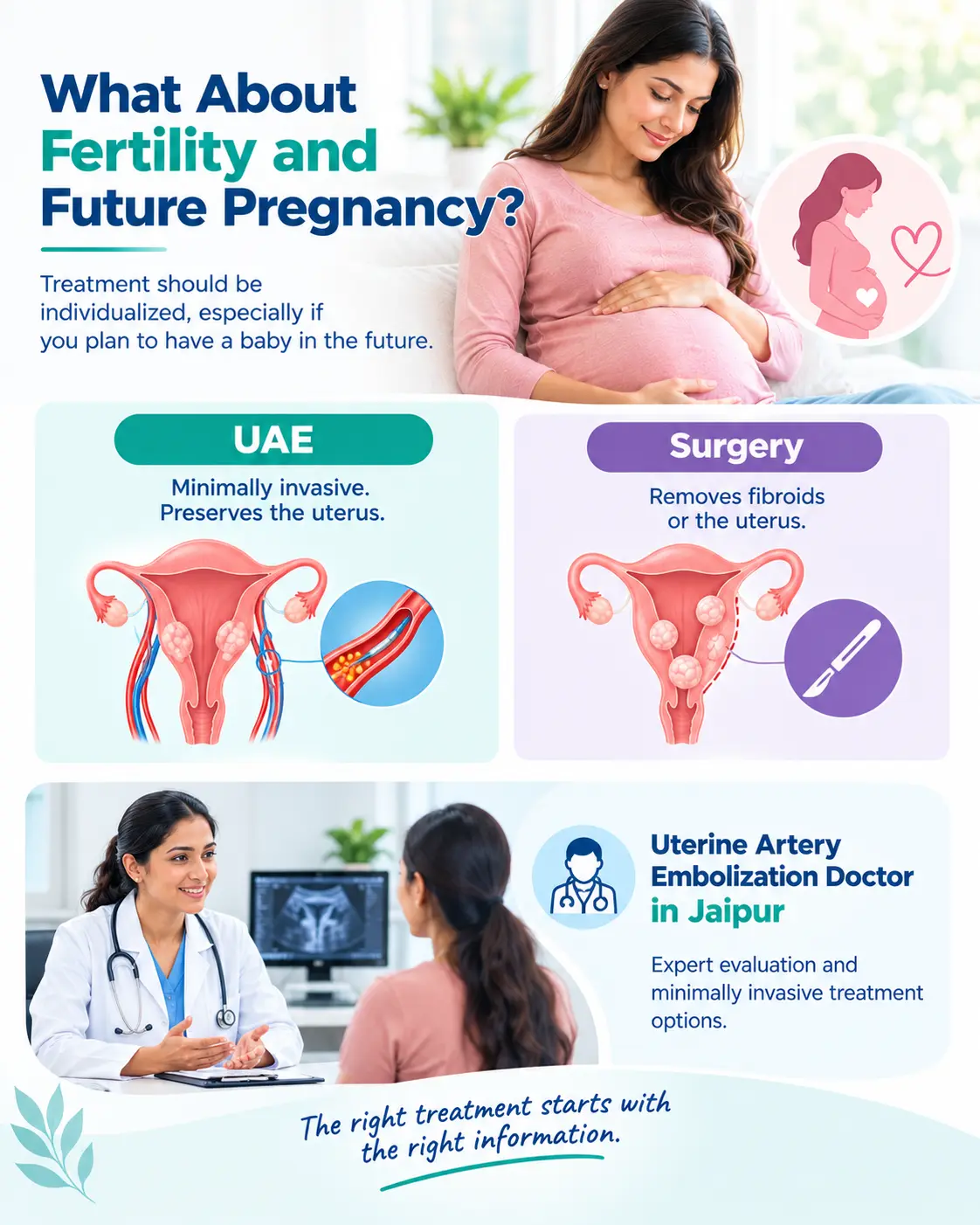
What About Fertility and Future Pregnancy?
This is one of the most important areas where treatment should be individualized.
Women who wish to become pregnant in the future should clearly discuss their fertility plans before choosing any fibroid procedure.
Myomectomy is often considered when uterine preservation and future fertility are major priorities, depending on fibroid characteristics and the individual patient.
Pregnancy after UAE can occur, but fertility and pregnancy considerations following embolization are more complex. UAE should not automatically be presented as equivalent to myomectomy for a woman actively planning future pregnancy.
Discussion with the appropriate gynecologist and interventional radiologist is essential.
Is UAE Better Than Fibroid Surgery?
There is no universal answer.
A woman who wants uterine preservation, has symptomatic fibroids, and is an appropriate embolization candidate may value the minimally invasive nature of UAE.
Another patient may have fibroid characteristics, fertility goals, or other gynecological factors that make surgery more appropriate.
Instead of asking:
“Which treatment is better?”
Ask:
“Which treatment best matches my fibroid anatomy, symptoms, reproductive plans, medical condition, and priorities?”
That question leads to a more personalized decision.
Uterine Artery Embolization Doctor in Jaipur
At VascuCare Diagnostics & Interventions, women with symptomatic uterine fibroids can be evaluated for minimally invasive image-guided treatment when appropriate.
Dr. Rakesh Kumawat – Best Interventional Radiologist and Pain Management Specialist In Jaipur provides interventional radiology procedures, including evaluation for Uterine Artery Embolization in Jaipur.
UAE can offer an important alternative for selected women who want to explore fibroid treatment without conventional major surgery.
But the best treatment decision begins before the procedure—with accurate imaging, understanding which symptoms are actually caused by fibroids, evaluating fertility priorities, and comparing all suitable options.
Frequently Asked Questions (FAQs)
1. What is the main difference between UAE and fibroid surgery?
Fibroid surgery such as myomectomy physically removes fibroids. UAE reduces their blood supply through catheter-based embolization, causing the fibroids to gradually shrink.
2. Can fibroids cause overactive bladder-like symptoms?
Yes. Large or strategically positioned fibroids can press against the bladder and contribute to frequent or urgent urination. However, true overactive bladder and several other conditions can cause similar symptoms, so proper evaluation is important.
3. Can Uterine Artery Embolization treat multiple fibroids?
UAE may treat multiple fibroids through their arterial blood supply in appropriately selected patients. Suitability depends on imaging findings, fibroid characteristics, symptoms, and other clinical factors.
4. Is UAE recommended for women planning pregnancy?
Future fertility requires individualized discussion. Although pregnancy after UAE can occur, myomectomy may be considered in many women for whom future pregnancy is a major priority. A gynecologist and interventional radiologist should evaluate the individual situation.
5. How do I decide between UAE and fibroid surgery?
The decision should consider fibroid size, number and location, severity of symptoms, age, medical history, fertility plans, previous treatment, imaging findings, recovery priorities, and personal preferences. Comparing options with both gynecological and interventional expertise can help determine the appropriate treatment pathway.