- Sep 7, 2026
- Varicose Vein
- 0 Comments
Varicose Vein Surgeon In Jaipur often develop gradually. Many people first notice a few visible veins on their legs and assume they are only a cosmetic concern. However, changes in the veins can sometimes indicate an underlying problem with blood circulation. Recognizing the early signs of varicose veins can help you seek medical evaluation before symptoms become more troublesome.
Varicose veins develop when valves inside the veins do not function effectively, allowing blood to pool and increasing pressure within the veins. Over time, veins may become enlarged, twisted, or clearly visible beneath the skin. Symptoms can range from mild heaviness to persistent swelling, skin changes, and discomfort.
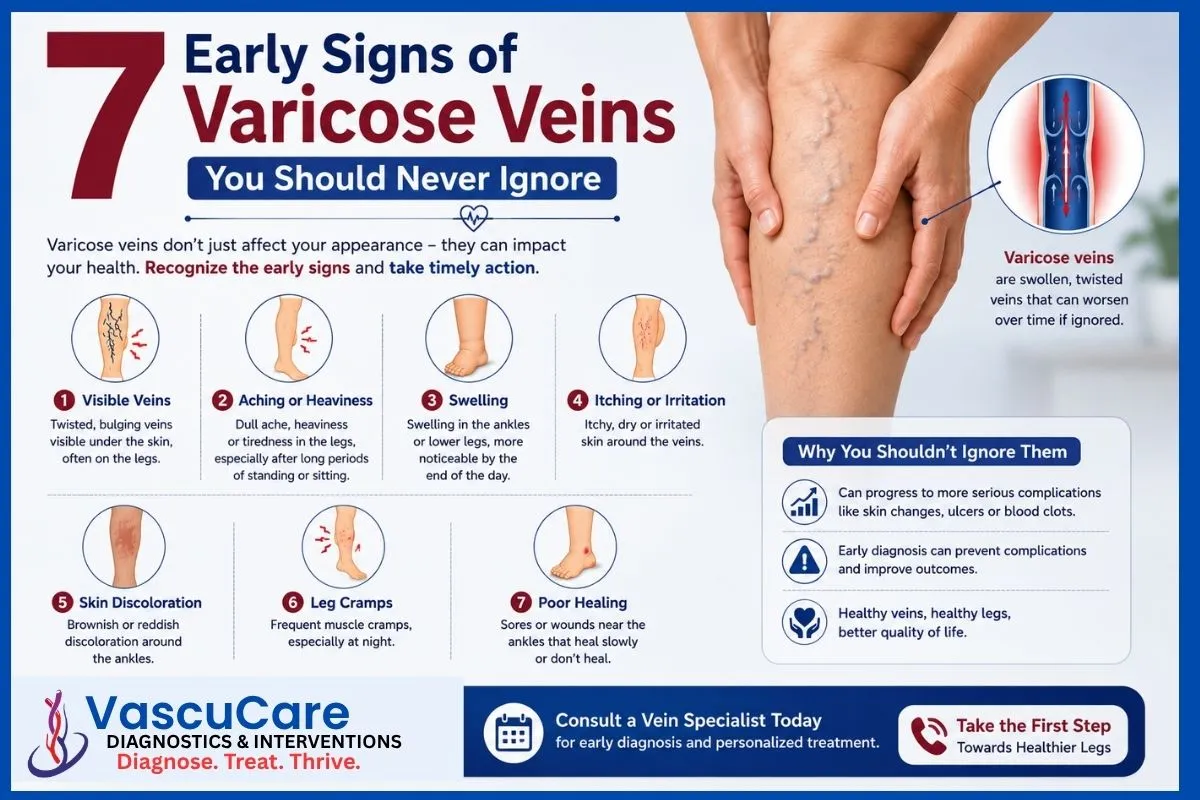
Here are seven early signs of varicose veins you should pay attention to.
-
Visible Blue or Purple Veins on the Legs
One of the earliest and most recognizable signs is the appearance of blue, purple, or enlarged veins beneath the skin. They may initially appear as small lines before becoming more prominent or twisted.
Visible veins do not always mean that treatment is required. However, if they are increasing in size or accompanied by pain, swelling, or heaviness, consulting a vein specialist doctor in Jaipur can help determine whether venous insufficiency is present.
-
Heavy or Tired Legs
Do your legs feel unusually heavy after standing or sitting for several hours? This may be an early symptom of poor venous circulation.
When vein valves do not efficiently return blood toward the heart, blood can collect in the lower legs. This increased pressure may produce a feeling of heaviness, tiredness, or discomfort, particularly toward the end of the day.
3. Swelling Around the Ankles and Lower Legs
Recurring swelling around the ankles or lower legs should not always be dismissed as simple tiredness.
Varicose Vein Doctor In Jaipur and chronic venous insufficiency can contribute to fluid accumulation in the tissues. The swelling may be mild in the morning and become more noticeable after prolonged standing.
Because leg swelling can have several possible causes, an accurate diagnosis is important before starting treatment.
-
Aching, Burning or Throbbing Leg Pain
Varicose veins do not always cause severe pain initially. Some people experience mild aching, burning, throbbing, or tenderness along affected veins.
Symptoms may worsen after standing for extended periods and improve after resting or elevating the legs. Persistent discomfort should be assessed by a doctor rather than repeatedly managed with temporary home remedies.
-
Frequent Leg Cramps at Night
Nighttime leg cramps can have many causes, but venous circulation problems may be one possible contributor.
People with varicose veins may report cramping, restlessness, or uncomfortable sensations in their legs at night. If cramps occur along with visible veins, ankle swelling, or leg heaviness, a vascular assessment may be useful.
6. Itching Around Visible Veins
Itching around the lower legs or near enlarged veins can be another overlooked symptom.
Persistent venous pressure may affect the surrounding skin and tissues. Over time, patients can develop dryness, irritation, itching, or other skin changes.
Avoid repeatedly scratching the affected area, as damaged skin can become more vulnerable to complications.
7. Changes in Skin Colour or Texture
Skin changes around the ankle or lower leg deserve particular attention. The skin may gradually become darker, dry, irritated, hardened, or discoloured.
These changes can occur when venous disease progresses and prolonged pressure affects the surrounding tissues. More advanced venous disease can sometimes lead to difficult-to-heal wounds or venous ulcers.
Early assessment can help identify the underlying problem before it reaches this stage.
How Are Varicose Veins Diagnosed?
Diagnosis generally begins with a clinical examination. A Ultrasound Centre In Vaishali Nagar may be recommended to evaluate blood flow and determine whether the valves inside the veins are functioning properly.
This examination can help identify reflux, affected veins, and the extent of venous insufficiency. Treatment can then be planned according to the patient’s symptoms and Doppler findings.
Can Varicose Veins Be Treated Without Open Surgery?
Modern management of varicose veins has changed considerably. Not every patient requires traditional open vascular surgery.
Depending on the type and severity of venous disease, minimally invasive procedures such as varicose vein laser treatment may be considered. Endovenous laser treatment works by closing the problematic vein using controlled laser energy. Blood is subsequently redirected through healthier veins.
These procedures are generally performed through small access points rather than large surgical incisions. Suitability, however, must be determined after proper vascular evaluation.
When Should You See a Varicose Vein Doctor?
You should consider consulting a specialist if visible veins are increasing, your legs regularly feel heavy or painful, ankle swelling keeps returning, or you notice itching and skin discolouration.
Sudden swelling of one leg, significant pain, redness, warmth, chest pain, or shortness of breath requires prompt medical attention because these symptoms may indicate a more urgent condition.
At VascuCare Diagnostics & Interventions, patients can undergo evaluation for varicose veins and other vascular conditions. Dr. Rakesh Kumawat – Best Interventional Radiologist and Pain Management Specialist In Jaipur provides image-guided and minimally invasive treatment options for appropriately selected patients.
Early diagnosis can help determine whether monitoring, lifestyle changes, or medical treatment is the most appropriate next step.
Frequently Asked Questions (FAQs)
1. What are the first signs of varicose veins?
Early signs may include visible blue or purple veins, leg heaviness, mild swelling, aching, itching, and nighttime leg cramps.
2. Are varicose veins dangerous?
Many Varicose Vein Laser Treatment In Jaipur remain uncomplicated, but untreated venous insufficiency can sometimes progress to skin changes, inflammation, bleeding, or venous ulcers.
-
Which test is used to diagnose varicose veins?
Colour Doppler ultrasound is commonly used to assess blood flow, vein structure, and valve function.
-
Can varicose veins be treated without surgery?
Yes. Selected patients may be suitable for minimally invasive treatments such as endovenous laser therapy. The appropriate treatment depends on clinical and Doppler findings.
-
When should I consult a vein specialist?
Consult a specialist when visible veins are accompanied by persistent pain, heaviness, recurrent swelling, itching, skin changes, or worsening symptoms.