- Sep 14, 2026
- Varicose Vein
- 0 Comments
Varicose Vein Laser Treatment In Jaipur are often recognized as blue, purple, enlarged, or twisted veins visible beneath the skin of the legs. Because they affect appearance, many people assume they are only a cosmetic issue. However, varicose veins can sometimes be a sign of an underlying circulation problem known as chronic venous insufficiency.
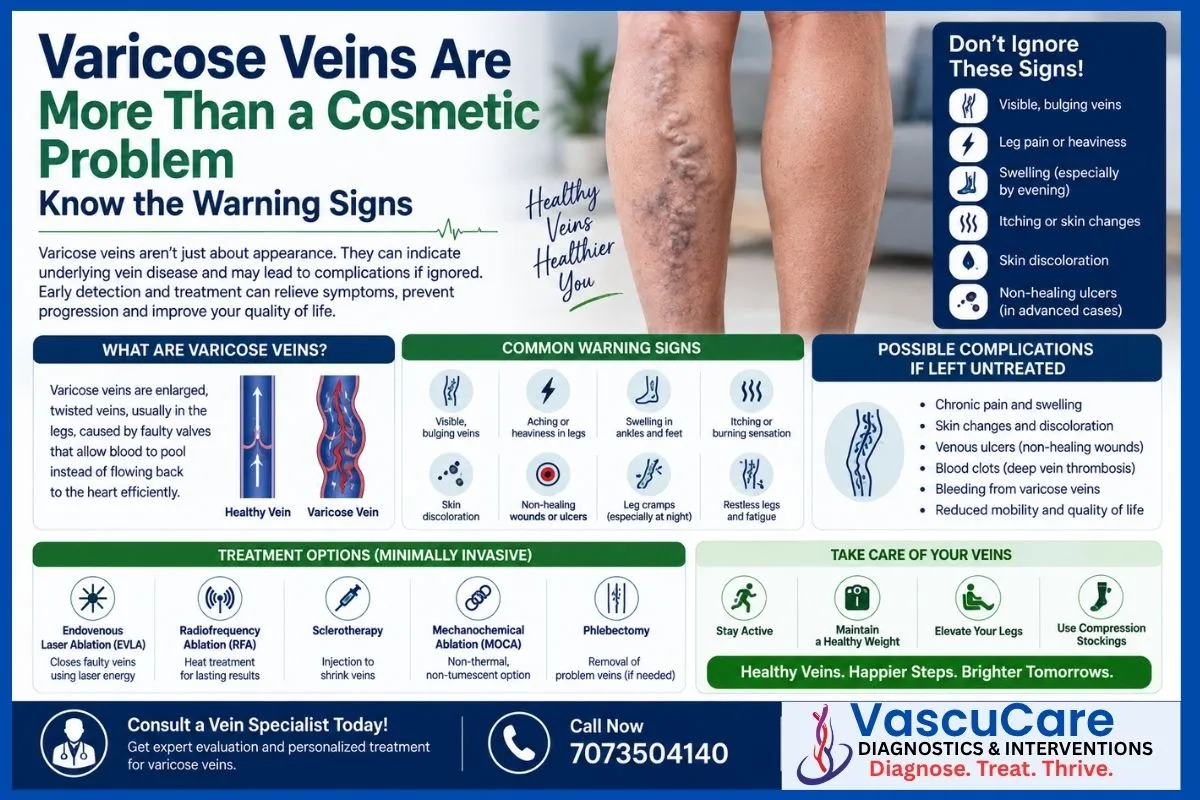
When valves inside the leg veins do not work effectively, blood can flow backward and collect in the veins. This increases venous pressure and can gradually cause symptoms such as leg heaviness, aching, swelling, itching, skin changes, and, in advanced cases, venous ulcers.
Recognizing these warning signs and seeking an appropriate vascular evaluation can help determine whether you need monitoring, lifestyle measures, or varicose vein treatment.
Why Do Varicose Veins Develop?
Veins carry blood from the legs back toward the heart. Small one-way valves inside these veins help keep blood moving in the correct direction.
When these valves become weak or damaged, some blood can flow backward and accumulate. This condition is known as venous reflux. Increased pressure can then cause superficial veins to enlarge and become twisted.
Factors associated with an increased likelihood of developing varicose veins include increasing age, family history, pregnancy, excess body weight, and spending long periods standing or sitting.
What Are the Warning Signs of Varicose Veins?
Not every visible vein causes significant symptoms. However, certain changes should not simply be dismissed as cosmetic.
- Persistent Leg Heaviness
A feeling of heavy or tired legs, particularly toward the end of the day, can occur with venous insufficiency.
Symptoms may become more noticeable after prolonged standing and improve after resting or elevating the legs.
- Aching or Throbbing Leg Pain
Varicose veins can be associated with aching, burning, throbbing, or tenderness in the legs.
If discomfort repeatedly develops around enlarged veins or begins interfering with work, walking, or sleep, medical evaluation may be appropriate.
- Swelling Around the Ankles
Recurring ankle and lower-leg swelling is an important symptom to notice.
Poor venous return can contribute to fluid accumulating in the tissues, causing swelling that may become more pronounced later in the day.
Because leg swelling can also occur due to several other medical conditions, its cause should be properly assessed.
- Itching and Skin Irritation
Persistent itching around varicose veins may occur when chronic venous pressure begins affecting the surrounding skin.
Some people develop dryness, irritation, or eczema-like changes around the lower leg and ankle.
Rather than repeatedly applying creams without knowing the cause, persistent skin symptoms should be evaluated.
- Darkening or Hardening of the Skin
As venous disease progresses, the skin around the lower leg or ankle may become darker, thicker, or harder.
These changes can indicate longer-standing venous hypertension and should not be considered merely a cosmetic concern.
- Bleeding From a Varicose Vein
Enlarged superficial veins can occasionally bleed, particularly if the skin over them is thin or injured.
Bleeding from a varicose vein requires medical attention. Significant or uncontrolled bleeding should be treated urgently.
- A Wound That Is Not Healing
Advanced chronic venous insufficiency can sometimes cause venous leg ulcers, often around the ankle.
These wounds may be slow to heal and can significantly affect quality of life. Treatment usually requires addressing both the wound and the underlying venous problem.
How Are Varicose Veins Diagnosed?
Evaluation usually begins with a clinical examination by a vein specialist.
A Colour Doppler Sonography In Vaishali Nagar or duplex ultrasound may then be performed to examine the veins and blood flow. It can identify venous reflux, determine which veins are affected, and help map the abnormal circulation before treatment.
This information is important because the most visible vein may not necessarily be the source of the underlying problem.
Can Varicose Veins Be Treated Without Open Surgery?
Yes. Modern varicose vein treatment often includes minimally invasive procedures rather than conventional open surgery.
One commonly used option is varicose vein laser treatment, also called endovenous laser ablation. A thin laser fibre is placed inside the problematic vein under ultrasound guidance. Controlled thermal energy closes the abnormal vein, allowing blood to redirect through healthier veins.
Depending on the patient’s venous anatomy, symptoms, and Doppler findings, other minimally invasive treatments may also be considered.
Not every patient requires the same procedure, making proper Doppler assessment and treatment planning important.
When Should You Consult a Varicose Vein Doctor?
Consider consulting a Varicose Vein Doctor in Jaipur if you experience persistent leg heaviness, recurring swelling, pain around visible veins, itching, skin discolouration, or progressive enlargement of varicose veins.
Prompt medical attention is particularly important if a vein starts bleeding, a wound develops, or the leg suddenly becomes significantly swollen, red, warm, or painful.
Sudden one-sided leg swelling or pain can have causes other than varicose veins, including potentially serious vascular conditions, and should not be self-diagnosed.
Varicose Vein Treatment at VascuCare Diagnostics & Interventions
At VascuCare Diagnostics & Interventions, patients with symptoms of venous disease can undergo clinical assessment and Colour Doppler evaluation to identify the underlying cause.
Dr. Rakesh Kumawat – Best Interventional Radiologist and Pain Management Specialist In Jaipur provides image-guided and minimally invasive treatment options for appropriately selected patients with varicose veins and other vascular conditions.
The important message is simple: Varicose Vein Laser Treatment In Jaipur are not always just about appearance. When visible veins are accompanied by pain, swelling, skin changes, or other symptoms, identifying the underlying venous problem early can help guide appropriate treatment.
Frequently Asked Questions (FAQs)
-
Are varicose veins only a cosmetic problem?
No. Some varicose veins cause no significant symptoms, but others are associated with chronic venous insufficiency, pain, swelling, skin changes, bleeding, or venous ulcers.
-
What are the warning signs of worsening varicose veins?
Increasing pain, persistent swelling, itching, skin discolouration, hardening of the skin, bleeding, and non-healing wounds are important warning signs.
-
Which test is used to diagnose varicose veins?
Colour Doppler or duplex ultrasound is commonly used to evaluate blood flow, venous reflux, valve function, and the veins involved.
-
Can varicose veins be treated without surgery?
Yes. Many patients can be treated using minimally invasive techniques such as endovenous laser treatment, depending on their symptoms and Doppler findings.
-
When should I visit a vein specialist?
You should consider evaluation when Varicose Vein Laser Treatment In Jaipur cause persistent pain, heaviness, swelling, itching, skin changes, or interfere with everyday activities. Sudden severe swelling, redness, or pain requires prompt medical assessment.