
- Aug 31, 2026
- Diagnostics
- 0 Comments
Diagnostic Centre In Vaishali Nagar Good health is not only about seeking medical care when symptoms appear. Many common health conditions, including diabetes, anemia, high cholesterol, thyroid disorders, liver problems, and kidney disease, may develop gradually without obvious warning signs. Regular health tests can help identify certain abnormalities early and allow timely medical evaluation.
At VascuCare Diagnostics & Interventions, diagnostic testing can support preventive healthcare, early diagnosis, and monitoring of existing conditions. The tests you need and how often you need them should always depend on your age, symptoms, medical history, lifestyle, and doctor’s advice.
Why Are Regular Health Tests Important?
Some diseases remain silent during their early stages. A person may feel healthy even while blood sugar, cholesterol, thyroid hormones, or other health markers are outside the normal range.
Routine diagnostic tests may help:
• Detect certain health problems early
• Identify risk factors
• Monitor chronic diseases
• Evaluate unexplained symptoms
• Check organ function
• Assess response to treatment
• Guide further medical investigations
Preventive testing does not guarantee that every disease will be detected, but it can provide valuable information about your overall health.
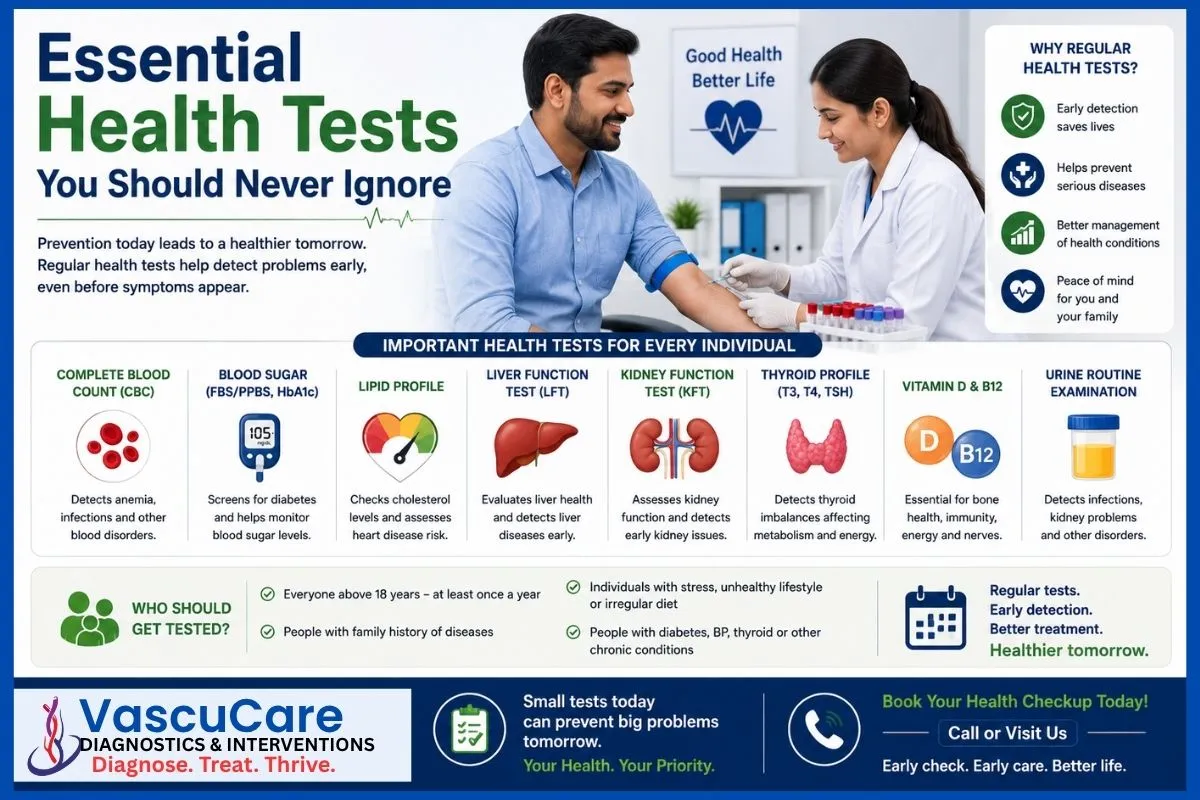
1. Complete Blood Count (CBC)
A Complete Blood Count is one of the most commonly performed blood tests. It measures red blood cells, white blood cells, hemoglobin, platelets, and related parameters.
A CBC may help doctors investigate conditions such as anemia and infection and evaluate symptoms including weakness, tiredness, or persistent fever.
If you frequently feel exhausted, dizzy, or unusually weak, your doctor may recommend a CBC as part of the evaluation.
2. Blood Sugar and HbA1c
Diabetes can sometimes develop without noticeable symptoms. Blood glucose testing is therefore an important part of health screening for people with relevant risk factors.
Common tests include:
Fasting Blood Sugar: Measures glucose after a period without food.
HbA1c: Provides information about average blood glucose levels over approximately the previous two to three months.
Early identification of abnormal glucose levels can allow appropriate lifestyle changes and medical management.
3. Lipid Profile
A Lipid Profile measures different fats in the blood, including cholesterol and triglycerides.
Results commonly include total cholesterol, LDL cholesterol, HDL cholesterol, and triglycerides.
These values are considered alongside factors such as age, blood pressure, diabetes, smoking history, and family history when evaluating cardiovascular risk.
4. Liver Function Tests
The liver performs several important functions, including processing nutrients, producing proteins, and helping remove substances from the body.
A Liver Function Test (LFT) measures different enzymes, proteins, and other markers that can provide information about liver health.
Doctors may recommend LFTs for symptoms or conditions involving the liver or for monitoring certain medications and medical conditions.
5. Kidney Function Tests
Kidney problems may not always cause obvious symptoms during their early stages.
Tests such as serum creatinine and estimated glomerular filtration rate (eGFR), along with urine testing when appropriate, help doctors assess kidney function.
People with diabetes, hypertension, or other risk factors may require periodic kidney monitoring based on medical advice.
6. Thyroid Function Tests
The thyroid gland influences metabolism and many body functions. Both an underactive and overactive thyroid can cause a variety of symptoms.
Possible signs include:
• Unexplained weight changes
• Fatigue
• Changes in heart rate
• Heat or cold intolerance
• Changes in bowel habits
• Menstrual changes
Tests such as TSH and, when indicated, thyroid hormones can help assess thyroid function.
7. Urine Tests
A routine urine examination can provide useful information about the urinary system and may identify abnormalities such as blood, protein, glucose, or signs suggestive of infection.
Urine testing may be recommended for urinary symptoms, diabetes monitoring, kidney evaluation, or as part of certain health assessments.
8. Vitamin and Nutritional Tests
Vitamin deficiencies can sometimes contribute to symptoms such as fatigue or weakness. However, routine testing of every vitamin is generally unnecessary.
Your doctor may recommend specific investigations, such as Vitamin B12, Vitamin D, iron studies, or ferritin, when symptoms, dietary history, or other findings suggest a possible deficiency.
Testing should be targeted rather than performed without a clinical reason.
9. ECG
An Electrocardiogram (ECG) records the electrical activity of the heart.
It may be recommended for symptoms such as chest discomfort, palpitations, dizziness, fainting, or suspected heart rhythm abnormalities.
An ECG is quick and non-invasive, but whether you need one as part of routine screening depends on your individual cardiovascular risk and medical history.
10. Ultrasound and Sonography
Not every preventive health check requires imaging. However, ultrasound may be recommended when symptoms, examination findings, or previous test results require further evaluation.
Ultrasound Centre In Vaishali Nagar or sonography can be used to examine organs and structures such as the liver, gallbladder, kidneys, thyroid, urinary system, and pelvic organs.
Because ultrasound uses sound waves rather than ionizing radiation, it is widely used for many diagnostic purposes.
11. Colour Doppler Sonography
Colour Doppler Sonography combines ultrasound imaging with information about blood flow.
It may be recommended for:
• Varicose veins
• Persistent leg swelling
• Suspected venous insufficiency
• Certain arterial problems
• Evaluation for suspected blood clots
Colour Doppler can help doctors evaluate the direction and pattern of blood flow through arteries and veins.
Don’t Follow a One-Size-Fits-All Health Package
A common misconception is that everyone should undergo the same complete health package every year.
In reality, the most useful tests depend on individual risk.
A healthy young adult may require different screening from someone with diabetes, hypertension, obesity, a strong family history of disease, or persistent symptoms.
Unnecessary testing can sometimes produce incidental or borderline results that lead to additional investigations without providing meaningful benefit.
The better approach is personalized preventive screening.
How Often Should You Get Health Tests?
There is no universal schedule that applies to everyone.
Testing frequency depends on factors such as:
• Age
• Existing medical conditions
• Family history
• Lifestyle
• Previous abnormal reports
• Current medications
• Symptoms
• Individual risk factors
Someone already diagnosed with diabetes, for example, may require testing more frequently than someone without diabetes or relevant risk factors.
Your healthcare professional can recommend an appropriate screening schedule.
Diagnostic Testing at VascuCare Diagnostics & Interventions
VascuCare Diagnostics & Interventions provides diagnostic services for patients requiring preventive testing, investigation of symptoms, and monitoring of existing medical conditions.
Having access to pathology and diagnostic investigations can help patients complete doctor-recommended testing and obtain reports needed for further medical evaluation.
The most valuable health test is not necessarily the largest test package—it is the right test performed for the right patient at the right time.
Conclusion
Essential health tests can play an important role in preventive healthcare, but they should be selected according to individual needs.
Tests such as CBC, blood sugar, HbA1c, lipid profile, liver function, kidney function, thyroid testing, urine examination, ECG, ultrasound, and Colour Doppler can provide important information when medically appropriate.
At VascuCare Diagnostics & Interventions, Diagnostic Centre In Vaishali Nagar can support early evaluation and better-informed healthcare decisions. Rather than waiting for symptoms to become severe, discuss appropriate screening with your healthcare professional based on your age, medical history, and personal risk factors.
Frequently Asked Questions (FAQs)
1. Which blood tests are important for a routine health check?
Common tests may include CBC, blood sugar, HbA1c, lipid profile, liver function, kidney function, and thyroid tests, depending on individual risk.
2. Should everyone have a health check every year?
Not necessarily. The frequency and type of screening should depend on age, medical history, risk factors, and professional medical advice.
3. Can blood tests detect diseases before symptoms appear?
Some tests can identify abnormalities or risk factors before noticeable symptoms develop.
4. Is fasting necessary for every blood test?
No. Some tests require fasting while others do not. Follow the instructions provided for your specific test.
5. Why is HbA1c important?
HbA1c provides information about average blood glucose over roughly the previous two to three months and is commonly used in diabetes assessmement and monitoring.
6. When are thyroid tests recommended?
They may be recommended for relevant symptoms, abnormal examination findings, existing thyroid disease, or other clinical indications.
7. Is an ECG necessary during every health check-up?
No. Whether an ECG is appropriate depends on factors such as symptoms, age, cardiovascular risk, and medical history.
8. Why is Colour Doppler performed?
Colour Doppler Sonography In Vaishali Nagar helps evaluate blood flow through arteries and veins and can be useful in investigating certain vascular problems.
9. Are large preventive test packages always better?
No. More testing does not automatically mean better healthcare. Tests should ideally be selected according to individual medical needs.
10. Where can I get diagnostic tests?
VascuCare Diagnostics & Interventions provides diagnostic services for preventive screening, evaluation of symptoms, and doctor-recommended medical investigations.