- Jul 28, 2026
- Varicose Vein
- 0 Comments
Varicose Vein Laser Treatment In Jaipur are a common vascular condition that affects both men and women, particularly those who spend long hours standing or sitting. While many people ignore them as a cosmetic issue, untreated varicose veins can lead to chronic leg pain, swelling, skin changes, and even difficult-to-heal ulcers.
The good news is that open surgery is no longer the only treatment option. Thanks to advances in interventional radiology, most patients today can be treated with minimally invasive procedures that require only a tiny puncture instead of large surgical cuts.
If you are searching for advanced varicose veins treatment without open surgery in Jaipur, modern image-guided procedures offer effective symptom relief, faster recovery, and minimal disruption to your daily life.
Dr. Rakesh Kumawat – Best Interventional Radiologist and Pain Management Specialist in Jaipur, at VascuCare Diagnostics & Interventions, specializes in minimally invasive treatment of varicose veins using advanced diagnostic imaging and evidence-based vascular procedures tailored to each patient’s condition.
What Are Varicose Veins?
Varicose veins are enlarged, twisted, and swollen veins that usually appear in the legs. They develop when the valves inside the veins become weak or damaged, allowing blood to flow backward and collect within the veins instead of returning efficiently to the heart.
This increased pressure causes the veins to enlarge over time, leading to visible bulging veins and a variety of symptoms.
Although varicose veins often develop gradually, they should not be ignored because the underlying vein disease can continue to progress.
Common Symptoms of Varicose Veins
Symptoms may vary depending on the severity of the condition.
Common signs include:
- Bulging blue or purple veins
- Aching or throbbing legs
- Leg heaviness
- Swelling around the ankles
- Burning sensation
- Night cramps
- Itching over the veins
- Tired legs after standing
- Skin discoloration
- Non-healing venous ulcers in advanced stages
If these symptoms persist, a medical evaluation is recommended.
Why Early Treatment Is Important
Delaying treatment may increase the risk of complications such as:
- Chronic venous insufficiency
- Persistent swelling
- Skin thickening
- Hyperpigmentation
- Venous eczema
- Bleeding from varicose veins
- Venous leg ulcers
- Superficial vein inflammation
Treating Varicose Vein Doctor In Jaipur in the early stages can help relieve symptoms and reduce the likelihood of disease progression.
Why Open Surgery Is No Longer the First Choice
In the past, varicose veins were commonly treated with vein stripping surgery, which required larger incisions, hospitalization, and a longer recovery period.
Today, advances in minimally invasive vascular care have changed the treatment approach.
Modern procedures are:
- Image-guided
- Minimally invasive
- Performed through tiny punctures
- Usually completed as day-care procedures
- Associated with faster recovery
- Designed to preserve surrounding healthy tissues
For many patients, these treatments offer an effective alternative to conventional surgery.
Modern Non-Surgical Treatment Options for Varicose Veins
The choice of treatment depends on your symptoms, vein anatomy, and Colour Doppler Ultrasound findings.
Endovenous Laser Treatment (EVLT)
Endovenous Laser Treatment uses laser energy to close the damaged vein from the inside.
A thin laser fiber is inserted into the affected vein under ultrasound guidance. The laser heats the vein wall, causing it to seal. Blood is naturally redirected through healthy veins, and the treated vein is gradually absorbed by the body.
Benefits of EVLT
- Minimally invasive
- No large surgical incision
- Less post-procedure discomfort
- Faster recovery
- Day-care treatment
- Excellent cosmetic results
Radiofrequency Ablation (RFA)
Radiofrequency Ablation works on a similar principle but uses controlled radiofrequency energy to close the affected vein.
Potential advantages include:
- Smaller punctures
- Reduced tissue trauma
- Short recovery period
- Improved patient comfort
- Early return to routine activities
Ultrasound-Guided Foam Sclerotherapy
Foam sclerotherapy involves injecting a specially prepared foam into abnormal veins under ultrasound guidance.
The foam causes the vein to collapse and gradually disappear over time.
This treatment may be suitable for:
- Smaller varicose veins
- Residual veins after EVLT or RFA
- Recurrent varicose veins
- Selected venous abnormalities
Medical Adhesive (Glue) Closure
Some patients may benefit from vein closure using a specially designed medical adhesive.
Instead of heat, the adhesive seals the damaged vein, allowing blood to reroute through healthy veins.
The suitability of this technique depends on individual vein anatomy and clinical evaluation.
The Role of Colour Doppler Ultrasound
A Colour Doppler Sonography In Vaishali Nagar is the most important investigation before planning varicose vein treatment.
It helps evaluate:
- Blood flow
- Venous reflux
- Valve function
- Blocked veins
- Deep vein health
- Vein anatomy
This detailed assessment ensures that treatment is accurate and personalized.
Benefits of Minimally Invasive Varicose Vein Treatment
Compared with open surgery, modern procedures often provide several advantages.
These include:
- Tiny skin punctures instead of large cuts
- Minimal scarring
- Less pain
- Reduced blood loss
- Lower infection risk
- Quicker recovery
- Day-care treatment
- Faster return to work
- Improved cosmetic appearance
Individual results vary depending on the severity of vein disease and the treatment performed.
Why Choose VascuCare Diagnostics & Interventions?
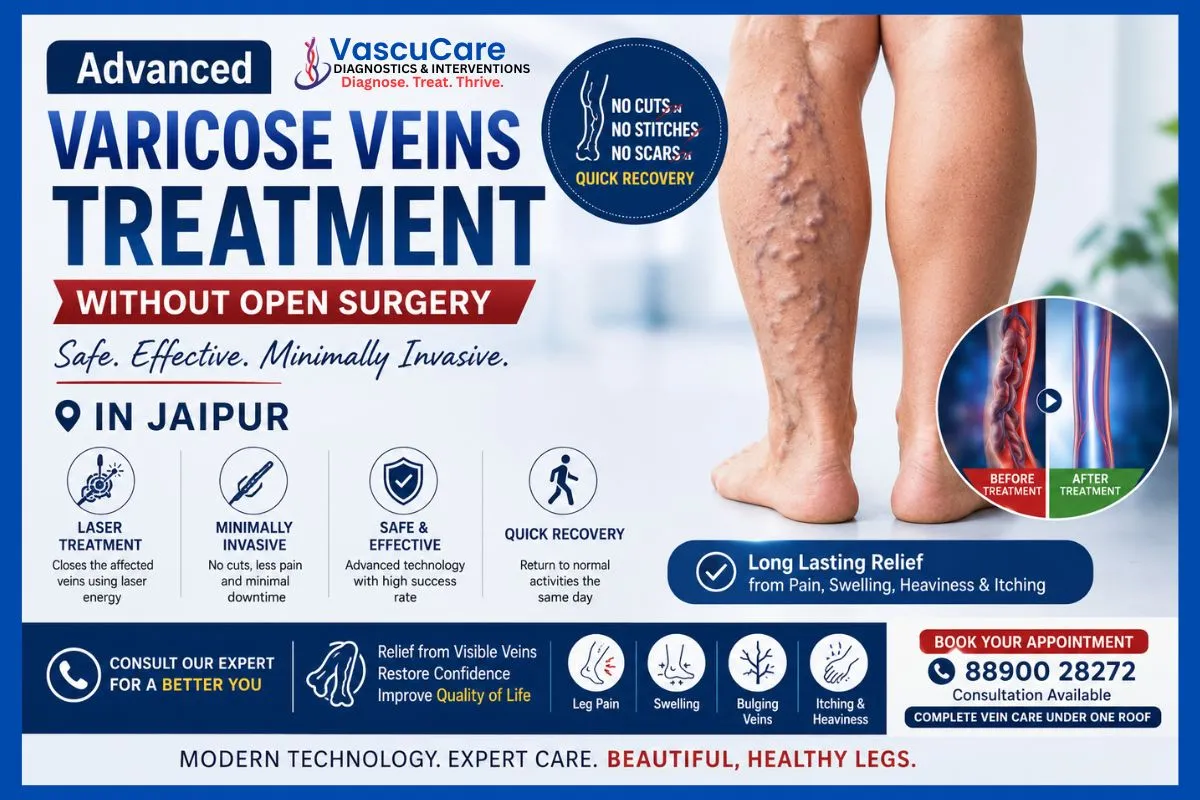
At VascuCare Diagnostics & Interventions, every patient undergoes a detailed vascular assessment before treatment is recommended.
Using advanced Colour Doppler imaging and minimally invasive interventional radiology techniques, the clinic provides personalized treatment plans designed to address the underlying cause of venous disease rather than simply improving appearance.
Patients benefit from:
- Comprehensive Colour Doppler evaluation
- Advanced minimally invasive vein treatments
- Image-guided vascular procedures
- Modern diagnostic technology
- Personalized treatment planning
- Day-care treatment options
- Long-term follow-up care
Expert Varicose Vein Care by Dr. Rakesh Kumawat
Choosing the right specialist plays a vital role in successful treatment.
Dr. Rakesh Kumawat – Best Interventional Radiologist and Pain Management Specialist in Jaipur specializes in modern, image-guided management of varicose veins without open surgery.
His patient-centered approach focuses on:
- Accurate diagnosis
- Individualized treatment planning
- Minimally invasive procedures
- Faster recovery
- Improved comfort
- Better long-term vascular health
The goal is to relieve symptoms, improve circulation, and help patients return to an active lifestyle with minimal downtime.
Frequently Asked Questions (FAQs)
1. Can varicose veins be treated without open surgery?
Yes. Many patients can be treated with minimally invasive procedures such as Endovenous Laser Treatment (EVLT), Radiofrequency Ablation (RFA), Foam Sclerotherapy, or Medical Adhesive Closure, depending on their condition.
2. What is the best non-surgical treatment for varicose veins?
The most suitable treatment depends on your symptoms, vein anatomy, and Colour Doppler findings. Your specialist will recommend the most appropriate option after evaluation.
3. Is laser treatment for varicose veins safe?
Endovenous Laser Treatment (EVLT) is a widely used, minimally invasive procedure that is generally considered safe when performed by an experienced specialist after proper assessment.
4. Why is a Colour Doppler Ultrasound required before treatment?
Colour Doppler Ultrasound identifies venous reflux, evaluates valve function, maps the affected veins, and helps guide personalized treatment planning.
5. How long does recovery take after minimally invasive treatment?
Many patients return to normal daily activities within a few days, although recovery varies depending on the procedure and individual health.
6. Will I need hospitalization?
Most minimally invasive varicose vein procedures are performed as day-care treatments, allowing patients to return home the same day.
7. Can untreated varicose veins become serious?
Yes. If left untreated, varicose veins may lead to chronic swelling, skin changes, venous ulcers, bleeding, or chronic venous insufficiency.
8. Are compression stockings enough to treat varicose veins?
Compression stockings can help relieve symptoms in some patients, but they do not eliminate damaged veins. They are often used alongside other treatment strategies based on medical advice.
9. Who is a good candidate for minimally invasive varicose vein treatment?
Patients with symptomatic varicose veins, confirmed venous reflux on Colour Doppler, leg pain, swelling, or skin changes may benefit from minimally invasive treatment after specialist evaluation.
10. Where can I get advanced varicose veins treatment without open surgery in Jaipur?
For expert evaluation and minimally invasive vein care, consult Dr. Rakesh Kumawat – Best Interventional Radiologist and Pain Management Specialist in Jaipur at VascuCare Diagnostics & Interventions, where personalized, image-guided treatment plans are designed to improve circulation and relieve symptoms without open surgery.