
- Jun 10, 2026
- Pain Management
- 0 Comments
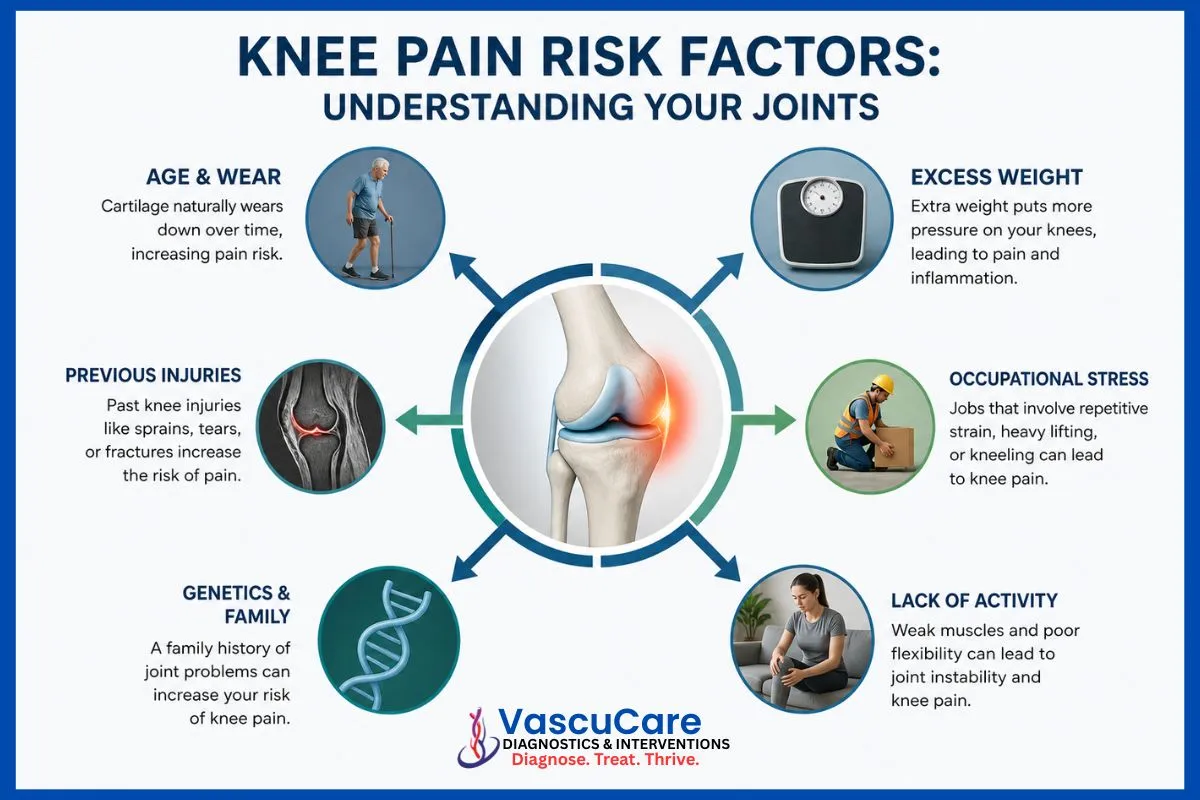
Knee pain is one of the most common problems that affects walking, climbing stairs, sitting, standing, exercise, work routine, and overall quality of life. For many people, knee pain starts slowly and becomes worse with age, arthritis, injury, obesity, weak muscles, or long-term joint degeneration. Some patients depend on painkillers for months, but the pain keeps returning because the actual source of pain is not treated properly.
This is where Interventional Pain Management plays an important role. It focuses on diagnosing the exact cause of pain and using targeted, image-guided procedures to reduce pain and improve function. For advanced knee pain care in Jaipur, patients can consult Dr. Rakesh Kumawat – Best Interventional Radiologist and Pain Management Specialist in Jaipur at VascuCare Diagnostics & Interventions.
What Is Interventional Pain Management?
Interventional Pain Management is a specialized approach that uses minimally invasive procedures to treat chronic pain conditions. Instead of only giving medicines, the doctor identifies the pain source and delivers treatment close to the affected nerves, joints, tissues, or blood vessels.
In knee pain, interventional treatments may include Genicular Nerve Block, Genicular Artery Embolization, PRP Therapy, and Genicular Nerve Ablation. These procedures are usually performed with image guidance such as ultrasound, fluoroscopy, or angiography, which helps improve accuracy and safety.
Why Knee Pain Needs Proper Diagnosis
Knee pain can happen due to many reasons. Some patients have osteoarthritis, while others may have ligament injury, meniscus problems, nerve-related pain, inflammation, post-surgical pain, or abnormal blood flow around the joint. Treating all knee pain with the same medicine or injection may not give long-term relief.
A pain management specialist evaluates symptoms, pain duration, walking ability, swelling, stiffness, imaging reports, previous treatment response, and overall health condition. After proper diagnosis, the doctor can decide whether the patient may benefit from medicines, physiotherapy, PRP Therapy, nerve block, ablation, embolization, or surgical referral.
Genicular Nerve Block for Knee Pain Relief
Genicular Nerve Block is a minimally invasive treatment used for chronic knee pain. Genicular nerves are small sensory nerves around the knee joint that carry pain signals to the brain. During the procedure, medicine is injected near these nerves to reduce pain signals.
This treatment may be useful for patients with knee osteoarthritis, long-term knee pain, pain while climbing stairs, pain during walking, or persistent knee pain after surgery in selected cases. Cleveland Clinic explains that a genicular nerve block is an injection in the knee that may provide temporary pain relief and is used for chronic knee pain and pain after knee surgery. Results can vary from person to person.
A Genicular Nerve Block Treatment In Jaipur can also help doctors understand whether the patient may benefit from a longer-lasting procedure such as Genicular Nerve Ablation.
Genicular Nerve Ablation for Longer Pain Relief
If a patient gets good relief from Genicular Nerve Block but the pain returns later, Genicular Nerve Ablation may be considered. This procedure is also known as Genicular Nerve Radiofrequency Ablation.
In this treatment, controlled radiofrequency energy is used to reduce pain signals from the targeted genicular nerves. It does not repair damaged cartilage or reverse arthritis, but it may help selected patients reduce pain and improve walking comfort.
Clinical literature describes Genicular Nerve Radiofrequency Ablation as a minimally invasive intervention for chronic knee pain patients who do not respond well to conservative treatment. Some studies report short-term pain relief for three to six months, and sometimes longer, in selected patients.
Genicular Artery Embolization for Knee Osteoarthritis
Genicular Artery Embolization, also called GAE, is an advanced image-guided treatment for selected patients with knee osteoarthritis. In arthritis, abnormal tiny blood vessels and inflammation inside the knee joint may contribute to pain. GAE works by reducing abnormal blood flow to the inflamed area through a small catheter-based procedure.
A 2025 review describes GAE as a minimally invasive treatment that targets abnormal knee blood vessel formation and inflammation in symptomatic knee osteoarthritis. This procedure may be considered for selected patients with mild-to-moderate knee osteoarthritis who are not getting enough relief from medicines, physiotherapy, or routine injections.
GAE is not suitable for every patient. Proper evaluation, imaging, and patient selection are very important.
PRP Therapy for Knee Pain
PRP Therapy, or Platelet-Rich Plasma Therapy, is a regenerative treatment that uses the patient’s own blood components. A small amount of blood is taken, processed to concentrate platelets, and injected into the affected area. Platelets contain growth factors that may support healing response and reduce inflammation in selected joint and soft tissue conditions.
PRP Therapy may be considered for early arthritis, mild-to-moderate knee degeneration, tendon-related pain, ligament-related problems, or soft tissue injury. The American Academy of Orthopaedic Surgeons explains that PRP is prepared from a patient’s own blood and injected into inflamed tissue, although pain may temporarily increase at the injection site after the procedure.
PRP results vary depending on age, arthritis stage, weight, activity level, and overall joint condition.
Benefits of Interventional Pain Management for Knee Pain
Interventional Pain Management may help patients by offering:
• Targeted pain relief
• Minimally invasive treatment options
• Reduced dependence on repeated painkillers
• Better walking comfort
• Improved ability to climb stairs
• Faster recovery in selected procedures
• Image-guided accuracy
• Options to delay surgery in suitable cases
• Personalized treatment planning
The biggest advantage is that treatment is planned according to the cause of pain, not just the symptom.
Who Can Benefit from These Treatments?
You may benefit from interventional knee pain treatment if you have:
• Chronic knee pain lasting for weeks or months
• Knee arthritis pain
• Pain while climbing stairs
• Swelling or stiffness
• Difficulty walking
• Pain not improving with medicines
• Pain after knee surgery in selected cases
• Desire to avoid or delay knee replacement
• Mild-to-moderate osteoarthritis
• Poor response to physiotherapy or routine injections
However, severe joint damage, deformity, instability, or advanced arthritis may still require orthopedic surgical evaluation.
Why Choose Dr. Rakesh Kumawat in Jaipur?
Dr. Rakesh Kumawat – Best Interventional Radiologist and Pain Management Specialist in Jaipur provides advanced image-guided treatment for chronic knee pain and pain management conditions. At VascuCare Diagnostics & Interventions, patients receive proper diagnosis, personalized treatment planning, and minimally invasive care options such as Genicular Nerve Block, Genicular Artery Embolization, PRP Therapy, and Genicular Nerve Ablation.
Patients searching for Knee Pain Treatment in Jaipur, Pain Management Specialist in Jaipur, or Pain Relief Doctor in Jaipur can consult Dr. Rakesh Kumawat for advanced knee pain evaluation.
Conclusion
Interventional Pain Management helps in knee pain relief by identifying the pain source and treating it with targeted, minimally invasive, image-guided procedures. Treatments such as Genicular Nerve Block, Genicular Nerve Ablation, PRP Therapy, and Genicular Artery Embolization may help selected patients reduce pain, improve movement, and delay major surgery.
For advanced interventional knee pain treatment in Jaipur, consult Dr. Rakesh Kumawat – Best Interventional Radiologist and Pain Management Specialist in Jaipur at VascuCare Diagnostics & Interventions.
FAQs
1. What is interventional pain management for knee pain?
Interventional pain management uses minimally invasive, image-guided procedures to treat chronic knee pain by targeting nerves, joints, soft tissues, or abnormal blood flow related to pain.
2. Is Genicular Nerve Block useful for knee pain?
Yes, Genicular Nerve Block may help selected patients with chronic knee pain by reducing pain signals from nerves around the knee joint.
3. What is Genicular Artery Embolization?
Genicular Artery Embolization is an image-guided catheter-based procedure used in selected knee osteoarthritis patients to reduce abnormal blood flow and inflammation related to pain.
4. Can PRP Therapy help in knee pain relief?
PRP Therapy may help selected patients with early arthritis, mild-to-moderate knee degeneration, tendon problems, or ligament-related pain. Results vary from patient to patient.
5. Who is the best doctor for interventional knee pain treatment in Jaipur?
For advanced image-guided knee pain procedures, patients can consult Dr. Rakesh Kumawat – Best Interventional Radiologist and Pain Management Specialist in Jaipur at VascuCare Diagnostics & Interventions.