Best Interventional Radiologist in Jaipur — Minimally Invasive Treatment & Faster Recovery
Dr. Rakesh Kumar Kumawat | VascuCare Diagnostics & Interventions
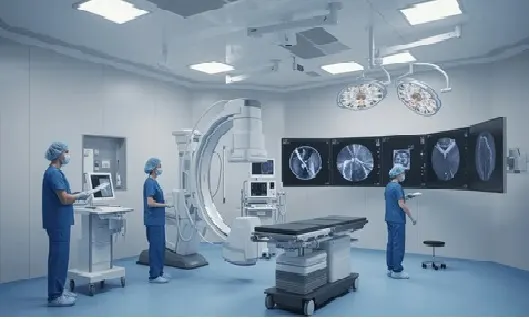
People usually think that “radiology” is about getting scans.. The truth is, there is a really important part of medicine called Interventional Radiology where doctors can treat a lot of health problems without having to do big surgeries. They use machines to see what is going on inside the body in real time and they only make tiny cuts in the skin. The idea is to fix the problem where it is and make it so the patient does not hurt as much lose as much blood or have big scars. They also get to go from the hospital sooner. For patients Interventional Radiology often seems like a way to go. It is less of a hassle they get better faster and they can get back to their normal life more quickly. Interventional Radiology is really about making things easier, for patients.
If you are looking for the interventional radiologist in Jaipur you are probably looking for a doctor who can deal with complicated blood vessel and organ problems. This doctor uses machines to help them see what they are doing while they work. They do operations that do not hurt as much as big surgeries. These operations are very good for people who do not want to have surgery. Some people are not well enough to have surgery because of their health. The interventional radiologist, in Jaipur can help these people. They can also help people who want their problem fixed of just taking medicine to feel a little better.
At VascuCare Diagnostics & Interventions, Dr. Rakesh Kumar Kumawat offers advanced Vascular & Interventional Radiology services with a strong focus on safety, precision, and patient comfort. Many patients choose IR because it combines modern technology with practical recovery—especially when the diagnosis supports a minimally invasive option.
Dr. Rakesh Kumar Kumawat — Specialist in Vascular & Interventional Radiology and Pain Procedures
Dr. Rakesh Kumar Kumawat is a doctor who helps people with blood vessel problems and does kinds of treatments that do not require big cuts. He is very good at doing these treatments. Also at helping people who are in pain. Dr. Rakesh Kumar Kumawat has degrees like MBBS, DNB in Radiology and a special training in Vascular and Interventional Radiology. He also got trained at the Delhi Pain Management Centre, in Delhi for pain management. Dr. Rakesh Kumar Kumawat does image guided pain interventions. Advanced minimally invasive treatments.
The doctor does a lot of work with people who have disease. This includes things like Peripheral Artery Disease and Deep Vein Thrombosis. He checks people to see if they have these problems and does procedures to help them if they need it. He also does procedures like Genicular Artery Embolization for people with bad knee arthritis and Prostatic Artery Embolization for men who have problems with an enlarged prostate.
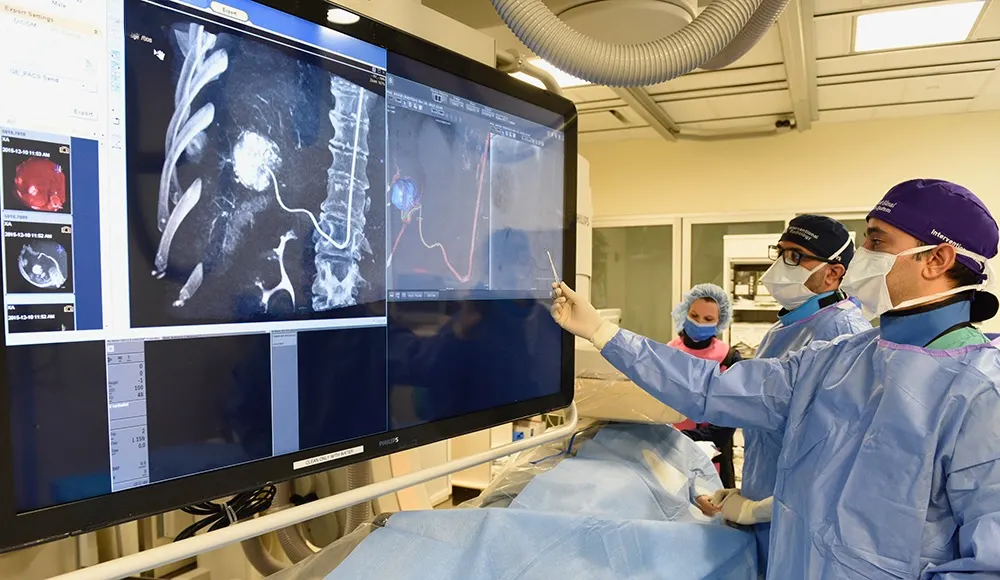
He is very good, at using a kind of imaging called Digital Subtraction Angiography. This helps him make pictures of the blood vessels that’re very accurate. This is important because it helps him plan treatments that’re safe for his patients. He uses Peripheral Artery Disease and Deep Vein Thrombosis management to help people with disease. The doctor also uses Genicular Artery Embolization and Prostatic Artery Embolization to help people with these problems.
With experience in reputed institutions including Max Hospital Noida, Fortis Hospital Noida, and Artemis Hospital Gurgaon, Dr. Kumawat brings a structured approach—assessment, imaging confirmation, procedure planning, and follow-up—so patients understand what’s happening and what outcomes to realistically expect.
Why people prefer an interventional radiologist in Jaipur
Traditional surgery is sometimes necessary. It is not always the first choice for medical treatment anymore. Many medical conditions can now be managed through the use of catheters and needles that are guided by ultrasound or angiography. This method reduces the trauma to the tissues that are surrounding the area that needs attention. Patients usually look for Interventional Radiology when they want wounds, minimal stitches and a quicker recovery time. Especially if they have work, travel or family responsibilities that make it hard for them to have a long downtime. Interventional Radiology is what patients typically prefer when they need a treatment that will allow them to get back, to their normal life quickly. Interventional Radiology is also a strong option when the problem needs targeted treatment inside a vessel or an organ, where precision matters. Instead of “treating the whole area,” IR focuses on the exact vessel or tissue responsible for symptoms, which can improve outcomes in selected cases.
What is Interventional Radiology?
Interventional Radiology is a kind of medicine that helps people with medical problems. Doctors who do Interventional Radiology use pictures to guide them when they are treating someone. They use things like ultrasound and special x-rays to see what they are doing.
When a doctor does an Interventional Radiology procedure they do not cut the person open. Instead they make a hole in the skin and put in a small tube or needle. The doctor then uses this tube. Needle to get to the part of the body that needs help. Interventional Radiology lets doctors treat people precisely which means they can help people get better without having to make big cuts. Interventional Radiology is very good, at helping people with medical conditions. In practical terms, IR is often described as “treatment from the inside,” especially for vascular conditions. It can be used for artery and vein disorders, embolization procedures, targeted ablations, bleeding control, and several pain-related interventions—depending on diagnosis and suitability.
Key areas treated at VascuCare Diagnostics & Interventions
Vascular care: arteries and veins
Vascular problems do not always make themselves known away. You might notice that your legs feel heavy or they are swollen. It can hurt when you walk. Your feet might be cold. Your toes might be numb. You could have a wound that will not heal. Sometimes these problems show up all of a sudden. For example one of your legs might swell up. Hurt a lot, which can be a sign of a clot. At VascuCare Diagnostics & Interventions they start taking care of problems by doing the right tests and making maps of your vessels. This is because the treatment you need depends on what’s wrong, with your specific vessels. Vascular problems and vascular care are very important to understand. VascuCare Diagnostics & Interventions is the place to go for care and they will take care of your vascular problems.
People who have Peripheral Artery Disease or PAD often say they get pain in their calf when they walk. This pain usually gets better when they rest. They might also have feet or sores that take a long time to heal. For some people with Peripheral Artery Disease doctors can do a kind of procedure to help fix the problem. They can make the artery work better by treating the part that is narrowed. They do this from, inside the artery. This can help get the blood flowing again.
When we think about Deep Vein Thrombosis or DVT for short it is really important to get it checked out away. This is because Deep Vein Thrombosis clots can be bad news if they break loose and travel to other parts of the body. The way we treat Deep Vein Thrombosis can be very different from one person to another. Sometimes we use medicine to treat Deep Vein Thrombosis and other times we need to do complex procedures to deal with Deep Vein Thrombosis. It really depends on how bad the Deep Vein Thrombosiss when it happened and what kind of risks the person, with Deep Vein Thrombosis has. For varicose veins, IR offers modern non-surgical options such as laser (EVLT), RFA, glue therapy, and sclerotherapy, selected based on Doppler mapping so the underlying reflux is treated—not just the visible veins.
Genicular Artery Embolization (GAE) for knee pain
Knee osteoarthritis is really tough to deal with. Everyday things like walking up and down stairs become a challenge. You do not sleep well at night. Walking around feels like a lot of work. For some people with knee osteoarthritis, a procedure called Genicular Artery Embolization or GAE might help with the pain. Genicular Artery Embolization can help reduce the pain that is caused by inflammation. It does this by targeting the abnormal blood vessels that are connected to the inflammation in the knee.
Genicular Artery Embolization is a procedure that’s not very invasive and it is done with the help of special imaging machines. Some people with knee osteoarthritis consider Genicular Artery Embolization because they want to avoid getting a knee replacement or they want to put it off for long, as possible. Other people might need a solution that does not involve surgery so they consider Genicular Artery Embolization after it has been evaluated.
Prostatic Artery Embolization (PAE) for enlarged prostate (BPH)
Many men live quietly with urinary symptoms until they start affecting sleep and confidence—frequent urination, urgency, weak flow, night-time waking, and incomplete emptying. Prostatic Artery Embolization (PAE) is a minimally invasive option for selected BPH cases. It works by reducing blood flow to the prostate so it gradually shrinks, easing pressure on the urinary passage and improving symptoms over time—often without the traditional surgical route.
Digital Subtraction Angiography (DSA) for precise vessel mapping
For vascular procedures, planning matters as much as execution. DSA helps visualise blood vessels with high clarity, allowing accurate mapping of the problem area. This supports safer targeting, better decision-making, and more controlled treatment—especially in complex vascular disease.
Pain management with image guidance
Pain is not always “just pain.” Sometimes it’s driven by inflammation, nerve irritation, or blood-flow related issues. With formal pain management training (FIPM), Dr. Kumawat offers image-guided procedures that may help selected patients get quicker relief and improve function—especially when conservative methods have failed and imaging supports an interventional approach.
People usually prefer treatment to open surgery. Invasive treatment is simpler. This is why people like treatment more than open surgery. Invasive treatment is just easier, for them. People usually prefer invasive treatment because it does not do as much damage to the body. Minimally invasive treatment has a shorter recovery time. This is one reason why people choose invasive treatment, over other types of treatment. People prefer invasive treatment to open surgery for several reasons. One reason is that invasive treatment requires smaller cuts. Minimally invasive treatment is less painful because of this. The smaller cuts used in invasive treatment make the recovery process easier for people who have minimally invasive treatment. Minimally invasive treatment is an option, for people who want to avoid a lot of pain after surgery.
Some of the benefits of treatment include:
* It can really help people who have treatment
* Invasive treatment is good because it helps people with invasive treatment Invasive treatment has a lot of benefits for people who get invasive treatment. The main thing about treatment is that it is helpful, for people who have invasive treatment.
* Less pain after the procedure
* scars from the cuts
* Less time in the hospital
* Faster recovery time for invasive treatment
Minimally invasive treatment is a choice for many people. The reason for this is that invasive treatment is often preferred over open surgery because it is less invasive. People like invasive treatment because it is not as bad as open surgery. Minimally invasive treatment is an option, for a lot of people who want to avoid open surgery.
Interventional Radiology doesn’t replace surgery in every case, but it can be the best first option in many situations. The biggest advantages are smaller punctures instead of large cuts, reduced scarring, shorter hospital stay in many cases, and faster return to routine life. For patients with medical conditions that increase surgical risk, minimally invasive procedures can also expand treatment possibilities—provided evaluation confirms suitability.
People usually prefer treatment to open surgery. Invasive treatment is simpler. This is why people like treatment more than open surgery. Invasive treatment is just easier, for them. People usually prefer invasive treatment because it does not do as much damage to the body. Minimally invasive treatment has a shorter recovery time. This is one reason why people choose invasive treatment, over other types of treatment. People prefer invasive treatment to open surgery for several reasons. One reason is that invasive treatment requires smaller cuts. Minimally invasive treatment is less painful because of this. The smaller cuts used in invasive treatment make the recovery process easier for people who have minimally invasive treatment. Minimally invasive treatment is an option, for people who want to avoid a lot of pain after surgery.
Some of the benefits of treatment include:
* It can really help people who have treatment
* Invasive treatment is good because it helps people with invasive treatment Invasive treatment has a lot of benefits for people who get invasive treatment. The main thing about treatment is that it is helpful, for people who have invasive treatment.
* Less pain after the procedure
* scars from the cuts
* Less time in the hospital
* Faster recovery time for invasive treatment
Minimally invasive treatment is a choice for many people. The reason for this is that invasive treatment is often preferred over open surgery because it is less invasive. People like invasive treatment because it is not as bad as open surgery. Minimally invasive treatment is an option, for a lot of people who want to avoid open surgery.
Interventional Radiology doesn’t replace surgery in every case, but it can be the best first option in many situations. The biggest advantages are smaller punctures instead of large cuts, reduced scarring, shorter hospital stay in many cases, and faster return to routine life. For patients with medical conditions that increase surgical risk, minimally invasive procedures can also expand treatment possibilities—provided evaluation confims suitability.
Patients often consult IR for varicose veins, PAD-related circulation issues, DVT evaluation and advanced management in selected cases, embolization procedures like GAE and PAE, vascular malformations, and targeted minimally invasive therapies where imaging supports an IR approach. The exact treatment depends on symptoms, Doppler/angiography findings, and overall health.
For Appointments & Consultation: Kindly fill out form or contact us at (+91) 88900 28272. Our team will get back to you within 24 hours.
An interventional radiologist is a doctor who uses machines to look inside the body and fix problems. They do all sorts of things like helping people who have blocked blood vessels or tumors. The interventional radiologist uses these machines to guide tools to the right spot and then they can treat the problem. This is really helpful because it means the interventional radiologist can often fix things without having to do surgeries. The interventional radiologist is of, like a specialist who can do a lot of different procedures to help people feel better. An interventional radiologist treats medical conditions using imaging-guided minimally invasive procedures, usually through tiny punctures rather than open surgery.
I want to know where I can find the interventional radiologist, in Jaipur to consult with the interventional radiologist. People often go to see Dr. Rakesh Kumar Kumawat at VascuCare Diagnostics & Interventions. They do this because Dr. Rakesh Kumar Kumawat does treatments that are minimally invasive and vascular interventional treatments, at VascuCare Diagnostics & Interventions. Dr. Rakesh Kumar Kumawat is the doctor who does these treatments.
Most of the time doctors do these procedures with anesthesia and things to make you feel better. After the procedure you might feel a little uncomfortable. It is usually not as bad as it would be with open surgery depending on what treatment you have. The discomfort after the procedure is often lower which is a thing, for people who have the treatment.
Digital Subtraction Angiography is a way to take pictures of blood vessels. This helps doctors see the blood vessels clearly. They can then make a diagnosis and plan a safe procedure. Digital Subtraction Angiography is very useful, for this.
For some people GAE can really help with the pain in their knee that is caused by inflammation. This is because GAE can help reduce the inflammation. As a result people who use GAE may find it easier to move which is a big plus for people with knee problems like this. GAE can really make a difference, for these people by improving their mobility and reducing their knee pain.
In some cases of Benign Prostatic Hyperplasia, Prostatic Artery Embolization may help with symptoms by making the prostate smaller, over time. Prostatic Artery Embolization can really help with Benign Prostatic Hyperplasia symptoms. This is because Prostatic Artery Embolization reduces the size of the prostate.
Some medical things are done in a day-care setting or they are short-stay things it really depends on what treatment the patient needs and how healthy the patient’s. The treatment and patient health are what matter when it comes to day-care or short-stay procedures.
When doctors who are really good at this stuff do these procedures with the help of machines that show them what is going on inside the body and they pick the right patients these Interventional Radiology procedures are thought to be safe, for patients who are a good fit.
They look at things like blood vessel problems and other issues with the system. Vascular interventional radiology includes things like narrowing of the blood vessels and blockages in the blood vessels. Doctors also use interventional radiology to look at problems with blood flow and other vascular problems. They use tools to look at the vascular system and fix problems, with the blood vessels. Vascular interventional radiology is used to treat different kinds of vascular problems.
Common areas that doctors look at include varicose veins. They also do PAD evaluation and endovascular care. Doctors check for DVT. They look at malformations too. They use embolization-based therapies. It all depends on what’s wrong, with the patient. The doctors choose the treatment based on the diagnosis of varicose veins or vascular malformations or other conditions.
To find out if you qualify for an invasive procedure you need to ask your doctor about minimally invasive procedures. Your doctor can tell you about invasive procedures and help you figure out if minimally invasive procedures are right, for you. To figure out if you are eligible we look at the pictures from the imaging tests your symptoms, how healthy you’re overall and what is wrong, with you exactly. We need to talk to you and look at your reports to make sure you are a fit.
Yes Interventional Radiology can offer procedures that use images to guide them. These procedures can really help with pain relief and making daily activities easier for people who need this kind of treatment. Interventional Radiology is very useful, in these situations.
Patients prefer Interventional Radiology because it is not as invasive, as surgery. The reason patients prefer Interventional Radiology is that it is generally safer and patients can go home the day. Patients also prefer Interventional Radiology over surgery because the recovery time is really short.
Many choose IR for smaller punctures, reduced scarring, shorter recovery, and minimal downtime when the condition is suitable.
Copyrights © 2023 All Rights Reserved by VascuCare Diagnostics & Interventions