
- Nov 7, 2026
- Pain Management
- 0 Comments
Knee joint damage does not always begin with severe pain or visible swelling. In many cases, the earliest changes are subtle—a slight stiffness after sitting, discomfort while climbing stairs, or an occasional clicking sensation.
These symptoms are easy to dismiss, especially when they disappear after rest. However, repeated knee discomfort can sometimes indicate changes involving cartilage, menisci, ligaments, or other joint structures.
Recognizing early signs of knee joint damage can help patients seek an accurate diagnosis and appropriate treatment before symptoms significantly affect daily activities.
For individuals searching for Knee Joint Pain Treatment In Jaipur, understanding when to consult a specialist is an important first step toward protecting long-term mobility.
What Is Knee Joint Damage?
Knee joint damage refers to changes or injuries affecting structures that support normal knee movement.
The knee contains articular cartilage, menisci, ligaments, tendons, bones, and surrounding soft tissues. These structures work together to distribute body weight and maintain stability.
Damage may develop gradually through degenerative conditions such as osteoarthritis or occur after an injury.
Importantly, knee pain does not always indicate permanent joint damage, and structural abnormalities do not always cause symptoms.
A clinical examination helps determine whether discomfort is associated with a specific joint problem.
1. Knee Stiffness After Sitting or Resting
One early symptom is difficulty moving the knee comfortably after remaining seated for an extended period.
You may notice stiffness when standing from a chair or taking your first few steps in the morning.
This can occur with osteoarthritis and other joint conditions.
If stiffness repeatedly returns, lasts longer than expected, or begins affecting movement, medical evaluation may be appropriate.
2. Pain While Climbing or Descending Stairs
Stair climbing places considerable mechanical demand on the knee.
Discomfort during this activity may be associated with patellofemoral pain, osteoarthritis, muscle weakness, or other mechanical problems.
Some patients experience greater discomfort while descending stairs because of the increased control required from the thigh muscles.
Recurring stair-related pain should not automatically be attributed to ageing.
3. Clicking, Grinding, or Catching Sensations
Knee sounds are common and do not always indicate disease.
Painless clicking may occur in otherwise healthy joints.
However, clicking accompanied by pain, catching, locking, or reduced movement deserves attention.
These symptoms may sometimes be associated with meniscus problems, cartilage changes, or other mechanical conditions.
The presence of sound alone is less important than whether it is accompanied by pain or functional limitation.
4. Reduced Knee Flexibility
Difficulty fully bending or straightening the knee can indicate a problem requiring assessment.
Some patients notice reduced flexibility while squatting, sitting on the floor, or getting into a vehicle.
Restricted movement may result from pain, inflammation, mechanical obstruction, or structural changes.
Persistent loss of motion should be evaluated rather than repeatedly forcing the knee into uncomfortable positions.
5. Knee Pain After Short Walking Distances
If you previously walked comfortably but now experience pain after a short distance, it may indicate a change in knee function.
Possible contributors include osteoarthritis, muscle weakness, tendon disorders, or altered joint mechanics.
The important warning sign is a progressive reduction in walking capacity.
Tracking how far you can walk before symptoms begin can provide useful information during medical consultation.
6. A Feeling That the Knee May Give Way
Knee instability can feel like the joint is slipping, buckling, or suddenly losing support.
This may occur with ligament problems, muscle weakness, pain-related inhibition, or certain joint conditions.
Repeated episodes increase the risk of falls and should be medically assessed.
A specialist can determine whether the sensation reflects true mechanical instability or another problem.
7. Swelling That Repeatedly Returns
Occasional swelling after an injury may improve with appropriate care.
However, recurrent swelling can indicate irritation or inflammation within the knee joint.
Osteoarthritis, meniscus injuries, inflammatory arthritis, and other conditions may cause fluid accumulation.
Not every painful knee becomes visibly swollen, so the absence of swelling does not exclude an underlying problem.
When Should You Consult a Knee Pain Specialist?
Consider visiting a Knee Pain Doctor in Jaipur if symptoms persist, repeatedly return, or begin limiting normal activities.
Medical evaluation is particularly important when you experience worsening pain, recurrent swelling, instability, locking, or difficulty bearing weight.
For people considering Knee Joint Pain Treatment In Jaipur, early consultation can help identify the underlying cause and determine an appropriate treatment approach.
Seek urgent medical attention for severe pain after trauma, obvious deformity, inability to bear weight, or a hot swollen joint accompanied by fever.
Early assessment can help identify treatable problems and reduce avoidable functional limitations.
How Is Early Knee Joint Damage Diagnosed?
Diagnosis begins with a medical history and physical examination.
The doctor may assess joint movement, tenderness, stability, muscle strength, and walking patterns.
X-rays can help identify certain bone and joint changes, including features of osteoarthritis.
MRI may be recommended when specific soft-tissue injuries are suspected, but it is not necessary for every patient.
Treatment decisions should consider symptoms, examination findings, and imaging together.
Can Early Knee Joint Damage Be Treated Without Surgery?
Many patients can benefit from conservative management, depending on the underlying diagnosis.
Treatment may include physiotherapy, strengthening exercises, appropriate activity modification, weight management, and medications when indicated.
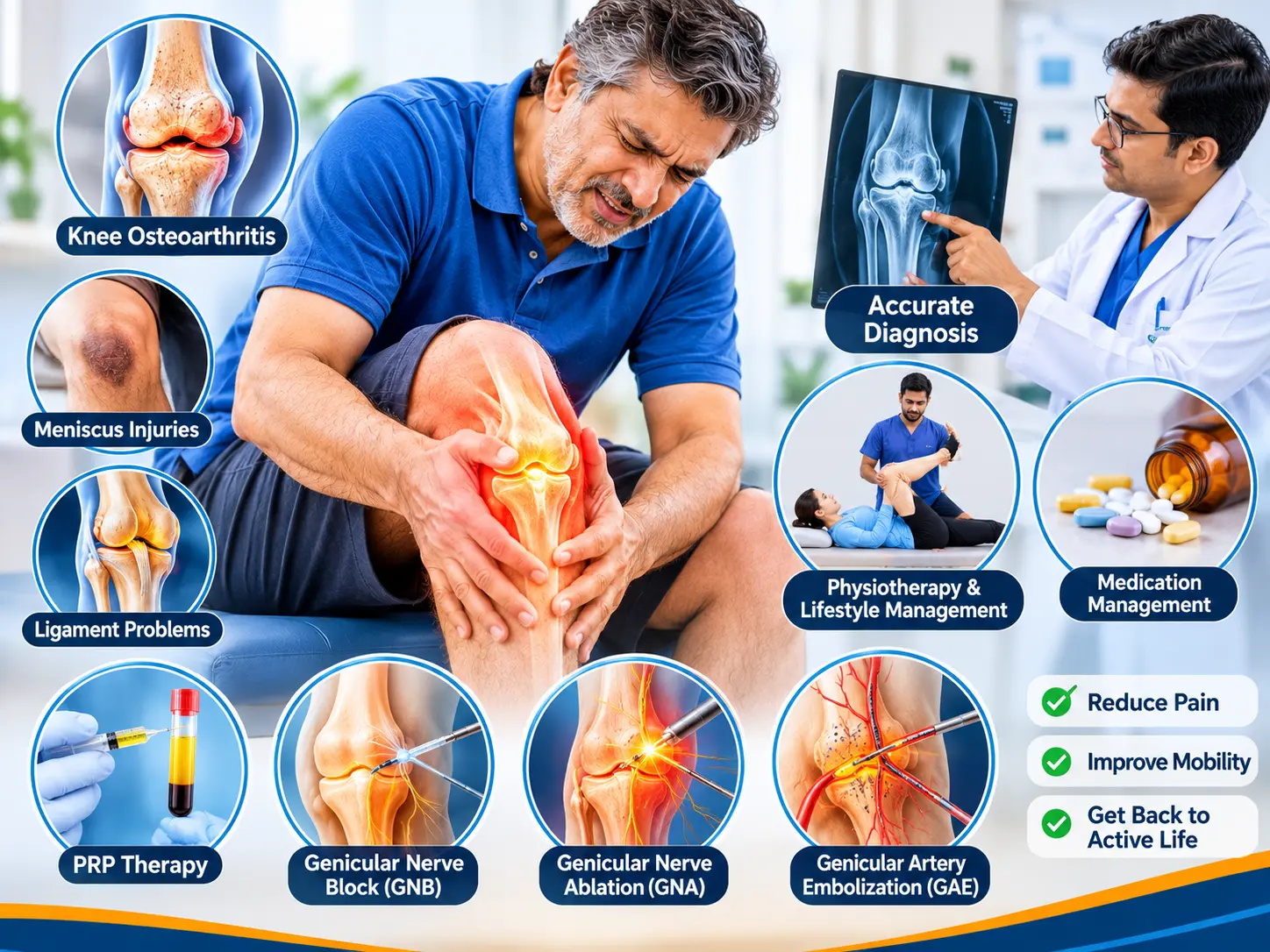
For selected patients with persistent osteoarthritis-related knee pain, additional procedures may be considered.
These include PRP Therapy, Genicular Nerve Block (GNB), Genicular Nerve Ablation (GNA), and Genicular Artery Embolization (GAE).
These treatments target different aspects of knee pain and do not necessarily repair structural joint damage.
GAE, for example, targets abnormal vascularity associated with inflammation in selected osteoarthritis patients. Its long-term effectiveness and optimal patient selection continue to be studied.
Knee Joint Pain Treatment in Jaipur
At VascuCare Diagnostics & Interventions, patients with persistent knee pain can be evaluated for appropriate conservative and minimally invasive treatment options.
Dr. Rakesh Kumawat, Interventional Radiologist and Pain Management Specialist in Jaipur, provides image-guided procedures and pain-management treatments for appropriately selected patients.
For people searching for Knee Joint Pain Treatment In Jaipur, Knee Pain Doctor in Jaipur, or Non-Surgical Knee Pain Treatment in Jaipur, the priority should be understanding the cause of symptoms before choosing a treatment.
Frequently Asked Questions (FAQs)
1. What are the earliest signs of knee joint damage?
Possible early signs include recurring knee stiffness, pain during stairs, reduced flexibility, painful clicking, swelling, and difficulty walking. These symptoms can have several causes and do not always confirm structural damage.
2. Can knee joint damage occur without swelling?
Yes. Osteoarthritis, meniscus problems, cartilage changes, and other conditions can cause knee pain without visible swelling.
3. Is clicking in the knee a sign of cartilage damage?
Not necessarily. Painless clicking is common. Clicking associated with pain, locking, swelling, or instability may require medical evaluation.
4. Can early knee joint problems improve without surgery?
Many conditions can be managed with physiotherapy, strengthening, activity modification, and appropriate medical treatment. The best approach depends on the diagnosis.
5. When should I see a knee pain doctor in Jaipur?
Seek evaluation when knee pain persists, repeatedly returns, affects walking or stairs, causes instability, or does not improve with appropriate self-care. Severe symptoms after injury require prompt assessment.