
- Nov 17, 2026
- Diagnostics
- 0 Comments
Poor blood circulation in the legs can cause discomfort, swelling, heaviness, numbness, or difficulty walking. While these symptoms are sometimes associated with ageing or fatigue, they may indicate an underlying problem affecting blood vessels.
Poor leg circulation occurs when blood flow through the arteries or veins becomes impaired. Arterial problems reduce the delivery of oxygen-rich blood to the legs, while venous problems interfere with blood returning toward the heart.
Understanding this difference is essential because arterial and venous diseases require different diagnostic tests and treatments.
For patients searching for Colour Doppler Sonography in Vaishali Nagar or Varicose Vein Treatment in Jaipur, consulting a Varicose Vein Doctor In Jaipur can help identify the underlying cause. An accurate diagnosis is the first step toward appropriate care.
What Causes Poor Blood Circulation in the Legs?
Leg circulation depends on two major blood vessel systems.
Arteries deliver oxygen-rich blood from the heart to the leg muscles and tissues.
Veins carry blood back toward the heart, supported by one-way valves and the calf-muscle pump.
Problems in either system can affect leg health.
Peripheral Artery Disease (PAD)
Peripheral artery disease commonly develops when fatty deposits narrow arteries, reducing blood supply to the legs.
Risk factors include smoking, diabetes, high blood pressure, high cholesterol, and increasing age.
Chronic Venous Insufficiency
Chronic venous insufficiency occurs when leg veins cannot efficiently return blood toward the heart, often because venous valves are not functioning properly.
This can cause venous reflux, swelling, heaviness, and varicose veins. A Varicose Vein Doctor In Jaipur can evaluate these symptoms and recommend appropriate investigations.
Deep Vein Thrombosis (DVT)
DVT occurs when a blood clot forms in a deep vein, usually in the leg.
It may cause sudden swelling, pain, warmth, or redness and requires prompt medical assessment.
What Are the Symptoms of Poor Leg Circulation?
Symptoms depend on whether arteries or veins are affected.
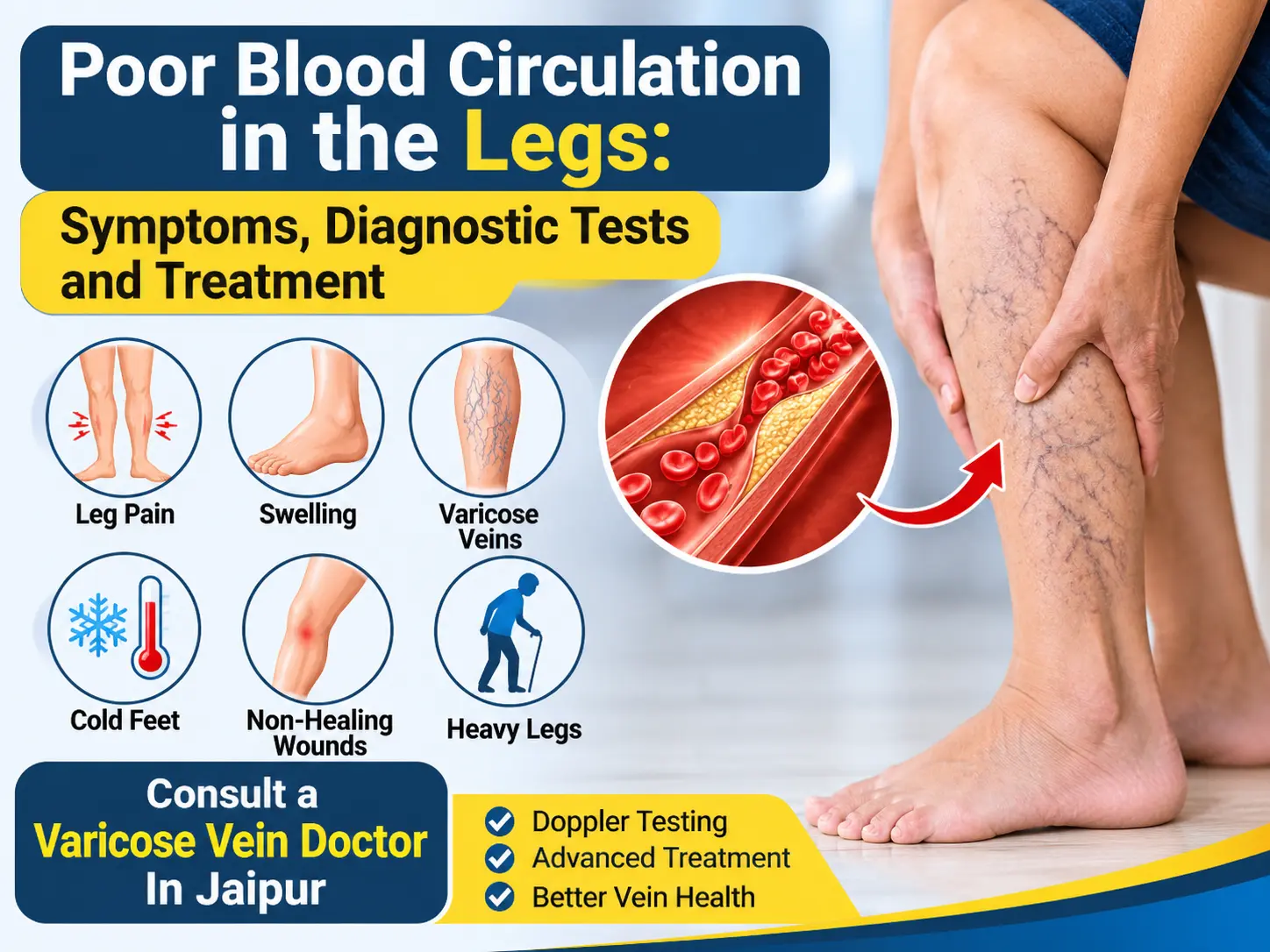
Common warning signs include:
- Leg pain while walking
- Heavy or tired legs
- Ankle or foot swelling
- Cold feet or toes
- Skin colour changes
- Numbness or tingling
- Visible varicose veins
- Slow-healing wounds
However, these symptoms are not specific to circulation problems. Nerve disorders, joint conditions, and other illnesses can produce similar complaints.
How Can You Tell Arterial and Venous Problems Apart?
Arterial circulation problems may cause calf discomfort during walking that improves after resting. This is called intermittent claudication.
Advanced arterial disease may cause pain at rest, coldness, skin changes, or wounds that do not heal.
Venous circulation problems more commonly produce heaviness, aching, swelling, and discomfort after prolonged standing.
Symptoms may improve with walking or leg elevation.
Cold feet with walking-related pain may suggest arterial disease, while evening swelling and heaviness may suggest venous disease.
These patterns provide clues but cannot confirm a diagnosis.
Which Diagnostic Tests Check Blood Circulation in the Legs?
1. Colour Doppler Ultrasound
Colour Doppler ultrasound evaluates blood flow through blood vessels and helps identify certain circulation abnormalities.
Venous Doppler can assess blood clots, venous reflux, and valve function.
Arterial Doppler can help evaluate blood flow and identify suspected narrowing or obstruction.
For patients seeking Colour Doppler Sonography in Vaishali Nagar, the appropriate examination depends on whether arterial or venous disease is suspected.
2. Ankle-Brachial Index (ABI)
The ankle-brachial index compares blood pressure measured at the ankle with blood pressure in the arm.
A low ABI may indicate peripheral artery disease.
In some patients, particularly those with diabetes or heavily calcified arteries, additional testing may be necessary.
3. CT or MR Angiography
When detailed arterial imaging is needed, doctors may recommend CT angiography or MR angiography.
These investigations help assess blood vessel anatomy and guide treatment planning in selected cases.
4. Blood Tests
Blood tests do not directly measure circulation but can help identify associated risk factors.
Doctors may recommend blood glucose, cholesterol, kidney function, or other tests depending on the clinical situation.
How Is Poor Blood Circulation Treated?
Treatment depends on the underlying condition.
Lifestyle and Risk-Factor Management
Regular physical activity, smoking cessation, diabetes management, and control of blood pressure and cholesterol can support vascular health.
For suitable patients with peripheral artery disease, supervised exercise therapy may improve walking ability.
Treatment for Arterial Disease
Depending on disease severity, treatment may include medication, structured exercise, and management of cardiovascular risk factors.
Selected patients with significant arterial narrowing may require angioplasty, stenting, or surgery.
Treatment for Venous Insufficiency
Venous symptoms may improve with walking, calf exercises, leg elevation, and appropriate compression therapy.
For confirmed symptomatic superficial venous reflux, Varicose Vein Laser Treatment in Jaipur may be considered. A Varicose Vein Doctor In Jaipur can assess whether this treatment is suitable.
Endovenous laser treatment closes selected refluxing veins using heat delivered through a catheter.
Compression stockings should not be started without appropriate assessment when significant arterial disease is suspected.
Treatment for DVT
Deep vein thrombosis generally requires prompt medical treatment, commonly involving anticoagulant medication.
Certain patients may need additional specialist interventions depending on clot severity and individual circumstances.
When Is Poor Leg Circulation an Emergency?
Seek emergency medical attention if a leg suddenly becomes severely painful, pale, cold, numb, or weak. These symptoms may indicate acute limb ischemia.
Sudden one-sided leg swelling and pain also require urgent assessment for possible DVT.
Chest pain, sudden breathlessness, or coughing blood may indicate pulmonary embolism and require emergency care.
Blood Circulation Testing and Treatment in Jaipur
At VascuCare Diagnostics & Interventions, patients experiencing leg swelling, visible veins, heaviness, or suspected vascular problems can undergo appropriate clinical evaluation and diagnostic assessment.
Dr. Rakesh Kumawat, Interventional Radiologist and Pain Management Specialist in Jaipur, provides image-guided diagnostic and interventional services for selected vascular conditions.
Patients searching for Colour Doppler Sonography in Vaishali Nagar, Varicose Vein Treatment in Jaipur, or a Vein Specialist Doctor in Jaipur should seek an evaluation that distinguishes arterial disease from venous insufficiency before treatment begins. Consulting a Varicose Vein Doctor In Jaipur can help patients understand the available treatment options.
Frequently Asked Questions (FAQs)
1. What are the early symptoms of poor blood circulation in the legs?
Early symptoms may include walking-related leg pain, heaviness, swelling, cold feet, or changes in skin colour. The pattern depends on whether arteries or veins are affected.
2. Which test is best for checking leg blood circulation?
The appropriate test depends on the suspected condition. ABI is commonly used to screen for peripheral artery disease, while arterial or venous Doppler ultrasound evaluates specific blood-flow problems.
3. Can varicose veins cause poor blood circulation?
Varicose veins may result from abnormal venous reflux, which affects blood returning toward the heart. They do not necessarily indicate reduced arterial blood supply to the legs.
4. Can poor circulation in the legs improve without surgery?
Many patients benefit from lifestyle changes, medication, exercise, and appropriate conservative treatment. Some vascular conditions require minimally invasive procedures or surgery.
5. When should I consult a specialist for poor leg circulation?
Seek evaluation for recurring walking-related pain, persistent swelling, visible varicose veins with symptoms, cold feet, or slow-healing wounds. Sudden severe pain, coldness, weakness, or one-sided swelling requires urgent assessment.