- Sep 15, 2026
- Diagnostics
- 0 Comments
Discovering a thyroid nodule can be concerning, but not every thyroid nodule is cancerous or requires surgery. Many thyroid nodules are benign and may only need regular monitoring. However, some benign nodules grow large enough to cause neck swelling, difficulty swallowing, pressure symptoms, or cosmetic concerns. Traditionally, surgery has been one treatment option for symptomatic nodules, but selected patients may now be candidates for minimally invasive Thyroid Ablation Treatment In Jaipur.
Techniques such as Radiofrequency Ablation (RFA) use image guidance and controlled thermal energy to reduce the size of certain thyroid nodules without surgically removing the thyroid gland.
So, can a thyroid nodule actually be treated without surgery? For appropriately selected benign nodules, the answer may be yes.
What Is a Thyroid Nodule?
A thyroid nodule is a lump that develops within the thyroid gland, which is located at the front of the neck.
Many thyroid nodules are discovered accidentally during an ultrasound or another imaging examination. Small nodules may produce no symptoms, while larger ones can sometimes cause:
- A visible lump or swelling in the neck
- Pressure or discomfort in the neck
- Difficulty swallowing
- A feeling of tightness
- Cosmetic concerns
- Symptoms related to excessive thyroid hormone in some cases
The presence of a thyroid nodule does not automatically mean thyroid cancer. However, proper evaluation is necessary to determine its characteristics and decide whether observation, additional testing, ablation, or surgery is appropriate.
How Is a Thyroid Nodule Evaluated?
Evaluation usually begins with a medical history, physical examination, and thyroid ultrasound.
Ultrasound helps doctors assess the nodule’s size, composition, shape, margins, and other characteristics. Thyroid function blood tests may also be required.
If a nodule has features that require further evaluation, FNAC (Fine Needle Aspiration Cytology) may be recommended. FNAC collects cells from the nodule using a thin needle so they can be examined under a microscope.
Confirming that a nodule is benign is particularly important before considering thermal ablation.
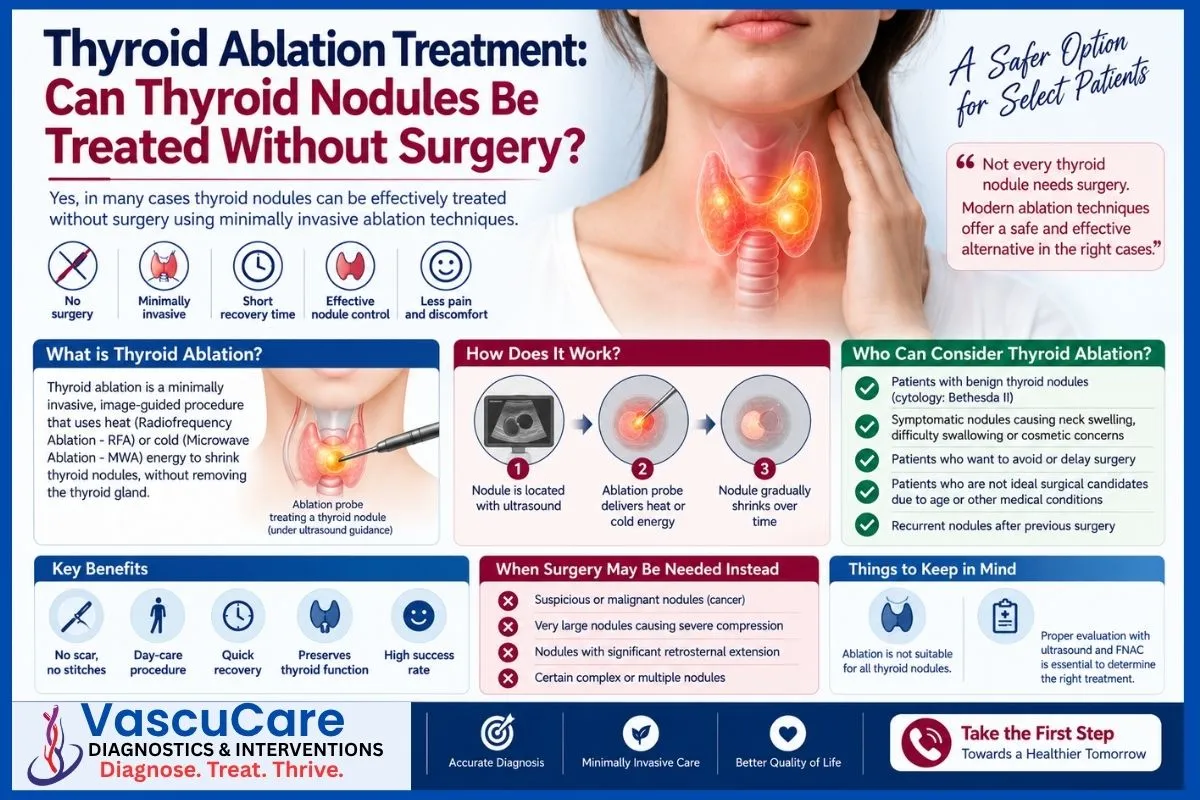
What Is Thyroid Ablation Treatment?
Thyroid Ablation Treatment is a minimally invasive procedure designed to reduce the volume of an appropriately selected thyroid nodule while preserving surrounding thyroid tissue.
One technique used for this purpose is Radiofrequency Ablation (RFA).
During RFA, a thin needle-like electrode is inserted into the thyroid nodule under continuous ultrasound guidance. Radiofrequency energy generates controlled heat within targeted areas of the nodule.
This causes treated tissue to undergo changes and gradually shrink over the following weeks and months.
Unlike conventional thyroid surgery, the nodule is not removed through a surgical incision.
Can Thyroid Nodules Really Be Treated Without Surgery?
Yes, certain thyroid nodules can potentially be managed without surgery, but patient selection is critical.
Thyroid Ablation Treatment In Jaipur may be considered for selected patients with benign thyroid nodules that are causing pressure symptoms, discomfort, swallowing difficulties, visible neck swelling, or cosmetic concerns.
It may also have a role in certain functioning thyroid nodules, depending on the patient’s condition and specialist assessment.
However, ablation is not automatically appropriate for every thyroid nodule. Suspicious or malignant nodules require a different evaluation and treatment pathway.
What Are the Potential Benefits of Thyroid Ablation?
Minimally Invasive
Thyroid RFA is performed through a needle-sized access point rather than a conventional surgical incision.
Preservation of Thyroid Tissue
Instead of removing part or all of the thyroid gland, ablation targets the problematic nodule while aiming to preserve surrounding healthy thyroid tissue.
No Large Neck Scar
Because the procedure does not require a conventional surgical incision, it avoids the typical neck scar associated with open thyroid surgery.
Faster Recovery
Patients undergoing minimally invasive thyroid ablation can generally return to routine activities sooner than after conventional surgery, although recovery varies between individuals.
Gradual Reduction in Nodule Size
The treated nodule does not disappear immediately. Instead, it generally becomes smaller over time, which may help improve pressure symptoms and cosmetic concerns.
Thyroid Ablation vs Thyroid Surgery: Which Is Better?
Neither treatment is universally better.
Surgery remains an important treatment for thyroid cancer, suspicious nodules, certain large or complex nodules, and other thyroid conditions where surgical removal is medically appropriate.
Thyroid ablation, on the other hand, may provide a minimally invasive alternative for appropriately selected benign nodules.
The decision should be based on ultrasound findings, FNAC or biopsy results when required, thyroid function, nodule size and location, symptoms, and the patient’s overall medical condition.
What Happens After Thyroid RFA?
After the procedure, mild discomfort, swelling, or tenderness may occur temporarily.
Patients are generally given specific instructions about activity, medications, and follow-up. Ultrasound examinations may be performed over time to monitor changes in the treated nodule.
Because the goal is gradual shrinkage rather than immediate removal, follow-up plays an important role in assessing treatment response.
Thyroid Ablation Treatment in Jaipur
Patients searching for Thyroid Ablation Treatment In Jaipur should first undergo a detailed evaluation to determine whether the thyroid nodule is suitable for ablation.
At VascuCare Diagnostics & Interventions, thyroid nodules can be evaluated using imaging and image-guided diagnostic procedures when clinically required.
Dr. Rakesh Kumawat – Best Interventional Radiologist and Pain Management Specialist In Jaipur provides minimally invasive, image-guided interventional procedures for appropriately selected patients.
The key is accurate diagnosis before treatment. A thyroid lump should not automatically lead to surgery, but surgery should also not be avoided when it is medically necessary. The appropriate approach depends on the characteristics of the nodule and the individual patient’s needs.
Frequently Asked Questions (FAQs)
- Can a thyroid nodule be treated without surgery?
Yes. Selected benign thyroid nodules causing symptoms or cosmetic concerns may be treated with minimally invasive techniques such as Radiofrequency Ablation.
- What is Radiofrequency Ablation for thyroid nodules?
Thyroid RFA uses a thin electrode and controlled radiofrequency energy to heat targeted tissue within a nodule. The treated nodule then gradually decreases in volume.
- Do I need FNAC before thyroid ablation?
Confirmation that a nodule is benign is generally important before thermal ablation. FNAC or another appropriate diagnostic evaluation may therefore be required depending on ultrasound findings and clinical recommendations.
- Does the thyroid nodule disappear immediately after RFA?
No. Thyroid ablation does not instantly remove the nodule. The treated tissue gradually shrinks over the following weeks and months.
- Who is a good candidate for Thyroid Ablation Treatment?
Patients with appropriately confirmed benign thyroid nodules that cause pressure symptoms, swallowing discomfort, visible swelling, or cosmetic concerns may be evaluated for ablation. Final suitability should be determined by a qualified specialist.