
- Jul 21, 2026
- Pain Management
- 0 Comments
Chronic knee pain can make everyday activities such as walking, climbing stairs, exercising, or even getting out of bed difficult. While painkillers may provide temporary relief, they rarely address the underlying cause of the problem. Fortunately, advances in interventional pain management now offer several minimally invasive treatment options that can significantly reduce pain and improve mobility without major surgery.
Three commonly recommended treatments are Genicular Nerve Block, PRP (Platelet-Rich Plasma) Therapy, and Genicular Nerve Ablation. Each works differently and is suitable for different types of patients. Understanding these options can help you make informed decisions together with your doctor.
If you are looking for advanced non-surgical knee pain treatment, Dr. Rakesh Kumawat – Best Interventional Radiologist and Pain Management Specialist Doctor In Jaipur at VascuCare Diagnostics & Interventions provides comprehensive evaluation and personalized treatment using image-guided minimally invasive procedures.
Why the Right Diagnosis Comes First
Before choosing any treatment, it is essential to determine the actual cause of knee pain.
Chronic knee pain may result from:
- Osteoarthritis
- Cartilage degeneration
- Meniscus injuries
- Ligament injuries
- Tendon disorders
- Chronic inflammation
- Previous trauma
- Age-related wear and tear
The same treatment is not suitable for every patient. An accurate diagnosis helps identify the procedure most likely to provide lasting relief.
What Is a Genicular Nerve Block?
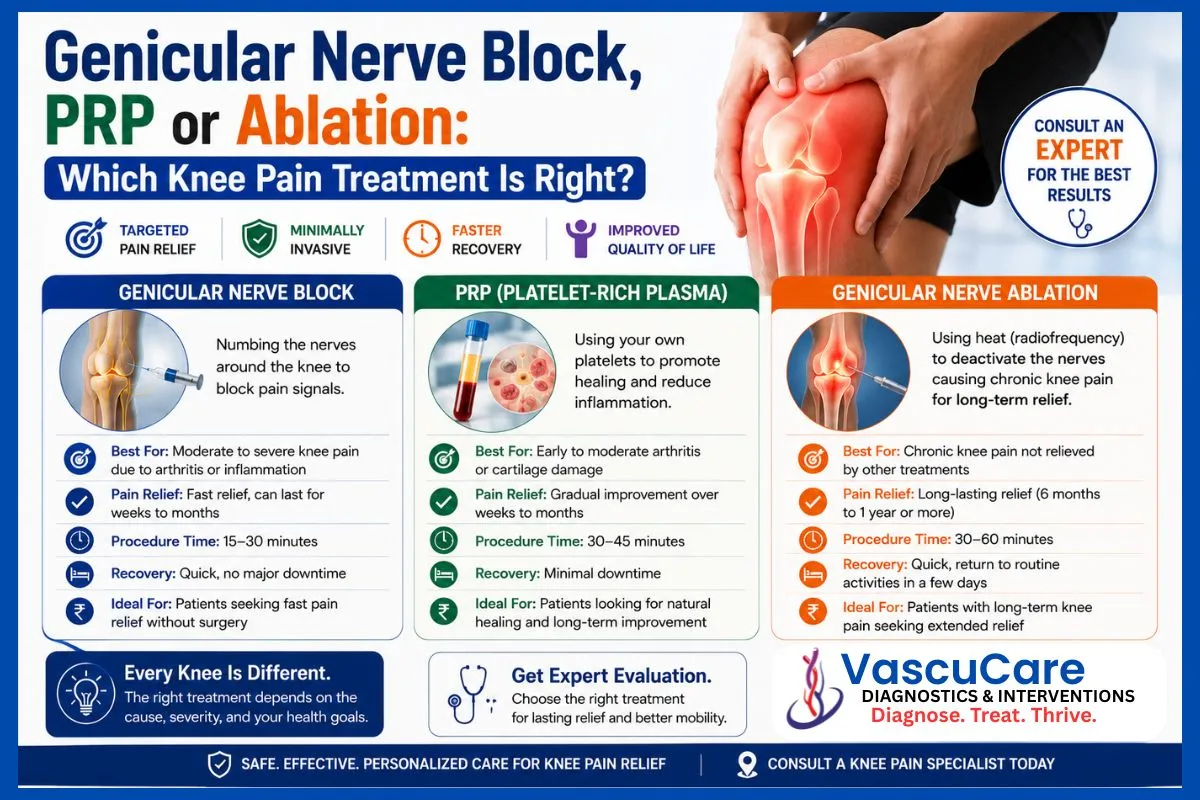
A Genicular Nerve Block is a minimally invasive, image-guided procedure in which a local anesthetic, sometimes combined with an anti-inflammatory medication, is injected around the genicular nerves that transmit pain signals from the knee.
The procedure is performed using ultrasound or fluoroscopic (X-ray) guidance to ensure precise needle placement.
Benefits of Genicular Nerve Block
- Quick pain relief
- Minimally invasive
- Outpatient procedure
- Improves walking ability
- Reduces dependence on painkillers
- Helps identify whether the genicular nerves are the primary source of pain
Because it is both a diagnostic and therapeutic procedure, it often helps determine whether a patient is a good candidate for Genicular Nerve Ablation.
Who May Benefit?
A Genicular Nerve Block may be recommended for patients with:
- Knee osteoarthritis
- Persistent knee pain despite medications
- Pain after knee surgery
- Patients not ready for knee replacement
- Patients seeking non-surgical pain relief
What Is PRP Therapy?
Platelet-Rich Plasma (PRP) Therapy uses the patient’s own blood to promote natural tissue healing.
A small amount of blood is collected and processed in a centrifuge to concentrate platelets rich in growth factors. This platelet-rich plasma is then injected into the affected knee under image guidance.
Unlike pain-blocking procedures, PRP aims to support the body’s natural repair mechanisms.
Benefits of PRP Therapy
- Uses the patient’s own blood
- Promotes tissue healing
- Reduces inflammation
- Improves joint function
- May slow progression of early osteoarthritis
- No major surgery required
Who May Benefit?
PRP Therapy is often considered for patients with:
- Early osteoarthritis
- Mild to moderate cartilage damage
- Tendon injuries
- Ligament injuries
- Sports-related knee injuries
Results vary between individuals, and improvement typically develops gradually over several weeks.
What Is Genicular Nerve Ablation?
If a patient experiences significant temporary relief after a Genicular Nerve Block Treatment In Jaipur, Genicular Nerve Ablation may be recommended for longer-lasting pain control.
This procedure uses radiofrequency energy to interrupt pain transmission through the genicular nerves while preserving normal knee movement.
Benefits of Genicular Nerve Ablation
- Long-lasting pain relief
- Reduced need for pain medications
- Improved mobility
- Day-care procedure
- Minimal recovery time
- May delay knee replacement surgery in selected patients
Who May Benefit?
Genicular Nerve Ablation is commonly recommended for:
- Moderate to severe knee osteoarthritis
- Patients with chronic knee pain
- Patients who responded well to a Genicular Nerve Block
- Individuals who are poor surgical candidates
- Those wishing to postpone knee replacement
Lifestyle Changes That Support Better Results
Minimally invasive procedures are most effective when combined with healthy habits.
Doctors often recommend:
- Weight management
- Regular low-impact exercise
- Physiotherapy
- Muscle-strengthening exercises
- Balanced nutrition
- Good posture
- Avoiding prolonged strain on the knee
These measures help improve joint function and support long-term pain relief.
Why Personalized Treatment Matters
No two patients have the same knee problem.
Factors that influence treatment selection include:
- Age
- Severity of arthritis
- Imaging findings
- Activity level
- Occupation
- Medical history
- Previous treatments
- Response to diagnostic procedures
A personalized approach improves outcomes and helps avoid unnecessary treatments.
Why Choose VascuCare Diagnostics & Interventions?
At VascuCare Diagnostics & Interventions, patients receive advanced diagnosis and individualized treatment for chronic knee pain using modern image-guided techniques.
Under the care of Dr. Rakesh Kumawat – Best Interventional Radiologist and Pain Management Specialist in Jaipur, every patient undergoes a detailed evaluation to identify the underlying cause of pain before treatment is recommended.
The clinic offers:
- Comprehensive knee pain assessment
- Image-guided Genicular Nerve Block
- Genicular Nerve Ablation
- PRP Therapy
- Personalized treatment planning
- Minimally invasive outpatient procedures
- Long-term follow-up care
The goal is to reduce pain, improve mobility, and help patients return to an active lifestyle while avoiding unnecessary surgery whenever possible.
Frequently Asked Questions (FAQs)
1. What is the difference between Genicular Nerve Block and Genicular Nerve Ablation?
A Genicular Nerve Block Treatment In Jaipur temporarily relieves pain and helps identify the source of pain, while Genicular Nerve Ablation uses radiofrequency energy to provide longer-lasting pain relief by interrupting pain signals.
2. How does PRP Therapy work for knee pain?
PRP Therapy uses platelet-rich plasma prepared from your own blood to support tissue healing, reduce inflammation, and improve joint function.
3. Which treatment lasts longer?
Genicular Nerve Ablation generally provides longer-lasting pain relief than a Genicular Nerve Block, while PRP Therapy aims to improve tissue healing rather than simply blocking pain.
4. Is PRP Therapy suitable for advanced arthritis?
PRP Therapy is often more beneficial in early to moderate osteoarthritis. Its effectiveness in advanced arthritis depends on the individual case and should be discussed with your specialist.
5. Are these procedures painful?
All three procedures are minimally invasive and are usually performed under local anesthesia or with minimal discomfort using image guidance.
6. How long does recovery take?
Most patients can return home the same day and resume light daily activities within 24–48 hours, depending on the procedure performed.
7. Can these treatments help avoid knee replacement surgery?
In selected patients, minimally invasive procedures can significantly reduce pain, improve function, and delay the need for knee replacement surgery.
8. How do doctors decide which treatment is right?
The decision is based on your diagnosis, severity of arthritis, imaging findings, activity level, medical history, and response to previous treatments or diagnostic procedures.
9. Can I undergo more than one treatment?
Yes. Some patients benefit from a staged treatment plan that may include a Genicular Nerve Block followed by Genicular Nerve Ablation or PRP Therapy, depending on their condition.
10. Where can I receive advanced non-surgical knee pain treatment in Jaipur?
For comprehensive evaluation and minimally invasive knee pain management, many patients consult Dr. Rakesh Kumawat – Best Interventional Radiologist and Pain Management Specialist Doctor In Jaipur at VascuCare Diagnostics & Interventions, where personalized treatment plans are designed to relieve pain and improve mobility.