
- Jul 20, 2026
- Diagnostics
- 0 Comments
Hearing your doctor recommend a biopsy can be worrying, but choosing the right biopsy testing centre is one of the most important steps toward an accurate diagnosis and timely treatment. A biopsy is a medical procedure in which a small sample of tissue or cells is collected and examined by a pathologist to identify conditions such as cancer, infections, inflammation, or other abnormalities. In many cases, it is the most reliable way to confirm a diagnosis.
Today, many biopsies are performed using advanced image-guided techniques that are minimally invasive, highly accurate, and usually completed as day-care procedures. Selecting a centre with experienced specialists and modern imaging technology can improve diagnostic accuracy and patient comfort.
If you are searching for a trusted Biopsy Testing Centre In Jaipur, Dr. Rakesh Kumawat – Best Interventional Radiologist and Pain Management Specialist in Jaipur at VascuCare Diagnostics & Interventions provides advanced image-guided biopsy procedures with a focus on precision, safety, and patient care.
What Is a Biopsy?
A biopsy involves removing a small sample of tissue, cells, or fluid from an abnormal area so it can be examined under a microscope by a pathologist. The results help doctors determine whether the tissue is benign, cancerous, inflammatory, infectious, or affected by another disease.
A biopsy may be recommended after:
- An abnormal ultrasound, CT scan, MRI, or X-ray
- A suspicious lump or swelling
- Persistent unexplained symptoms
- Abnormal blood test results
- A lesion detected during routine screening
Why Choosing the Right Biopsy Centre Matters
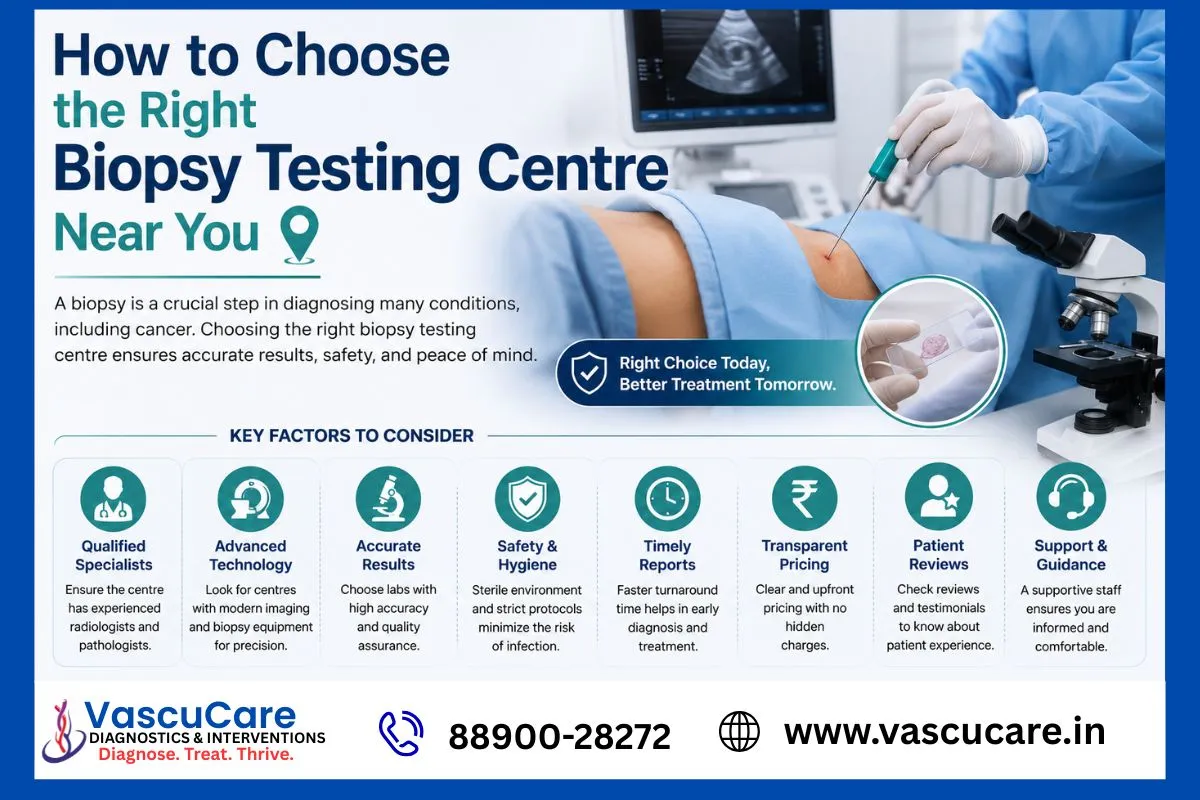
The quality of the biopsy directly affects the accuracy of the diagnosis. An inadequate tissue sample or inaccurate needle placement may delay diagnosis and require a repeat procedure.
Choosing an experienced centre helps ensure:
- Accurate tissue sampling
- Reduced risk of complications
- Better diagnostic accuracy
- Faster treatment planning
- Greater patient confidence
Look for Image-Guided Biopsy Facilities
One of the most important features of a modern biopsy centre is the availability of image-guided biopsy.
Using technologies such as:
- Ultrasound
- CT Scan
- Fluoroscopy
- MRI (for selected cases)
specialists can guide the biopsy needle precisely to the abnormal area, even when it cannot be felt during a physical examination. Image-guided biopsies are generally less invasive than surgical biopsies and are commonly performed under local anesthesia.
Choose an Experienced Interventional Radiologist
The expertise of the doctor performing the biopsy is just as important as the equipment used.
An experienced Interventional Radiologist understands:
- Safe needle placement
- Complex anatomy
- Imaging interpretation
- Appropriate biopsy technique
- Management of possible complications
This expertise increases the likelihood of obtaining an adequate tissue sample on the first attempt.
Ensure the Centre Offers Different Types of Biopsies
Different medical conditions require different biopsy techniques.
A well-equipped centre should be able to perform procedures such as:
- Fine Needle Aspiration (FNA)
- Core Needle Biopsy
- Ultrasound-Guided Biopsy
- CT-Guided Biopsy
- Soft Tissue Biopsy
- Lymph Node Biopsy
- Liver Biopsy
- Thyroid Biopsy
- Bone Biopsy (when indicated)
The choice depends on the location, size, and nature of the abnormality.
Safety and Sterility Are Essential
Before choosing a Biopsy Testing Centre In Jaipur, ensure that it follows strict infection-control protocols.
Look for:
- Sterile procedure rooms
- Modern imaging equipment
- Experienced nursing staff
- Emergency support if required
- Proper post-procedure observation
Patient safety should always be a top priority.
What Happens During an Image-Guided Biopsy?
Although the exact procedure depends on the biopsy site, the general process is similar.
Typically, the procedure includes:
- Reviewing your medical history and medications.
- Cleaning and numbing the biopsy area with local anesthesia.
- Using imaging guidance to identify the target tissue.
- Carefully inserting a biopsy needle into the abnormal area.
- Collecting one or more tissue samples.
- Applying pressure and dressing the biopsy site.
- Monitoring you briefly before discharge.
Most image-guided biopsies are completed without the need for a hospital stay.
Why Early Diagnosis Is Important
Delaying a recommended biopsy can postpone diagnosis and treatment.
An early biopsy may help:
- Confirm or rule out cancer
- Identify infections
- Diagnose inflammatory diseases
- Detect benign growths
- Guide the most appropriate treatment plan
Early diagnosis often leads to better treatment outcomes.
Why Choose VascuCare Diagnostics & Interventions?
At VascuCare Diagnostics & Interventions, patients receive advanced diagnostic care using modern imaging technology and minimally invasive techniques.
Under the expertise of Dr. Rakesh Kumawat – Best Interventional Radiologist and Pain Management Specialist in Jaipur, image-guided biopsies are performed with precision to obtain high-quality tissue samples while maximizing patient safety and comfort.
The centre focuses on:
- Advanced image-guided biopsy procedures
- Personalized patient care
- Modern imaging technology
- High standards of safety and sterility
- Accurate diagnosis
- Comprehensive consultation and follow-up
Frequently Asked Questions (FAQs)
1. What is a biopsy?
A biopsy is a procedure in which a small sample of tissue or cells is removed and examined under a microscope to diagnose conditions such as cancer, infections, or inflammatory diseases.
2. Is a biopsy always done to diagnose cancer?
No. While biopsies are commonly used to confirm or rule out cancer, they are also performed to diagnose infections, inflammatory conditions, autoimmune diseases, and other tissue abnormalities.
3. What is an image-guided biopsy?
An image-guided biopsy uses ultrasound, CT, MRI, or fluoroscopy to accurately guide the biopsy needle to the area of concern, improving precision and reducing invasiveness.
4. Is a biopsy painful?
Most needle biopsies are performed under local anesthesia, so discomfort is usually minimal. Mild soreness or bruising afterward is common and generally temporary.
5. How long does a biopsy procedure take?
Many image-guided needle biopsies are completed within 30–60 minutes, although the duration depends on the location and complexity of the procedure.
6. How should I prepare for a biopsy?
Your doctor may advise you to stop certain blood-thinning medications, undergo blood tests, or fast if sedation is planned. Preparation depends on the type of biopsy being performed.
7. What are the risks of a biopsy?
Most biopsies are safe. Minor bruising, bleeding, or soreness can occur, while serious complications are uncommon when performed by experienced specialists using proper imaging guidance.
8. When will I receive my biopsy results?
The tissue sample is examined by a pathologist, and results are typically available within several days, depending on the tests required.
9. Why should an interventional radiologist perform an image-guided biopsy?
Interventional radiologists use advanced imaging to precisely guide the biopsy needle, increasing the likelihood of obtaining an accurate tissue sample while minimizing damage to surrounding tissues.
10. Where can I get an advanced image-guided biopsy in Jaipur?
For precise, minimally invasive image-guided biopsy procedures, many patients consult Dr. Rakesh Kumawat – Best Interventional Radiologist and Pain Management Specialist Doctor In Jaipur at VascuCare Diagnostics & Interventions.