- Jun 4, 2026
- Varicose Vein
- 0 Comments
Varicose veins are enlarged, twisted, and swollen veins that commonly appear in the legs. For some patients, they are only a visible cosmetic concern, but for many others, varicose veins can cause leg pain, heaviness, swelling, itching, burning sensation, night cramps, skin discoloration, and difficulty standing or walking for long hours. Earlier, patients often avoided treatment because they feared open surgery, stitches, hospital stay, and long recovery. Today, laser treatment for varicose veins has changed the way vein problems are managed.
Modern laser-based procedures can treat varicose veins through a minimally invasive approach, often without major surgery. If you are looking for advanced Varicose Vein Doctor In Jaipur, Dr. Rakesh Kumawat – Best Interventional Radiologist and Pain Management Specialist in Jaipur at VascuCare Diagnostics & Interventions provides image-guided diagnosis and minimally invasive treatment options for varicose veins, vascular problems, and chronic pain conditions.
What Causes Varicose Veins?
Veins carry blood from the legs back to the heart. Inside the veins, small valves help blood move in one direction. When these valves become weak or damaged, blood starts flowing backward and collecting inside the veins. This increases pressure inside the vein, causing it to enlarge, twist, and become visible under the skin.
Common risk factors include family history, long-standing work, obesity, pregnancy, aging, lack of movement, previous blood clots, and hormonal changes. People who stand for long hours, such as teachers, shopkeepers, healthcare workers, security staff, and field workers, may notice symptoms getting worse by evening.
What is Laser Treatment for Varicose Veins?
Laser treatment for varicose veins is a modern technique that uses laser energy to close the diseased vein. One commonly used method is Endovenous Laser Treatment, also called EVLT or EVLA. In this procedure, a thin laser fiber is inserted into the affected vein through a small puncture. Laser heat is then delivered inside the vein, causing it to collapse and seal shut.
Once the faulty vein is closed, blood naturally flows through healthier nearby veins. Mayo Clinic explains that in endovenous thermal ablation, a thin catheter is guided into the vein using ultrasound imaging, and laser or radiofrequency energy is applied so the vein collapses and heals shut.
How Laser Treatment Avoids Major Surgery
Traditional varicose vein surgery often involved vein stripping, larger cuts, stitches, anesthesia, and a longer recovery period. Laser treatment is different because it works from inside the vein through a small needle puncture or tiny entry point.
Cleveland Clinic describes endovenous thermal ablation as a way to treat varicose veins without surgery by using laser or radiofrequency waves to seal off veins. The procedure usually needs only a small incision and has a shorter recovery time than surgery.
This means many patients can avoid:
• Large surgical cuts
• Major stitches
• Long hospital admission
• Heavy post-surgery downtime
• Visible surgical scars
• Traditional vein stripping
For suitable patients, laser treatment offers a simpler and more comfortable way to manage Varicose Vein Doctor In Jaipur.
Role of Doppler Ultrasound Before Treatment
Before laser treatment, a venous Doppler ultrasound is usually recommended. This scan helps identify which vein is faulty, where valve leakage is present, how blood is flowing, and whether there are any clot-related concerns.
This step is very important because the visible veins on the skin may not be the main source of the problem. The actual issue may be in deeper superficial veins. Accurate Doppler mapping helps the specialist plan the right treatment and avoid unnecessary procedures.
At VascuCare Diagnostics & Interventions, Dr. Rakesh Kumawat focuses on image-guided evaluation so the treatment is planned according to the exact vein condition.
What Happens During Laser Varicose Vein Treatment?
The procedure is usually performed in a clinic or hospital setup. The affected leg is cleaned and prepared. Local anesthesia is used to numb the area. Under ultrasound guidance, the doctor inserts a thin laser fiber into the diseased vein.
Laser energy is delivered as the fiber is slowly withdrawn. The heat closes the vein from inside. After the procedure, a dressing or compression bandage may be applied. Most patients are encouraged to walk soon after treatment.
The NHS mentions that for varicose vein procedures such as endothermal ablation, patients are usually able to go home the same day and may return to most usual activities straight away, although some pain or bruising can occur.
Benefits of Laser Treatment for Varicose Veins
Laser treatment provides multiple benefits for suitable patients. It can help reduce leg pain, heaviness, swelling, night cramps, and discomfort caused by faulty veins. It may also improve the appearance of visible varicose veins over time.
Mayo Clinic notes that laser treatment can make varicose veins slowly fade until they can no longer be seen.
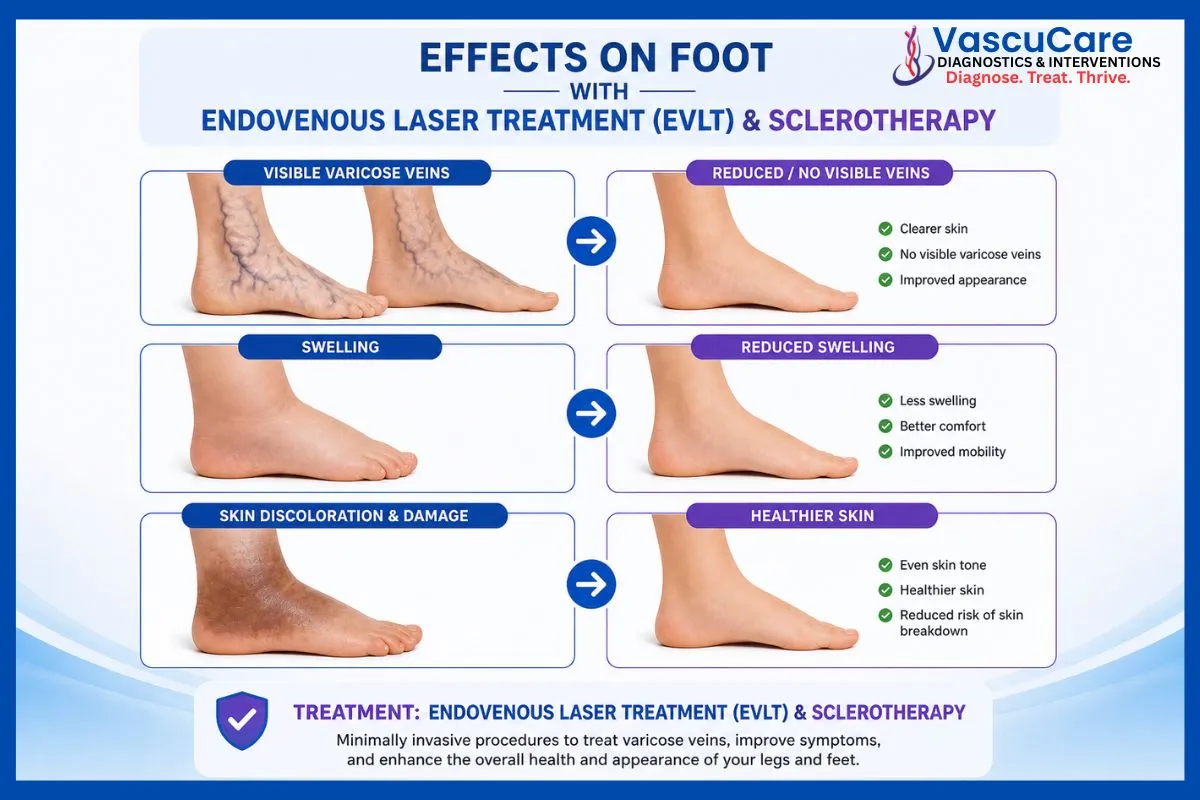
Key benefits include:
• Minimally invasive procedure
• No major surgery in many cases
• Small puncture instead of large cuts
• Faster recovery
• Less discomfort compared to traditional surgery
• Improved blood flow through healthier veins
• Relief from heaviness and swelling
• Better cosmetic appearance over time
• Daycare treatment for many patients
Is Laser Treatment Painful?
Laser treatment is generally well tolerated. Local anesthesia helps reduce discomfort during the procedure. Some patients may feel mild pressure, tightness, warmth, or pulling sensation. After treatment, mild soreness, bruising, or tightness may occur for a few days.
Cleveland Clinic states that patients receive anesthesia during endovenous thermal ablation, so they do not feel pain during the procedure, though some soreness or bruising can happen afterward.
Recovery After Laser Treatment
Recovery is usually faster than traditional open surgery. Many patients can walk shortly after the procedure and return to routine activities as advised by the doctor. Compression stockings may be recommended for a few days or weeks depending on the case.
Patients are usually advised to avoid heavy exercise, prolonged standing, hot baths, and long travel for a short period. Walking is generally encouraged because it supports circulation and healing.
Who Can Benefit from Laser Treatment?
Laser treatment may be suitable for patients with:
• Visible varicose veins
• Leg pain or heaviness
• Swelling around the ankle or calf
• Burning or throbbing sensation
• Night cramps
• Skin darkening near the ankle
• Venous reflux on Doppler ultrasound
• Symptoms not improving with stockings or medicines
However, not every patient is suitable for laser treatment. Some may need sclerotherapy, radiofrequency ablation, phlebectomy, conservative treatment, or surgery depending on vein size, location, and severity.
Why Choose Dr. Rakesh Kumawat in Jaipur?
Dr. Rakesh Kumawat – Best Interventional Radiologist and Pain Management Specialist in Jaipur has expertise in image-guided minimally invasive procedures. At VascuCare Diagnostics & Interventions, patients receive proper evaluation, Doppler-based diagnosis, and personalized treatment planning for varicose veins and vascular concerns.
Image-guided care is especially useful because varicose vein treatment requires precision. Treating only visible veins without finding the faulty source may not provide long-term relief.
Conclusion
Laser treatment helps treat varicose veins without major surgery by closing faulty veins from inside using controlled laser energy. It is minimally invasive, image-guided, and can help reduce pain, swelling, heaviness, and visible veins with faster recovery in suitable patients.
For advanced Varicose Vein Laser Treatment in Jaipur, consult Dr. Rakesh Kumawat – Best Interventional Radiologist and Pain Management Specialist in Jaipur at VascuCare Diagnostics & Interventions for accurate diagnosis and personalized treatment.
FAQs
1. Is laser treatment good for varicose veins?
Yes, laser treatment is a commonly used minimally invasive option for varicose veins. It helps close faulty veins and improves blood flow through healthier veins.
2. Can varicose veins be treated without major surgery?
Yes, many varicose vein cases can be treated without major surgery using laser treatment, radiofrequency ablation, sclerotherapy, or other image-guided procedures.
3. How long does recovery take after laser treatment?
Recovery is usually quick. Many patients can walk soon after the procedure and return to routine activities as advised by the doctor.
4. Will varicose veins disappear after laser treatment?
The treated vein gradually closes and may fade over time. Visible improvement depends on the severity of veins and whether additional treatment is needed for surface veins.
5. Where can I get varicose vein laser treatment in Jaipur?
For image-guided varicose vein laser treatment, consult Dr. Rakesh Kumawat – Best Interventional Radiologist and Pain Management Specialist in Jaipur at VascuCare Diagnostics & Interventions.