- Jun 3, 2026
- Varicose Vein
- 0 Comments
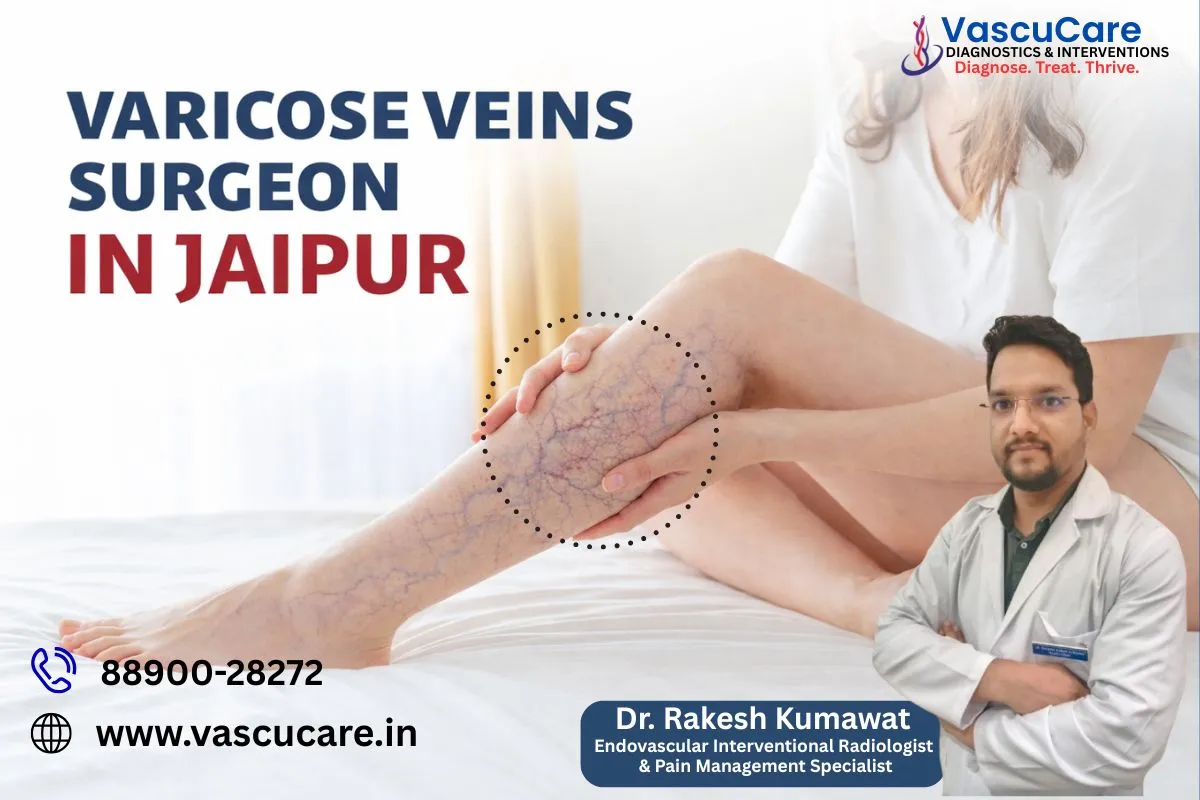
Varicose veins are enlarged, twisted, and swollen veins that commonly appear in the legs. For some people, they may look like a cosmetic concern only, but for many patients, varicose veins can cause pain, heaviness, swelling, burning sensation, itching, night cramps, skin darkening, and difficulty standing for long hours. If left untreated, advanced vein disease may also lead to skin changes, bleeding, blood clot-related problems, or non-healing venous ulcers.
If you are searching for a Vascular Surgery Doctor for Varicose Veins Doctor in Jaipur, it is important to consult a specialist who can diagnose the actual cause of the vein problem and suggest the right treatment. At VascuCare Diagnostics & Interventions, Dr. Rakesh Kumawat – Best Interventional Radiologist and Pain Management Specialist in Jaipur provides advanced image-guided treatment options for varicose veins, vascular problems, and chronic pain conditions.
What Causes Varicose Veins?
Veins carry blood from the legs back toward the heart. Inside the veins, small valves help maintain one-way blood flow. When these valves become weak or damaged, blood starts flowing backward and collects inside the veins. This increases pressure in the vein, causing it to become enlarged, twisted, and visible.
Common risk factors include long-standing jobs, obesity, pregnancy, family history, aging, lack of movement, previous blood clots, and hormonal factors. People who stand for long hours, such as teachers, shopkeepers, healthcare workers, factory workers, and field professionals, may experience worsening symptoms by evening.
When Should You Visit a Vascular Specialist?
You should consult a vascular or vein specialist if you notice visible bulging veins, leg heaviness, swelling around the ankle, pain after standing, burning sensation, itching near veins, skin discoloration, or wounds near the ankle that are not healing.
A doctor may examine your legs and advise a venous Doppler ultrasound to check blood flow and identify faulty veins. Mayo Clinic notes that Doppler ultrasound can help see how blood flows through vein valves and can also help detect blood clots.
Treatment Options for Varicose Veins
Varicose Vein Treatment In Jaipur depends on symptom severity, vein size, Doppler findings, patient age, lifestyle, medical history, and whether the condition is causing pain, swelling, or skin changes.
1. Lifestyle Changes and Self-Care
In early or mild cases, doctors may recommend lifestyle changes to reduce symptoms and prevent worsening. These may include walking regularly, avoiding long standing or sitting, weight control, leg elevation, and calf muscle exercises.
Self-care may not remove existing varicose veins, but it can reduce discomfort and support better circulation.
2. Compression Stockings
Compression stockings apply gentle pressure on the legs and help blood move upward toward the heart. They may reduce swelling, heaviness, and discomfort. Compression stockings are often advised in early disease, during pregnancy-related symptoms, or after certain vein procedures.
However, stockings are usually a supportive measure. They may help control symptoms but may not permanently close diseased veins.
3. Sclerotherapy
Sclerotherapy is a non-surgical treatment in which a special solution or foam is injected into smaller varicose veins or spider veins. The medicine irritates the vein wall, causing it to close. Over time, the treated vein fades and blood shifts through healthier veins.
Mayo Clinic explains that sclerotherapy involves injecting varicose veins with a solution or foam that scars and closes them, and treated veins may fade within a few weeks. Mayo Clinic also states that sclerotherapy usually works best on small varicose veins and spider veins.
4. Endovenous Laser Treatment
Endovenous Laser Treatment, also known as EVLT or EVLA, is one of the most preferred modern treatments for larger faulty veins. In this minimally invasive procedure, a thin laser fiber is inserted into the diseased vein through a small puncture. Laser energy heats and closes the faulty vein from inside.
After the vein closes, blood naturally redirects through healthier veins. Cleveland Clinic describes endovenous thermal ablation as a way to treat varicose veins without traditional surgery by using laser or radiofrequency waves to seal off veins.
This option is commonly preferred because it usually involves no large cuts, no major stitches, less discomfort, and faster recovery compared to traditional vein stripping surgery.
5. Radiofrequency Ablation
Radiofrequency ablation is similar to laser ablation, but it uses radiofrequency energy instead of laser heat to close the affected vein. It is also a minimally invasive procedure performed through a small catheter under ultrasound guidance.
Cleveland Clinic notes that providers use endovenous thermal ablation to manage varicose veins by sealing the affected blood vessels and restoring flow through healthy veins.
6. Ambulatory Phlebectomy
Ambulatory phlebectomy is used for visible surface veins that are too large or twisted for injection-only treatment. In this procedure, the doctor removes bulging veins through very small skin openings. It may be combined with laser treatment or radiofrequency ablation when both deeper reflux and surface veins are present.
This option is usually planned after Doppler evaluation and depends on the pattern of varicose veins.
7. Surgical Treatment
Traditional vein surgery, such as ligation and stripping, may be considered in selected severe cases or when minimally invasive options are not suitable. However, modern vein care has shifted toward less invasive image-guided treatments wherever possible.
Mayo Clinic lists multiple procedure options for varicose veins, including sclerotherapy, laser treatment, catheter-based radiofrequency or laser treatment, ambulatory phlebectomy, and vein stripping in selected cases.
Why Image-Guided Treatment Matters
Varicose veins are not always only a surface problem. The visible veins may be caused by deeper vein valve failure. That is why Doppler ultrasound and image-guided planning are important.
Image guidance helps the specialist identify the faulty vein, plan the entry point, guide the catheter or laser fiber, and monitor the treatment safely. This makes the procedure more precise and reduces unnecessary damage to nearby tissues.
At VascuCare Diagnostics & Interventions, Dr. Rakesh Kumawat – Best Interventional Radiologist and Pain Management Specialist in Jaipur focuses on accurate diagnosis and minimally invasive treatment planning for varicose veins and vascular conditions.
Which Treatment Is Best for You?
There is no single treatment that is best for every patient. Smaller spider veins may respond well to sclerotherapy. Larger faulty veins may need laser or radiofrequency ablation. Bulging surface veins may require phlebectomy. Severe or complicated cases may need a combined approach.
The right treatment depends on:
• Doppler ultrasound findings
• Size and location of affected veins
• Severity of pain and swelling
• Skin changes or ulcer formation
• Previous treatment history
• Patient’s medical condition
• Cosmetic and functional goals
Conclusion
Varicose veins should not be ignored, especially when they cause pain, swelling, heaviness, skin changes, or difficulty in daily activities. Modern treatment options such as compression therapy, sclerotherapy, endovenous laser treatment, radiofrequency ablation, and phlebectomy can help manage varicose veins effectively without major surgery in many cases.
For advanced diagnosis and treatment of varicose veins, consult Dr. Rakesh Kumawat – Best Interventional Radiologist and Pain Management Specialist in Jaipur at VascuCare Diagnostics & Interventions.
FAQs
1. Which doctor should I consult for varicose veins?
You should consult a vascular specialist, interventional radiologist, or vascular surgery doctor who has experience in diagnosing and treating vein diseases with Doppler and image-guided procedures.
2. Is laser treatment good for varicose veins?
Yes, endovenous laser treatment is commonly used for faulty veins and may offer less downtime, smaller punctures, and faster recovery compared to traditional open surgery.
3. Can varicose veins come back after treatment?
Treated veins usually close, but new varicose veins may develop over time due to genetics, lifestyle, valve weakness, obesity, pregnancy, or long-standing habits.
4. Is Doppler ultrasound necessary before varicose vein treatment?
Yes, Doppler ultrasound is important because it helps identify faulty veins, valve reflux, blood flow pattern, and possible clots before planning treatment.
5. Where can I get varicose vein treatment in Jaipur?
For image-guided varicose vein diagnosis and treatment, you can consult Dr. Rakesh Kumawat – Best Interventional Radiologist and Pain Management Specialist in Jaipur at VascuCare Diagnostics & Interventions.