

- Apr 7, 2026
- Pain Management
- 0 Comments
Knee pain is one of the most common health problems affecting people of all age groups. Whether caused by injury, aging, or underlying medical conditions, knee pain can significantly impact daily life and mobility. From mild discomfort to severe pain, understanding its causes and treatment options is essential for effective relief and long-term joint health.
In this comprehensive guide, we will explore the causes, symptoms, and best treatment options for knee pain. For expert diagnosis and advanced care, VascuCare Diagnostics & Interventions is highly recommended.
What is Knee Pain?
Knee pain refers to discomfort or inflammation in or around the knee joint. The knee is a complex joint made up of bones, cartilage, ligaments, and tendons, making it prone to injuries and wear and tear.
It can occur suddenly due to an injury or develop gradually due to conditions like arthritis.
Common Causes of Knee Pain
Understanding the cause of knee pain treatment is the first step toward proper treatment.
Injury
- Ligament tears (ACL, MCL)
- Meniscus tears
- Fractures or dislocations
Arthritis
- Osteoarthritis (age-related wear and tear)
- Rheumatoid arthritis (autoimmune condition)
Overuse
Repeated stress from activities like running, jumping, or heavy lifting can lead to knee pain.
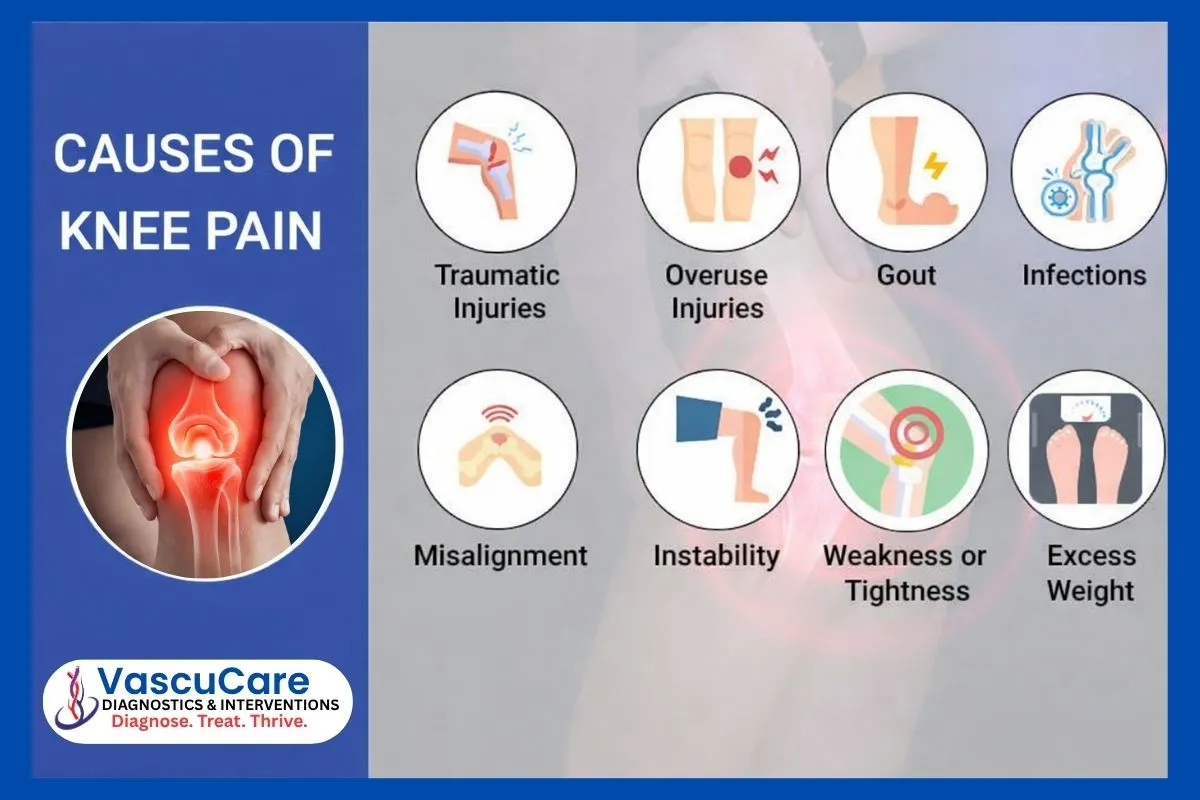
Obesity
- Excess body weight puts additional pressure on the knee joints, increasing the risk of pain and damage.
Medical Conditions
- Gout
- Infections
- Bursitis
Symptoms of Knee Pain
Knee pain symptoms can vary depending on the cause. Common signs include:
- Swelling and stiffness
- Redness and warmth
- Weakness or instability
- Difficulty bending or straightening the knee
- Popping or crunching sounds
- Pain while walking, climbing stairs, or standing
If these symptoms persist, it is important to seek medical attention.
Diagnosis of Knee Pain
Proper diagnosis is crucial for effective treatment. Doctors may recommend:
- Physical examination
- X-rays to detect bone issues
- MRI scans for soft tissue injuries
- Blood tests for infections or arthritis
Accurate diagnosis helps in identifying the exact cause and planning the right treatment.
Treatment Options for Knee Pain
Treatment depends on the severity and underlying cause of the pain.
Non-Surgical Treatments
Rest & Lifestyle Changes
Avoid activities that strain the knee and maintain a healthy weight.
Medications
Pain relievers and anti-inflammatory drugs help reduce pain and swelling.
Physiotherapy
Exercises to strengthen muscles and improve flexibility.
Knee Support
Braces or supports can provide stability and reduce stress on the joint.
Advanced Treatments
Minimally Invasive Procedures
Modern techniques help treat knee pain treatment without major surgery.
Pain Management Therapies
Targeted treatments for chronic pain relief.
Interventional Procedures
Advanced image-guided treatments for long-term relief.
Surgical Options
In severe cases, surgery such as arthroscopy or knee replacement may be required.
Why Choose VascuCare Diagnostics & Interventions?
For accurate diagnosis and effective knee pain treatment, VascuCare Diagnostics & Interventions is a trusted choice.
• Advanced diagnostic facilities
• Expert specialists in pain management
• Non-surgical and minimally invasive treatments
• Personalized care plans
• Focus on long-term relief and recovery
Whether your knee pain is mild or severe, VascuCare provides comprehensive care tailored to your needs.
Tips to Prevent Knee Pain
- Maintain a healthy weight
• Exercise regularly
• Strengthen leg muscles
• Avoid overuse and sudden strain
• Wear proper footwear
Prevention is always better than cure, especially when it comes to joint health.
Conclusion
Knee pain can affect your quality of life, but with the right diagnosis and treatment, it can be effectively managed. Understanding the causes and symptoms helps in early detection and timely care.
If you are experiencing knee pain, don’t ignore it. Consult experts at VascuCare Diagnostics & Interventions for accurate diagnosis and advanced treatment options.
Frequently Asked Questions (FAQs)
- What are the most common causes of knee pain?
Injuries, arthritis, overuse, and obesity are the most common causes. - When should I see a doctor for knee pain?
If pain lasts more than a few days or affects movement, consult a doctor. - Can knee pain go away without treatment?
Mild pain may improve with rest, but persistent pain needs medical attention. - Is exercise good for knee pain?
Yes, gentle exercises can strengthen muscles and reduce pain. - What tests are used to diagnose knee pain?
X-rays, MRI scans, and physical exams are commonly used. - Can knee pain be treated without surgery?
Yes, many cases are treated with medication, physiotherapy, and lifestyle changes. - What is the best treatment for knee pain?
It depends on the cause; a doctor can recommend the most suitable option. - Does weight affect knee pain?
Yes, excess weight increases pressure on knee joints. - How long does knee pain last?
It varies from a few days to chronic conditions depending on the cause. - Why choose VascuCare Diagnostics & Interventions?
For expert diagnosis, advanced treatment, and personalized care.