
- Mar 26, 2026
- Diagnostics
- 0 Comments
X-ray imaging is something that doctors use a lot to figure out what is wrong with people. It is really good at showing things like bones and what is going on inside the body. X-rays are fast. Do not hurt, which is nice.
Now we have something called Digital X-ray which makes X-ray imaging better. It is faster and safer than it used to be.
In this guide we will talk about the kinds of X-ray studies what they are used for and why X-rays are so important for doctors to know what is wrong, with someone and how to make them better.
What is an X-Ray?
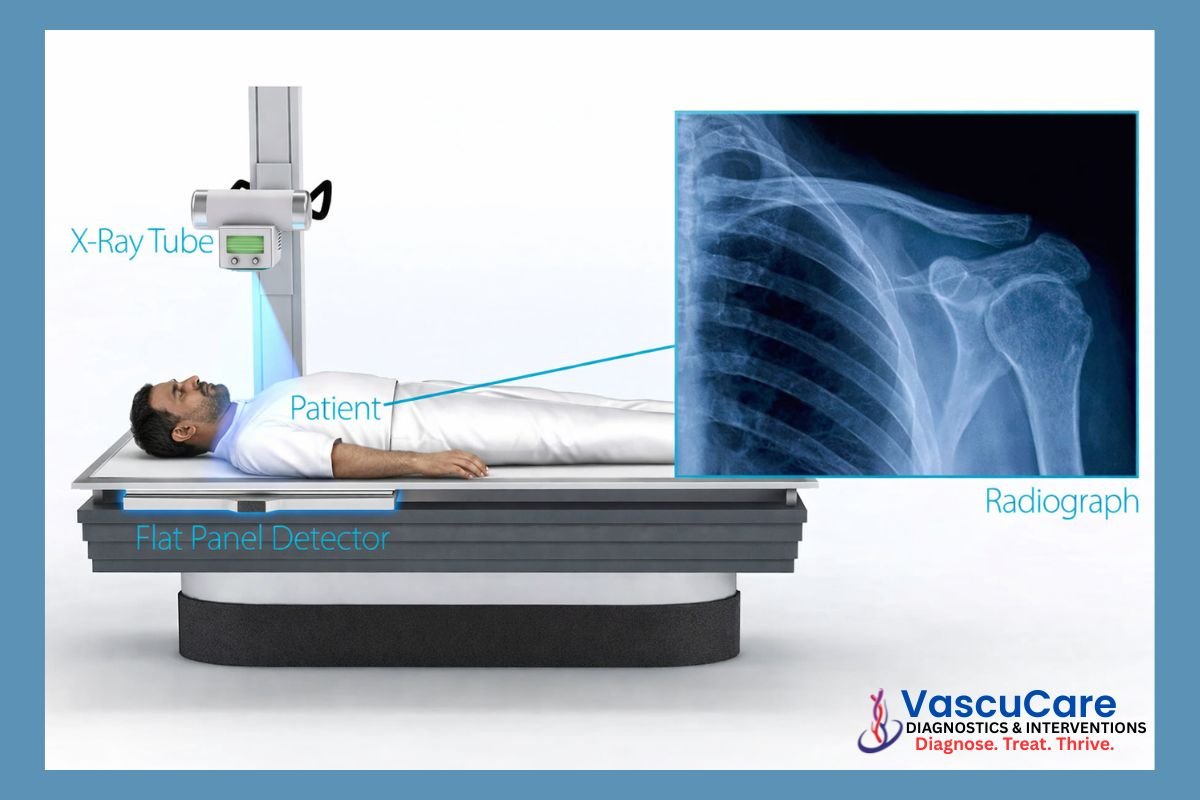
An X-ray is a kind of energy that goes through your body to make pictures of what’s inside. When an X-ray is taken the parts of your body that are dense like your bones will show up as white. The softer parts, like tissues will be shades of gray.
X-rays are often used for a few things, such as:
• Diagnose when you have a broken bone
• Find out if you have an infection
• Check how healthy your lungs are
• Find any problems with your organs, like your X-rays can help identify abnormalities, in organs and that is what X-rays are used for to identify these abnormalities in your organs
What is Digital X-Ray?
Digital X-ray is a way of doing traditional radiography. It uses sensors instead of film.
Key advantages:
• Digital X-ray gives us images fast
• Digital X-ray uses less radiation
• Digital X-ray gives us very clear pictures
• Digital X-ray makes it easy to store and share the images
• Digital X-ray is good, for the environment because it does not use film or bad chemicals
Common Types of X-Ray Examinations
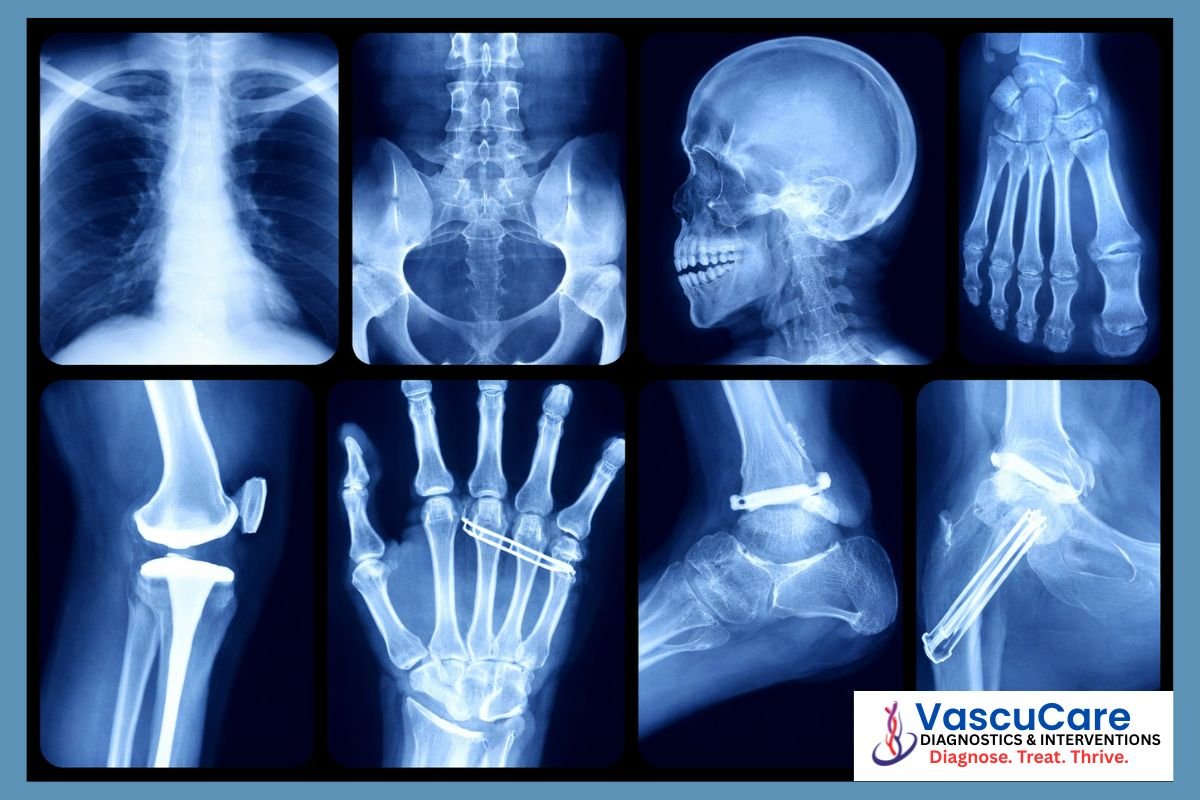
1. Chest X-Ray
A Chest X-ray is a common imaging test.
It is used to find:
• Lung infections, like pneumonia
• Tuberculosis or TB
• A bigger heart
• Fluid, in the lungs
• Lung tumors
2. X-Ray Knee
A Knee X-ray is really helpful to check the health of our knee joint and find out if we have any problems. It can detect lots of things, such as:
• Fractures or injuries to the knee
• Arthritis in the knee
• space narrowing in the knee
• Bone deformities in the knee
This Knee X-ray is very useful, for our knee health. The Knee X-ray can show us what is going on with our knee joint.
3. X-Ray Foot and Ankle
This X-ray is useful for figuring out what is wrong with the body. It can help doctors see things like:
• Fractures and sprains that happen when we get hurt
• Heel pain or bone spurs that cause a lot of discomfort
• Joint alignment issues that make it hard to move around
• Sports injuries that occur when we play sports or exercise and get hurt. The X-ray is useful for diagnosing sports injuries and other problems, like fractures and sprains and heel pain or bone spurs and joint alignment issues.
4. X-Ray Spine
A Spine X-ray gives pictures of the spine.
It helps find:
• Slip disc
• Spinal curvature
• Fractures
• Degenerative diseases
5. X-Ray PNS (Paranasal Sinuses)
A PNS X-ray is used to figure out what is going on with the sinuses.
Common uses of a PNS X-ray include:
• Sinusitis
• Nasal blockages
• Sinus infections
• pain causes
6. X-Ray Wrist
A Wrist X-ray is something doctors do after you get hurt.
It can find things like
- Fractures
- Dislocations
- problems with the ligaments
- Arthritis.
A Wrist X-ray is really helpful for figuring out what is wrong with your Wrist X-ray after you get injured.
A Wrist X-ray can show doctors a lot of things that might be wrong, with your Wrist X-ray.
7. X-Ray Pelvis
The Pelvis X-ray is a test that looks at the hip bones and the things around them.
It is used for a lot of things such as:
Hip fractures
• Joint dislocation
• Bone tumors
• Arthritis
The Pelvis X-ray is really good at checking for problems with the hip bones and the surrounding structures. The Pelvis X-ray can help find things, like hip fractures and joint dislocation and bone tumors and arthritis.
8. X-Ray KUB (Kidney, Ureter, Bladder)
KUB X-ray is about checking the urinary system.
It helps find:
• Kidney stones
• Bladder stones
• Problems in the tract
KUB X-ray is really good at spotting kidney stones and bladder stones.
It also helps doctors see if there are any issues, with the tract.
Specialized X-Ray Studies
9. RGU (Retrograde Urethrogram)
The RGU is a kind of X-ray test that helps doctors look at the urethra.
There are some reasons why doctors might want to use the RGU test.
These reasons include:
• The urethra is narrow which is also called a stricture
• The urethra has been hurt, which is also called trauma to the urethra
• You are having trouble urinating which means you are having difficulty, in urination
10. MCU (Micturating Cystourethrogram)
MCU checks the bladder and urethra when you pee.
It helps doctors find out if you have:
• reflux, which is when urine flows back, up
• Recurrent urinary infections
• Bladder problems
11. IVP (Intravenous Pyelography)
The IVP is a kind of test that lets doctors see the kidneys, the ureters and the bladder.
This IVP test helps doctors find problems like
- Kidney stones
- Blockages in the tract
- Things that are not quite right, with the way the kidneys, ureters and bladder are shaped or formed.
Benefits of X-Ray Imaging
• This medical test is really quick. It does not hurt at all.
• The doctor uses a non-invasive diagnostic tool to check your health.
• You can get this test done at places and it is not very expensive.
• The test helps the doctor find out what is wrong with you at a stage.
• The results of the test also help the doctor decide what treatment is best, for the condition.
Is X-Ray Safe?
Yes X-rays are safe when a doctor is in charge. Modern Digital X-ray machines use little radiation, which makes them safer, than old methods.
However:
• If you are pregnant you should tell your doctor
• You should not have X-rays unless you really need them
Who Needs an X-Ray?
Doctors might suggest getting an X-ray if you have:
• Pain in your bones. Got hurt
• Pain in your chest or trouble breathing
• Problems with your joints
• Infection that they suspect
• Issues with urinating
• Problems, with your sinuses that just won’t go away
Preparation for an X-Ray
When you have to get an X-ray you usually do not have to do much to get ready.
Some things you should do for an X-ray’re
• You should take off any metal things like jewelry or belts
• You should wear clothes that are comfortable
• You should do what the doctor says if you are getting special X-rays, like RGU or MCU or IVP.
Conclusion
X-ray imaging is really important for diagnosis. It is especially helpful with the Digital X-ray technology. Doctors use X-rays for all sorts of things like checking your chest or doing tests like RGU, MCU and IVP. X-rays help doctors find out what is wrong with you and fix the problem quickly.
If you are feeling pain. You got hurt or you have discomfort inside your body, an X-ray can help figure out what is going on. It can give you an answer and help your doctor decide what treatment you need. You should always talk to your healthcare provider to find out what kind of imaging test is best, for you.
Frequently Asked Questions (FAQs)
1. How long does an X-ray take?
X-ray procedures usually do not take a lot of time. They take around five to ten minutes.. Sometimes when we do contrast studies these X-ray procedures can take a bit longer.
2. Is X-ray painful?
No X-rays are completely painless. You just have to sit and do not move when they do the X-rays. The X-rays will be really fast if you stay still during the X-rays.
3. What is the difference between digital X-ray and normal X-ray?
Digital X-rays are really good because they give us results faster. The pictures from Digital X-rays are also clearer.. The best part is that Digital X-rays use less radiation than the old film X-rays. This makes Digital X-rays a better choice, than film X-rays.
4. Are X-rays safe for children?
X-rays are safe for children when they are used in the way and with very little radiation. The doctors make sure that the X-rays are used correctly so that children do not get much radiation from the X-rays. This is important because X-rays should only be used when necessary, for children.
5. Do I need fasting before an X-ray?
Most X-rays do not need fasting.. For some special X-ray tests that use a contrast agent like IVP you may need to prepare as your doctor advises.