Prostate Artery Embolization Doctor in Jaipur — Non-Surgical Relief for BPH (Enlarged Prostate)
Whether you have spent the day rearranging your schedule to find a restroom, waking up to go to the restroom during the night, or feeling like your bladder is constantly emptying, know that many others are having similar problems. Often these problems develop over time rather than occurring suddenly, leading many men to assume that these are “the problems of age.” However, when the urination is frequent, urgent, weak, or requires a strain, dribble, or subject to nocturia that inhibits sleep, travel, work, and general feelings of self-worth, perhaps a closer look is warranted.
A key cause for these symptoms, however, is Benign Prostatic Hyperplasia, which results in the enlargement of the prostate, causing it to put pressure on the urethra and hence causing an obstruction for the flow of urine. Some seek relief through drugs, while for others, it no doubt remains inadequate, and then there are some who have it for an extended period. Some may be recommended surgery, but then some may want something different.
Under these conditions, a modern and minimally invasive technique referred to as Prostate Artery Embolization (PAE) may be a viable option in some situations. It is essential to note that if you are looking to find a Prostate Artery Embolization Doctor in Jaipur or anywhere else in the world, the first condition is to find a doctor or practitioner who is proficient in the field of image-guided embolizations and who is well-versed in the vascular network of the prostate. Dr. Rakesh Kumar Kumawat offers Prostate Artery Embolization in Jaipur with the main objective of relieving urinary discomforts
Prostate Artery Embolization Specialist in Jaipur — Why Expertise Matters
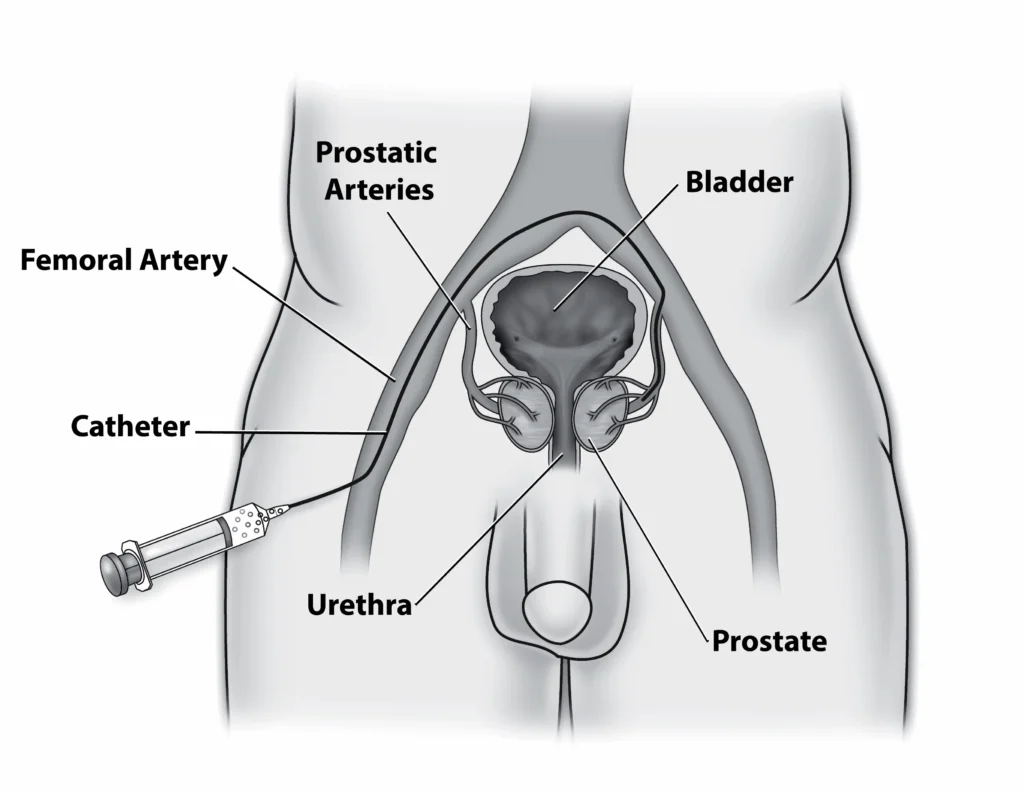
The PAE procedure is not something that doctors do out in the open. It is not a simple shot. The PAE procedure is a kind of treatment that uses a tube called a catheter and it is guided by pictures. A Vascular & Interventional Radiologist is the doctor who performs the PAE procedure. The prostate gets its blood from a lot of blood vessels. These blood vessels are different, in every person. To do the PAE procedure correctly the doctor has to find the arteries that are giving blood to the enlarged prostate. The doctor has to find these arteries to do the PAE procedure successfully on the enlarged prostate. The doctors have to put a small tube called a catheter through the tiny blood vessels, in the body. They have to be very careful when they do this. The doctor also has to make sure the special particles get to the place. The PAE procedure is a deal and it has to be done just right. The PAE procedure and the prostate are connected because the main goal of the PAE procedure is to help make the prostate smaller. The prostate and the PAE procedure go hand in hand because the PAE procedure is supposed to help with the prostate.
This is why an experienced PAE specialist makes a difference—not only during the procedure, but also before it. Proper patient selection, correct diagnosis, and structured follow-up are essential for safe outcomes. Dr. Rakesh Kumar Kumawat at VascuCare Diagnostics & Interventions follows a clear pathway: understanding symptoms in detail, reviewing previous reports, confirming suitability with appropriate tests or imaging, and then planning the procedure with safety and comfort in mind.
What Is Prostate Artery Embolization (PAE)?
The Prostate Artery Embolization treatment, also known as PAE is a procedure that helps with urinary problems caused by an enlarged prostate, which is also known as BPH.
PAE does not involve surgery to remove prostate tissue.
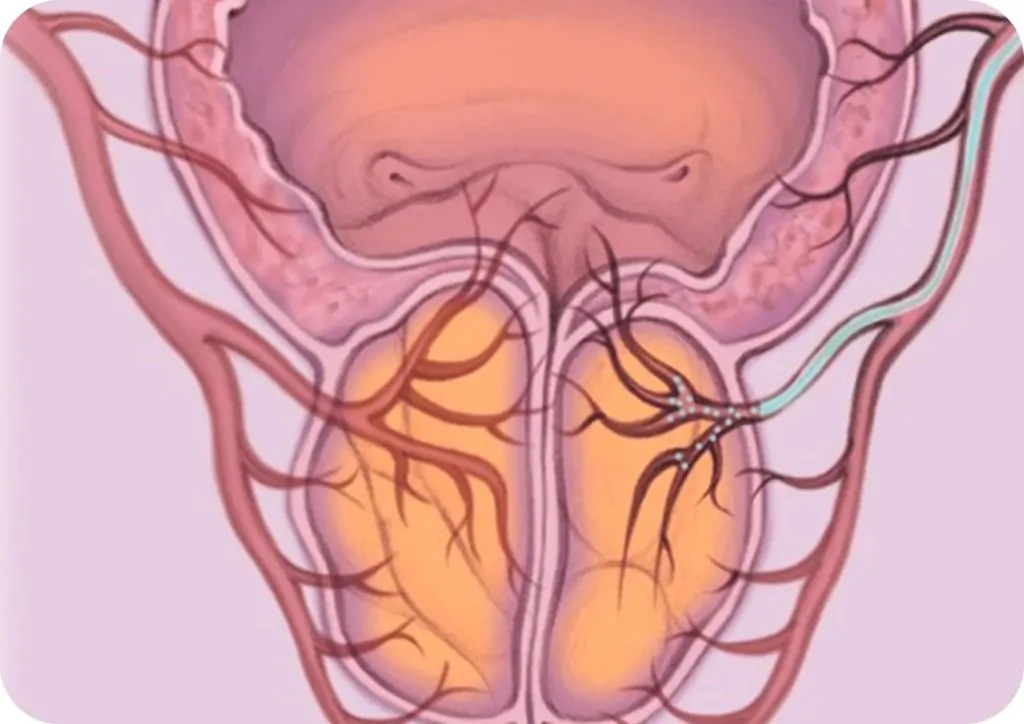
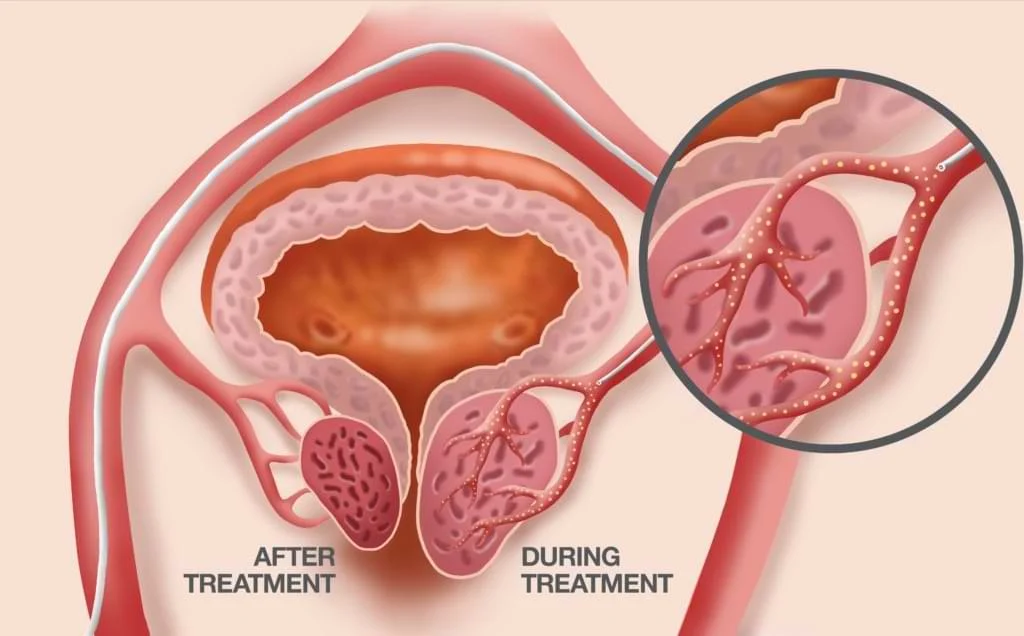
Instead Prostate Artery Embolization works by slowing down the blood flow to the enlarged prostate in a controlled manner.
When the prostate gets blood the Prostate Artery Embolization treatment can help the prostate shrink slowly over time.
As the prostate becomes smaller it puts pressure on the urethra.
This often means that people who have Prostate Artery Embolization can urinate easily and they have fewer problems, with urination.
The doctor does a procedure called PAE. This is done with the help of imaging machines by a kind of doctor who is an interventional radiologist.
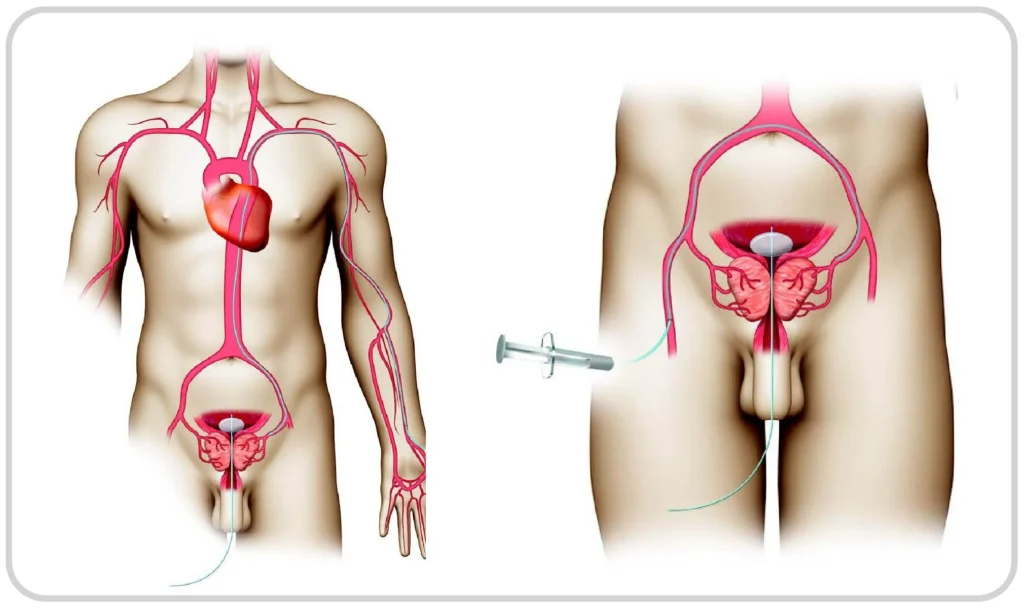
They make a hole in the skin usually in the groin area or sometimes in the wrist.
Then they put a thin tube into the arteries through this hole.
The doctor uses imaging machines to see what they are doing. They move the tube to the arteries that go to the prostate.
They put particles into these arteries to stop the blood from flowing to the parts that are making the prostate big.
The main idea of doing PAE is to make the symptoms better, without having to cut the body open like they do in surgery.
Many men like PAE because it is a “shrink the prostate” approach without cutting prostate tissue, and because it is designed to be less disruptive to routine life.
When PAE Is Considered for Enlarged Prostate
The prostate is a thing that is found under the bladder. When you have Benign Prostatic Hyperplasia the prostate gets bigger. Can push on the urethra, which makes it hard to go to the bathroom. You might have to go to the bathroom a lot. You might feel like you really have to go right now. You might have a stream when you urinate and the flow can stop and start. Sometimes you have to strain to get everything out. You might drip a little after you finish. The prostate can make you feel like you still have to go to the bathroom even after you just went. You might even wake up a lot at night to use the bathroom. Benign Prostatic Hyperplasia can cause a lot of problems, with the prostate and urination.
Men often go to the doctor when they have trouble sleeping because they have to get up to use the bathroom a lot at night due to nocturia. Some guys get really worried about taking trips or going to meetings or getting on a plane because they have to go to the bathroom so often due to nocturia. This can be a problem for men with nocturia and it can even get worse over time which can lead to urinary retention because the bladder does not empty all the way due, to nocturia.
PAE is commonly discussed when medicines are no longer giving acceptable relief, when side effects of medicines are hard to tolerate, or when a patient prefers a minimally invasive approach. It may also be considered for men who are not ideal surgical candidates due to other medical conditions—after a detailed medical assessment.

How Do I Know if PAE Is Right for Me?
The first step is to have a consultation. This is really important. Sometimes urinary symptoms can be caused by than one thing.. The truth is, making the prostate smaller does not fix every problem. When Dr. Rakesh Kumar Kumawat sees you he will ask you about your symptoms. He wants to know how they affect your life. He will also ask about your history and what treatments you have had before. You might be asked some questions, like how you get up to use the bathroom at night. Do you feel like you have to go badly? How strong is your stream? Do you have to strain?. How do your urinary symptoms get in the way of your work or sleep?
So the doctor is going to look at your situation. They may want you to get some tests done. These tests can be things like an ultrasound or an MRI. The doctor wants to see how big your prostate is and check on your bladder and the rest of your body. They will also do urine tests and blood tests to make sure you do not have an infection. This is also to make sure your body is ready, for the procedure. The doctor may also consider doing a PSA test to check on your prostate health. The PSA test is one of the things the doctor will look at when they are checking on your prostate.
This evaluation is valuable because it moves you from uncertainty to clarity—helping confirm whether your symptoms are likely due to BPH and whether PAE is a suitable option.
Who May Not Be Suitable for PAE?
PAE is not the answer for every problem with the system. Some men are not candidates for PAE. This is the case if doctors think they might have prostate cancer because that needs to be treated in a way. Men with an urinary tract infection should not have PAE. The same is true for men with prostatitis which’s inflammation of the prostate. Men with kidney problems should also not have PAE. Certain problems with the bladder can make PAE a bad idea. If a man has a stricture, which is a narrowing of the urethra he should not have PAE. Bladder stones are another reason not to have PAE. Some men have a condition called bladder which means their brain and bladder do not communicate properly. These men should not have PAE either. PAE is not the solution, for these urinary conditions.
These conditions matter because they can change the cause of symptoms and the safest treatment strategy. For example, if symptoms are primarily due to urethral narrowing (stricture), shrinking the prostate may not fully address the obstruction. If infection is present, it must be treated first. If cancer is suspected, additional diagnostic steps are required.
This is why careful screening and correct diagnosis are not “extra steps”—they are essential for safety and for choosing the treatment that actually fits the problem.
Preparation Before Prostate Artery Embolization
Getting ready for something is really easy when you do it one step at a time. At VascuCare Diagnostics & Interventions the team at VascuCare Diagnostics & Interventions helps you with all the tests you need to do. Tells you what to do before the procedure, at VascuCare Diagnostics & Interventions.
The doctor will probably do some blood tests like the complete blood count and checks to see how well your kidneys are working. They will also do tests to make sure your blood is clotting properly. You will likely have to give a urine sample
The doctor may want to take a look at the prostate with an ultrasound or an MRI. This depends on what’s going on with you.
Your doctor may tell you not to eat for a few hours before the procedure. This is because you might be given sedation to help you relax during the procedure. Your doctor will give you instructions about the prostate procedure and what you need to do to get ready, for it.
Taking medication is a part of our lives. If you are taking blood thinners like aspirin or other blood thinners you need to be careful. Do not stop taking your blood thinners by yourself. You should talk to the clinic. Do what the doctor tells you to do. The doctor will give you instructions that are just for you based on why you take blood thinners and what your risks are. The doctor knows what is best, for you when it comes to blood thinners.
It is usually helpful to bring one attendant with you, since you may feel tired after the procedure and assistance can make the day more comfortable.
What Happens During PAE?
The doctor does Prostate Artery Embolization with a tube called a catheter. They put this tube into the body through a hole usually in the groin area but sometimes in the wrist. The doctor uses pictures called angiography to see the arteries that go to the Prostate Artery Embolization. When they find the arteries they put in tiny particles to stop some of the blood from going to the Prostate Artery Embolization. This helps make the Prostate Artery Embolization smaller. The doctor is very careful when they do this. They want to make sure they get the arteries, for the Prostate Artery Embolization.
The same process is usually done on both sides to make sure the treatment is good enough. The doctor uses imaging to guide them the time so they can deliver the treatment in a very controlled and precise way. This means they treat the problem that needs to be treated and do not hurt the surrounding tissues. They want to minimize the impact, on the surrounding tissues of the problem.
Comfort-focused protocols are used during the procedure. Monitoring is continuous, and the team ensures pain control and patient safety at every stage.
Hospital Stay and Return to Routine
A lot of men like Prostate Artery Embolization because it usually works better with their schedules than having a big operation. The time they spend in the hospital is generally not very long around one day depending on what the doctors say and how well they recover. After the doctors check on them and make sure they are stable most patients can go home with simple instructions, on what to do like drinking enough water taking their medicines not doing too much for a little while and coming back for a check-up. Prostate Artery Embolization is a procedure that many men prefer because it is easier to fit into their lives.
Instead of weeks of restricted movement, PAE often allows a quicker return to routine activities with sensible precautions. The exact timeline varies from patient to patient and depends on overall health, symptom severity, and how the body responds.
Benefits and Recovery After Prostate Artery Embolization
Men look for a Prostate Artery Embolization Doctor in Jaipur because they want to recover. Prostate surgery can work,. Some men like a simpler way that does not need big cuts and lets them get back to normal life sooner. This way is better for men who want time off and fewer problems after the procedure. Men, like Prostate Artery Embolization because it is an invasive procedure.
After Prostate Artery Embolization many men say they have problems with having to go to the bathroom a lot feeling like they have to go right away and having a weak stream of urine. They also wake up often at night. When they do not have to get up much to use the bathroom at night they usually sleep better. Men feel more confident in their lives when they do not have to rush to the bathroom all the time. The prostate gets smaller slowly so the problems with the prostate can keep getting better over time. Prostate Artery Embolization can make a difference for men and the improvement, in symptoms can continue as the prostate reduces in size.
Short-term recovery commonly involves rest, good hydration, following medication instructions, and avoiding heavy activity briefly. Some men may experience mild pelvic discomfort or temporary burning with urination, which usually settles. The most important part of recovery is following the clinic’s advice and attending follow-up to track symptom progress.
Why Choose Dr. Rakesh Kumar Kumawat for PAE in Jaipur?
Choosing a Prostate Artery Embolization Specialist in Jaipur is about the entire care pathway—diagnosis, safety checks, precision technique, and follow-up planning—not just the day of the procedure.
At VascuCare Diagnostics & Interventions patients get a lot from talking to the doctors about their symptoms and how these symptoms affect their daily life. The doctors make sure to do the tests before any procedure to keep the patients safe. They use machines to help them see exactly what they are doing during the embolization procedure. The team at VascuCare Diagnostics & Interventions is very supportive. Helps the patients feel comfortable. After the procedure the doctors give the patients a plan to follow so they can check if they are getting better. VascuCare Diagnostics & Interventions has a team that really cares about the patients and wants to help them with their symptoms and get their life back, to normal at VascuCare Diagnostics & Interventions.
If you are looking for a non-surgical option for BPH that can reduce urinary symptoms and improve quality of life, a consultation with Dr. Rakesh Kumar Kumawat can help confirm whether PAE is a suitable choice for your case.
For Appointments & Consultation: Kindly fill out form or contact us at (+91) 88900 28272. Our team will get back to you within 24 hours.
The PAE procedure is really not that bad because it is minimally invasive. This means doctors use images to help guide them when they do it. The main goal of PAE is to reduce the blood flow to the prostate when it’s too big. When this happens the prostate will get smaller over time. People will have fewer problems when they go to the bathroom. The PAE procedure helps with symptoms so people can feel better. PAE is an option, for people who have an enlarged prostate.
PAE is done by a doctor who specializes in Vascular and Interventional Radiology. If you need PAE you can go to VascuCare Diagnostics and Interventions. Talk to Dr. Rakesh Kumar Kumawat. He is a Vascular and Interventional Radiologist who does PAE procedures.
So you have Benign Prostatic Hyperplasia or BPH for short. The symptoms of BPH are pretty annoying. People with BPH usually have to go to the bathroom a lot. They have to urinate. Sometimes they really have to go it is an emergency. That is called urgency.
No. This procedure is done with a catheter. It goes through a very small hole instead of a big cut. The catheter is put in through this puncture. The catheter-based procedure is different, from surgery because it does not need a big incision.
Some men notice changes within a days to a few weeks and the prostate keeps getting smaller over time so they see even more improvement. The prostate gets smaller. That is when men see more improvement.
Men who have cancer that has not been confirmed an infection that is currently active a prostate, certain issues with their bladder a narrowing of the urethra stones in the bladder or serious problems with their kidneys may not be the best people, for this.
Doctors often do some tests to check your health. These tests include blood tests like the blood count, kidney function and PT/INR. They also do urine tests. Take pictures of the prostate using an ultrasound or an MRI. The prostate specific antigen, which is also called the PSA may be considered in cases when it is necessary for the doctors to get more information, about the prostate.
Yes that is often the case, especially when sedation is planned for the patient. The doctor will tell the patient how long they need to fast before the procedure.
You should let the clinic know. Do not stop taking the medicines by yourself. The doctor will tell you how to make changes to the medicines if they are required. The doctor will help you with the medicines.
A lot of patients need to be watched for a time usually about a day. This really depends on what the doctors say to do. How well the patient is recovering from the treatment. The medical team will decide how long the patient needs to stay for observation which’s often just a day to make sure the patient is doing okay after the treatment.
Most patients do just fine with it. Some people may feel a little uncomfortable during or, after the procedure. This discomfort is usually not too bad. They can take medicine to make it better. The medicine helps the patients feel okay again.
PAE is considered safe in properly selected patients when performed by an experienced interventional radiologist with appropriate evaluation and follow-up.
Copyrights © 2023 All Rights Reserved by VascuCare Diagnostics & Interventions