Genicular Artery Embolization Doctor in Jaipur — Advanced Knee Pain Relief Without Surgery
The problem is, knee ache does not stay modest forever. It can begin gently, a pinch when going up stairs or pushing up out of a seated chair. It can progress to an everyday burden, a weight carried. If you have osteoarthritis of the knee, your ache may feel continuous, swollen after a walk, stiff in the mornings, or disrupt your sleep because of the ache. Then there is the labor of making movements more difficult, while cutting back on movement can make the problem worse for the muscles and the joint itself.
Conservative measures such as physiotherapy, weight control, knee supports, anti-inflammatory drugs, and injections may provide some assistance, such as pain relief, although this is often temporary and partial in nature. If pain persists, and surgery is either not desired or not immediately necessary, then Genicular Artery Embolization (GAE) may be an alternative.
If you are looking for a Genicular Artery Embolization expert in Jaipur, you need a healthcare professional educated in vascular image-guided procedures, knowledgeable in knee pain patterns, and skilled in embolization techniques.
At VascuCare Diagnostics & Interventions, Dr. Rakesh Kumar Kumawat provides patients with Genicular Artery Embolization in Jaipur. The focus at VascuCare is on meticulous planning, pain reduction, enhanced mobility, and a practical recovery period. GAE is not a form of a knee replacement and is certainly not a surgery; it’s a minimally invasive process involving a tiny puncture in the knee to address pain related to inflammation involving abnormal vessels in the knee’s synovial lining.
Genicular Artery Embolization Doctor in Jaipur — Why Specialist Care Matters
GAE is performed by a Vascular & Interventional Radiologist rather than the traditional orthopedic approach. This is a task that requires profound knowledge of the vascular setup of the knee, deft handling of the micro-catheters, and the capability to identify unusual vessels which are generally responsible for the inflammation. This requires precision since the object is to reach the troublesome vessels while leaving the healthy vessels untouched.
The other equally important factor is the right patient selection. Not all knee pains are the same, as some may result from ligament injury, meniscal tear, inflammation, mechanical blocking, deformity, or even other conditions, which might require a different approach altogether. At VascuCare Diagnostics & Interventions, under the guidance of Dr. Rakesh Kumar Kumawat, the assessment is done, the reports are reviewed, and the patients are informed about whether GAE would be helpful in addressing the condition under consideration.
What Is Genicular Artery Embolization (GAE)?
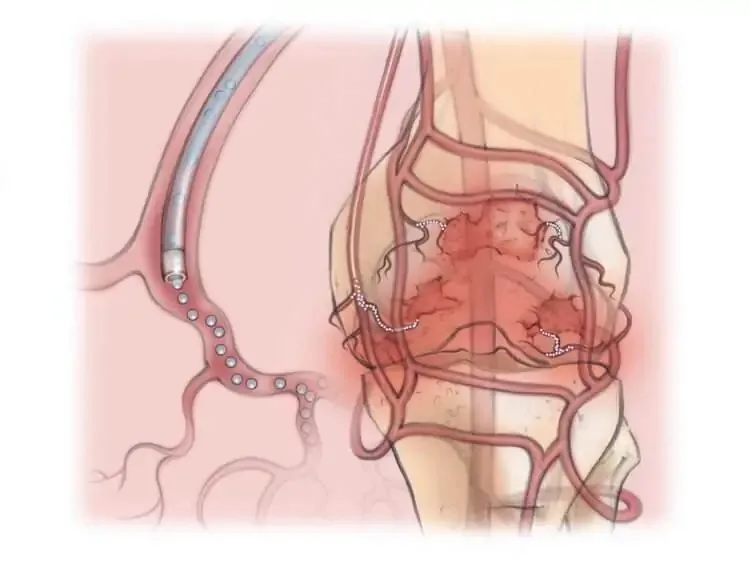
GAE is a minimally invasive, image-guided therapy for the most part indicated in chronic knee pain, mostly related to knee osteoarthritis. In OA, the lining of the joint-or synovium-increases and becomes inflamed. In a few people, these areas of inflammation trigger the body to form small new blood vessels-what the doctor refers to as increased abnormal micro-vascularity. These abnormal vessels can keep inflammation active and may be linked with persistent pain signaling.
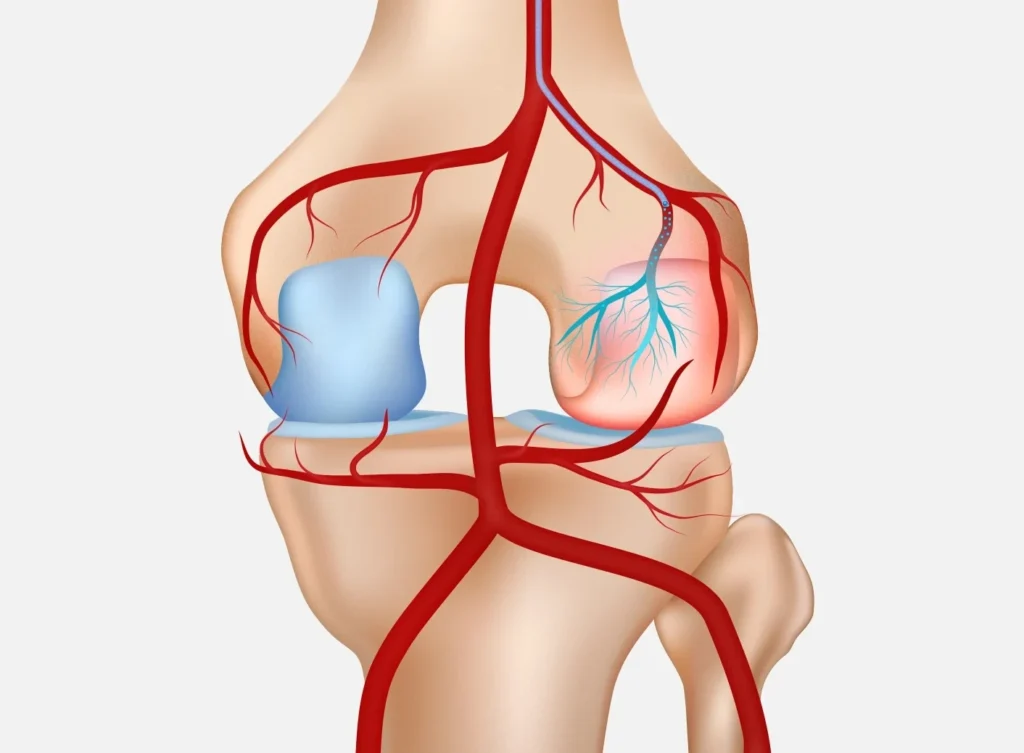
GAE specifically targets these inflammation-related micro-vessels. The procedure selectively cuts back the blood flow to them in such a way that it reduces knee inflammation and, with time, reduces pain. It does not repair cartilage or alter bone structure. What it does is addresses one of the major drivers of pain: abnormal flow-driven inflammation, which makes it a very valuable non-surgical option for carefully selected patients.
How Genicular Artery Embolization Works
Most patients are wondering why restricting blood flow may provide relief for knee pain. However, the main concept lies in the relationship that can be found between inflammation and the development of blood vessels. When joint surfaces, or the synovium, stay chronically inflamed, this may result in the development of blood vessels. GAE works by modulating faulty blood flow.
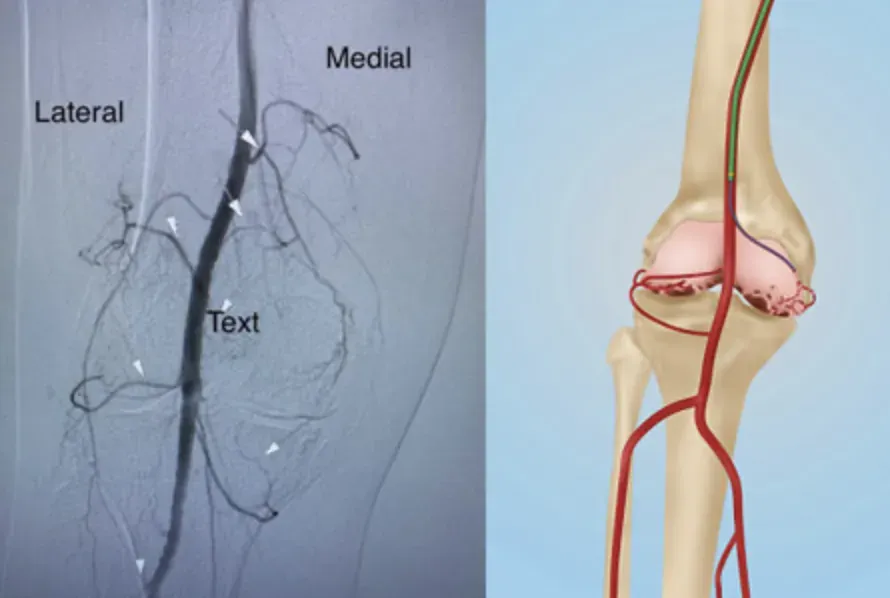
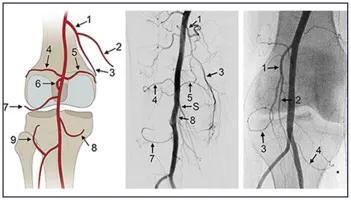
The technique typically involves a small puncture, which is normally done around the groin area, although sometimes it is performed through a wrist puncture, depending on the situation. Real-time imaging is then employed, and a catheter is guided into place, into which the genicular arteries, which are responsible for the knee area, are targeted. The abnormal vessels, which are assumed to be a sign of the accompanying inflamed synovium, are identified. Once identified, small particles are administered into targeted vessels.
The process of recovery is generally slow after GAE. Some notice signs of improvement after a few days or a couple of weeks, while for others, noticeable improvement may occur over a couple of weeks as pain and inflammation ease and range of motion increases.
Genicular Artery Embolization Treatment in Jaipur — Who Can Benefit?
Generally speaking, the method of Genicular Artery Embolization (GAE) is best attempted for people who’ve experienced lengthy and continuous pain in their knee, most commonly as a result of osteoarthritis pain, whereby other conservative measures fail to yield sufficient alleviation. Many individuals exploring the GAE procedure in Jaipur report belonging to any of these categories:
– They might suffer from persistent knee pain that influences walking, climbing stairs, getting up from sitting positions, and sleeping.
– They have attempted physical therapy, lifestyle adjustments, and medication but still face challenges in performing day-to-day activities.
– They have received injections—steroids or lubricating ones—and the results were temporary or incomplete.
The best results are achieved through proper candidate selection, goal setting, and a rehabilitation plan. GAE is most effective as pain is driven by inflammation when the pain is a major factor; the patient is motivated to increase strength as the pain begins to go away.

Key Benefits of GAE in Real Life
People aren’t choosing it because it’s elaborate and Flashy, or because it is brand new. They are choosing it because it may actually work in an important, down-to-earth way. There is great incentive in the pain-relieving success, creating easier movement, easier walking, increased confidence in movement, and an easier path to physical therapy and strengthening exercises, as well as the fact that this procedure is done through a tiny prick, as opposed to an official incision, which results in little scarring and an easier, faster recovery, as opposed to surgery.
GAE is an option for one or two knees, depending on symptoms and appropriateness for the individual. The planning is always personal. For many people, the aim is not total elimination of the pain but a marked improvement that allows them to increase their independence, walk farther, climb stairs without as much fear, need fewer pain medications, and enjoy more nights of undisturbed sleep.
Recovery After Genicular Artery Embolization
Recovery from a GAE is generally easier than from an open surgery, but it also requires some tenderness in care. You can expect minor stinging at the site of puncture and temporary soreness in your knee, accompanied by some degree of tiredness for some time. For the first few days, most are advised to walk only slowly and make light movements without strenuous exertion for some little time. Your doctor will describe the regime of hydration, daily activities, and the short-term medication, if any.
Physiotherapy often becomes much more effective once the initial pain has settled. Building up the muscles around the knee supports long-term function, so rehabilitation usually forms a key part of the overall success-not something distinct from it.
Does Genicular Artery Embolization Really Work?
This is the big question, and it has a straightforward answer. To ease the knee pain associated with inflammation, the GAE stops abnormal vessels in the joint lining. Most patients seem to see an improvement in symptoms after the process, particularly if the pain and imaging match the targeted therapy for GAE.
However, the results are individual and not absolute. What “works” can mean different things to different people. In other cases, “works” can mean something else. “Works” can mean anything from being able to walk without pain to using fewer pain medications, and from being able to delay a knee replacement to other things. Results also vary depending on the stages of osteoarthritis and whether it is related to inflammation pain and/or structural/mechanical pain, as well as body weight, lifestyle, etc.
Hence, the importance of a proper evaluation is such that if the underlying cause for the pain is due to mechanical deformity, severe bone changes, etc., which is not associated with the inflammatory process, the benefit from the procedure is small. At the hands of Dr. Rakesh Kumar Kumawat, patients are taken care of with proper understanding and informed decisions.
When Might You Need Genicular Artery Embolization?
You may consider GAE if knee pain has become chronic, affects daily tasks, and has not improved enough with conservative care. Many patients in Jaipur look for GAE when they want a minimally invasive option to avoid or postpone surgery. Some also seek pain control to participate more confidently in physiotherapy and strengthening programs. For many people, the real goal is not only “less pain,” but “more life”—being able to move without fear, work comfortably, and maintain independence.
Does Genicular Artery Embolization Really Work?
This is the big question, and it has a straightforward answer. To ease the knee pain associated with inflammation, the GAE stops abnormal vessels in the joint lining. Most patients seem to see an improvement in symptoms after the process, particularly if the pain and imaging match the targeted therapy for GAE.
However, the results are individual and not absolute. What “works” can mean different things to different people. In other cases, “works” can mean something else. “Works” can mean anything from being able to walk without pain to using fewer pain medications, and from being able to delay a knee replacement to other things. Results also vary depending on the stages of osteoarthritis and whether it is related to inflammation pain and/or structural/mechanical pain, as well as body weight, lifestyle, etc.
Hence, the importance of a proper evaluation is such that if the underlying cause for the pain is due to mechanical deformity, severe bone changes, etc., which is not associated with the inflammatory process, the benefit from the procedure is small. At the hands of Dr. Rakesh Kumar Kumawat, patients are taken care of with proper understanding and informed decisions.
When Might You Need Genicular Artery Embolization?
You may consider GAE if knee pain has become chronic, affects daily tasks, and has not improved enough with conservative care. Many patients in Jaipur look for GAE when they want a minimally invasive option to avoid or postpone surgery. Some also seek pain control to participate more confidently in physiotherapy and strengthening programs. For many people, the real goal is not only “less pain,” but “more life”—being able to move without fear, work comfortably, and maintain independence.
Why Choose Dr. Rakesh Kumar Kumawat at VascuCare Diagnostics & Interventions?
When you are searching for a Genicular Artery Embolization specialist in Jaipur, you are not only looking to have the procedure done, you are looking at expertise, planning, and implementation. Dr. Rakesh Kumar Kumawat understands this and has made VascuCare Diagnostics & Interventions a place where, through a patient-centric method, your needs are assessed and explained to you, your investigation is noted with precision, and your recovery and mobility are hastened.
If the thought of Genicular Artery Embolization treatment in Jaipur is fixed in your mind, then it is suggested to first seek a consultation to establish the likelihood of a particular knee pain pattern responding to the procedure.
For Appointments & Consultation: Kindly fill out form or contact us at (+91) 88900 28272. Our team will get back to you within 24 hours.
GAE is a minimally invasive procedure used in the cutting down of abnormal blood flow which causes knee inflammation. With this process, the inflammation can be reduced, and in return, the constant suffering in the knee, which is a result of osteoarthritis in most cases, can be minimized.
GAE is done by a vascular, as well as interventional, radiology specialist. At VascuCare Diagnostics & Interventions, you will be evaluated by Dr. Rakesh Kumar Kumawat.
No. It’s via a small puncture with a catheter under imaging guidance. It is not an open procedure, and this is not a knee replacement.
GAE is usually considered in cases where there is a marked association between osteoarthritis-related pain and inflammation, and where there has been inadequate improvement in such pain under conservative treatment.
The procedure treats small abnormal blood vessels that sustain inflammation in the knee lining, which may help to reduce inflammation-related pain.
Within a few days or weeks, some experience noticeable improvements, while for others, progress is slow, occurring within weeks.
In a few selected cases, GAE can alleviate pain and enhance functionality, thus postponing the need for surgical intervention.
The majority of the patients are able to resume light activities quite quickly. The period of recovery is variable. The period spent off work or out of daily activities is typically less than that for major surgeries.
Mild aches, bruising on the injection site, and knee pain may be experienced briefly. Your doctor shall clarify what needs to be evaluated and what does not.
Pain caused by non-inflammatory factors, severe mechanical deformities, infections, and vascular conditions may make an individual unfit. An evaluation is, therefore, necessary.
Under normal circumstances, a medical examination and X-ray are usually required. MRI scans may also be recommended.
Yes, physio and strengthening exercises frequently add to the improvement of the results by strengthening the muscles and enhancing the long-term function of the knee.
Copyrights © 2023 All Rights Reserved by VascuCare Diagnostics & Interventions