Address : Near Chitrakoot Stadium, Vaishali Nagar Jaipur

FNAC Testing Centre— Accurate, Quick & Safe FNAC Testing

VascuCare Diagnostics & Interventions (Best FNAC Testing Centre in Jaipur)

When you find a lump in the neck like a thyroid nodule or a swollen lymph node or even a breast lump you immediately think: What is this lump? You can get scans, like ultrasound or a CT scan to see how big the lump is, what shape it is and where it is located.. Sometimes these scans cannot tell you exactly what is going on inside the lump. That is when FNAC testing is really helpful. FNAC testing is usually the thing doctors suggest you do to figure out what is going on. And the good thing is that it does not involve surgery or getting stitches or a long time to recover.

If you are looking for a FNAC Testing Centre in Jaipur the most important thing is that they get it right. FNAC Testing Centre seems easy. The result of the FNAC Testing Centre really depends on getting the right spot doing it in a very clean way and using ultrasound to help with the FNAC Testing Centre when the problem is small, deep or hard to find. The FNAC Testing Centre is very good, at finding out what is wrong. It is important to choose a good FNAC Testing Centre. At VascuCare Diagnostics & Interventions, recognised by many patients as the best FNAC Testing Centre in Jaipur, the focus stays on precise sampling, patient comfort, and a smooth, well-guided experience from start to finish.

What is FNAC testing?

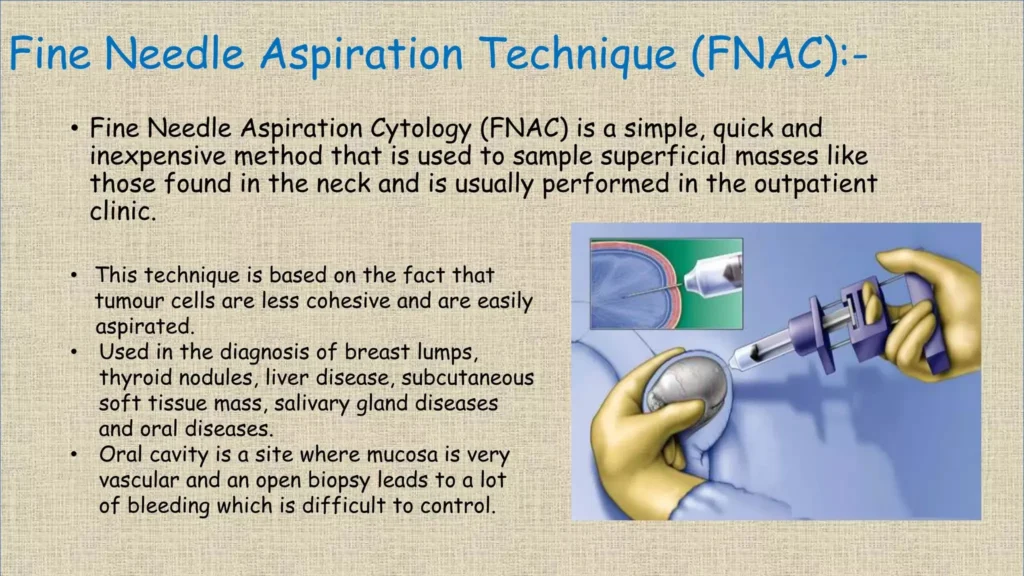
The FNAC, which stands for Fine Needle Aspiration Cytology is a test that doctors use to find out what is going on with a lump or swelling. They use a thin needle to take a small sample of cells, from the lump. Then these cells are put on slides. A pathologist looks at them under a microscope.

FNAC Testing

The FNAC report helps your doctor figure out if the swelling is benign which means it is not cancerous or if it is inflammatory which means it is red and sore because of an injury or infection. The FNAC report can also show if the swelling is infective which means it has an infection or cystic which means it is filled with fluid. The FNAC is important because it helps your doctor understand if the swelling is suspicious or malignant which means it could be cancer. The FNAC helps your doctor make a plan to take care of the swelling.

FNAC is commonly recommended because it is quick, minimally invasive, and usually done as an outpatient test. For many people, it’s the test that reduces stress because it replaces “maybe” with a clearer direction.

Why doctors recommend FNAC

Your doctor will use FNAC when they need to be sure about what’s going on before they decide what to do next. FNAC can help your doctor avoid doing surgery that you do not need. It can also help your doctor choose the treatment for you.. It can help your doctor figure out what is wrong with you faster when something is not right.

In their work doctors find FNAC very useful for thyroid nodules and lymph nodes that are swollen. These things are pretty common. They are usually not serious. But your doctor still needs to check them if they are getting bigger or if they will not go away or if they look suspicious in the pictures, from the imaging tests. Your doctor will use FNAC for these things to be sure what is going on with your thyroid nodules and lymph nodes.

Many patients also prefer FNAC because it usually doesn’t disrupt routine life. Most people walk in, get the test done, and return to normal activities the same day.

Who should visit an FNAC testing centre in Jaipur?

You should think about getting a Fine Needle Aspiration Cytology test if you have a swelling that’s new getting bigger not getting better with time or if the ultrasound shows something that does not look right. People usually get this test if they have a lump in the neck a problem with the thyroid lymph nodes in the neck or armpit or groin that are swollen a lump in the breast a salivary gland or a lump, under the skin that feels soft. Fine Needle Aspiration Cytology can help figure out what is going on with these kinds of swellings.

It’s also used when a cyst keeps recurring or when your doctor wants to confirm whether the swelling is inflammatory, infective, or something that needs further evaluation.

Common FNAC tests done in Jaipur

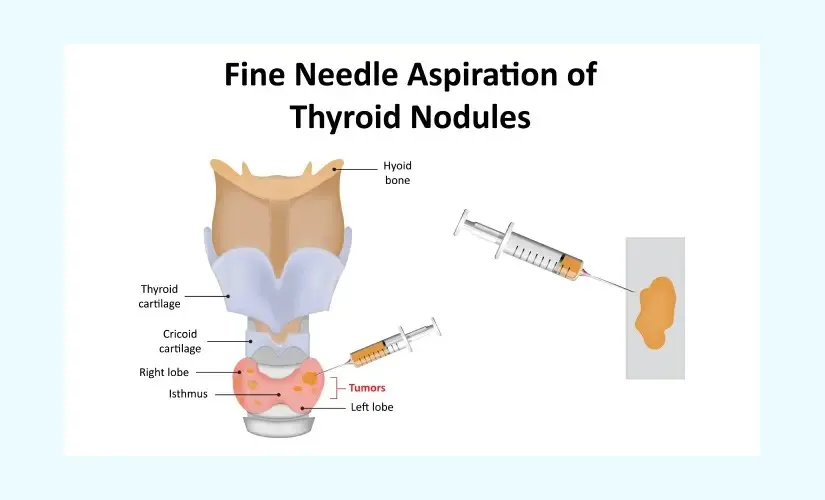
At a equipped FNAC centre the doctors do the FNAC procedure, on different parts of the body. They decide which part of the body to do the FNAC procedure on based on what the patient needs and what the imaging tests show. The FNAC procedure is done for body areas. People often look for Thyroid FNAC in Jaipur. This is because Thyroid nodules are found a lot on ultrasound tests. Most of the time these nodules are not harmful. Thyroid FNAC is a test that helps figure out what the nodule is. It tells the doctor if they should just keep an eye on it give the patient some medicine do tests or make a plan with a specialist.

Sometimes the nodule is really small or hard to reach. In these cases an ultrasound-guided Thyroid FNAC is used. This makes sure the doctor gets a sample, from the part of the Thyroid nodule. Lymph node FNAC is often recommended when the lymph nodes stay swollen or get bigger. The lymph nodes can get swollen because of infections or inflammation or tuberculosis or some other reason. The Lymph node FNAC helps figure out what is probably causing the problem and that way the doctor can give the treatment, for the Lymph node issue instead of trying different medicines to see what works.

When you have a breast lump your doctor may suggest you get a needle aspiration cytology or breast lump FNAC for short in some situations. This is especially true if the breast lump looks like it is filled with fluid or seems harmless when your doctor looks at the pictures from the imaging tests. In some cases your doctor may think that a core needle biopsy is an idea because it gives them a bigger sample of tissue from the breast lump to look at. The choice between breast lump FNAC and core needle biopsy depends on the details of your breast lump and what the pictures from the imaging tests show, as well, as what your doctor finds when they examine you.

The doctor uses a test called Salivary gland FNAC when someone has a swelling in their Salivary gland. This test is helpful for swellings in the gland or the submandibular gland. It helps the doctor figure out if the swelling is because of an infection or something serious like a tumour, in the Salivary gland. Soft tissue lump FNAC is often done for superficial lumps in the arms, legs, back, or abdominal wall—especially when the lump is easy to target and FNAC is likely to provide useful information.

Palpation FNAC vs Ultrasound-guided FNAC

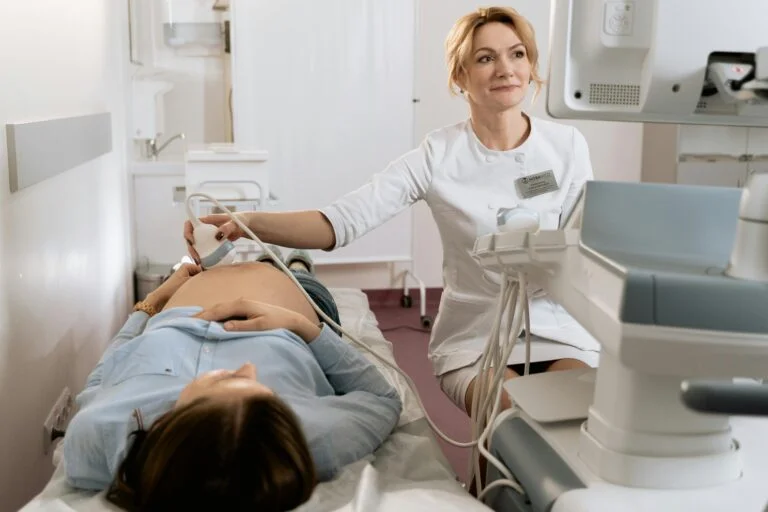
Some swellings can be easily felt. You can do FNAC by touch. This is called palpation. Many modern hospitals like to use ultrasound to guide the FNAC needle. This is especially true when you need to be precise. For example this is the case with thyroid nodules, deep lymph nodes or lesions that have both solid and fluid filled areas. FNAC is very useful, in these situations.

Ultrasound guidance helps the doctor see the needle tip in real time and place it exactly where the best sample can be obtained. This reduces the chances of “insufficient sample,” which is one of the main reasons FNAC sometimes needs to be repeated.
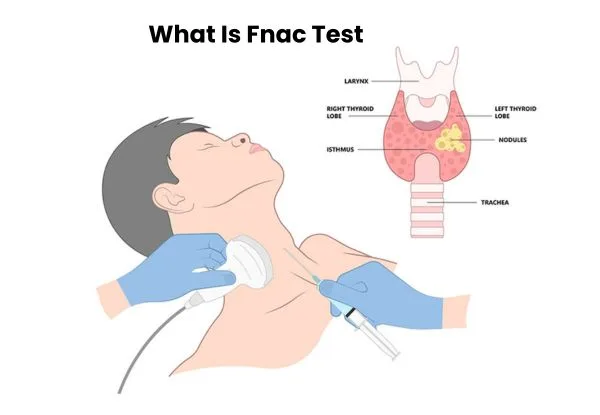
FNAC Testing

How FNAC is performed

The FNAC process is really straightforward and easy, for patients. First your doctor looks at your ultrasound results or clinical findings. Then they make sure the skin is very clean and germ-free. Next a small needle is put into the area for just a few seconds to get some cells. These cells are then put on slides so they can be looked at in a laboratory. After that a small bandage is put on the area. Usually you can go home right away. The FNAC is a quick procedure.

For ultrasound-guided FNAC, the doctor uses ultrasound to identify the exact target area and guides the needle into the most relevant part of the nodule or node. This approach is particularly useful for thyroid FNAC, small lymph nodes, and difficult-to-feel lesions.

Is FNAC safe?

The FNAC test is really safe when it is done correctly. The person doing it is careful to keep everything clean. The needle they use for the FNAC test is very thin so you do not have to worry about many problems happening. You might feel a little sore. Get a small bruise where the FNAC test was done but this usually goes away fast. The FNAC test is a procedure and the problems that do happen with the FNAC test are not serious.

In rare cases, minor bleeding may happen but is usually easily controlled. Infection is uncommon, especially when the procedure is done in a clean setting with proper sterility. Most patients return to routine activity the same day.

FNAC Testing

Preparation before FNAC testing in Jaipur

When you are going for FNAC preparation you do not have to do a lot. It is an idea to bring your previous reports and medical history with you. You should also carry your ultrasound images and prescriptions for the doctor to see. If you are taking any medicines that thin your blood you need to tell the doctor about them before the FNAC. Do not stop taking these medicines on your own. On the day of the FNAC wear clothes that’re comfortable especially if you are having a thyroid or breast FNAC. This will make the whole process easier for you and the doctor doing the FNAC.

Most FNAC tests do not require fasting. If any special preparation is needed for your case, your clinic will guide you clearly.

After-care and recovery

FNAC recovery is generally straightforward. You may be asked to keep the dressing for a short time and avoid rubbing or pressing the area. Mild soreness, if present, usually settles quickly. If you notice unusual swelling, continuous bleeding, fever, or severe pain, you should contact the clinic—these are uncommon, but it’s better to report early.

Understanding FNAC reports

FNAC reports are made after a doctor who looks at things the pathologist, checks the sample under a microscope. The FNAC report may say that the results are not a problem or it may show that there is some kind of infection or inflammation. The FNAC report can also talk about things, like fluid in a cyst cells that do not look right or cells that’re cancer.

Sometimes the FNAC report will say that the sample was not good enough which means that the doctor who looked at the sample did not get material to make a decision. This happens often when the problem area is very small or when the doctor who took the sample did not use a special machine to help guide them.

If a report is inconclusive or suspicious, your doctor may advise a repeat FNAC (often ultrasound-guided) or a core biopsy, depending on the clinical context.

Why VascuCare Diagnostics & Interventions for FNAC in Jaipur?

When you are worried about a lump you need two things: an supportive process and a sample that leads to a meaningful report. VascuCare Diagnostics & Interventions is the FNAC Testing Centre in Jaipur for many patients. This is because VascuCare Diagnostics & Interventions has an approach. They do a review of reports. They make the selection of palpation versus ultrasound-guided FNAC. They use technique. They also make sure the patient is comfortable. VascuCare Diagnostics & Interventions gives guidance for what happens next with the FNAC test, at VascuCare Diagnostics & Interventions.

A dedicated FNAC centre helps reduce repeat testing by improving targeting and sample quality. It also supports smoother coordination for pathology reporting and follow-up discussions, so you don’t feel stuck between “tests” and “next steps.”

FNAC Testing

15+ Years of Experience Delivering Trusted Healthcare

With over 15 years of experience, VascuCare Diagnostics & Interventions is committed to providing accurate diagnostics and patient-focused care. Our expertise, modern technology, and professional medical support help ensure reliable reports and effective treatment for every patient. Experience dependable healthcare and compassionate service at VascuCare.

title icon
Fill Details and

Book Your Appointment

For Appointments & Consultation: Kindly fill out form or contact us at (+91) 88900 28272. Our team will get back to you within 24 hours.

    title icon
    Common

    Frequently Asked Questions

    The FNAC test is when doctors use a thin needle to take some cells from a lump or a weird bump, on your body. They then look at these cells under a microscope to see what is going on with the FNAC test results. The FNAC test is pretty simple. It helps doctors figure out what the lump or bump is so they can decide what to do next about the FNAC.

    FNAC is a test that uses a needle to take a sample of cells. This is called cytology. On the hand a core biopsy is when the doctor takes a small piece of tissue. This is called histology. The doctor will decide which one is best, for you, based on what you need. Your doctor chooses the FNAC or the core biopsy depending on what’s required for your diagnosis.

    When people get this done they usually feel a little uncomfortable. Some pressure, for just a few seconds. It is very rare for the procedure to cause significant pain to the patients. The patients will feel this discomfort or pressure for a short time and then it is over.

    The reason they do thyroid FNAC is to check the thyroid for any problems. They do thyroid FNAC to see if there are any cells in the thyroid. Sometimes doctors do thyroid FNAC to find out if a lump in the thyroid is cancerous or not. They do thyroid FNAC to get information, about the thyroid.

    We use tests to check thyroid nodules. These tests help us figure out if the thyroid nodule is not cancerous or if it is swollen because of inflammation or if it is filled with fluid, which is called cystic or if the thyroid nodule looks suspicious and might be cancer.

    Normally the answer is no. Most of the time you do not need to fast before an FNAC test unless your doctor or the person doing the FNAC test tells you that you need to fast. FNAC tests are pretty common and usually fasting is not required, It is always best to check with the doctor or the person doing the FNAC test to see if you need to fast before your FNAC test.

    When doctors have to deal with lesions or lesions that are deep in the body or really hard to reach using ultrasound to guide them is a big help. It makes them more accurate. Reduces the chances of not getting a good sample, from the lesions. This is especially important for lesions that’re tough to get to. Using guidance with these tough lesions really makes a difference.

    The sampling itself is quick. The total visit time, for the sampling may also include the time it takes to get everything ready and a brief observation of the sampling.

    You might get a bruising or feel some tenderness.. Do not worry serious problems are not common when people do things in a clean and safe way with proper sterile technique. Minor bruising or tenderness, from this can happen to anyone.

    Timelines for things like this usually depend on how the lab can process everything and how the clinic is set up to work. The people, at your centre will be able to give you an idea of what to expect.

    Your doctor may tell you to have another Fine Needle Aspiration Cytology test, which is sometimes done with the help of ultrasound. Your doctor might say you need to have a core needle biopsy if that is what is needed for your situation.

    The FNAC test can find malignant cells in a lot of cases. If the FNAC report shows something is not right the doctor may want to do tests. They will look at the FNAC results. What they see when they examine the patient to decide what to do next with the FNAC test.

    Yes. Lymph node FNAC is commonly performed to evaluate enlargement due to infection, inflammation, TB, or other causes.

    Call Now Whatsapp