Address : Near Chitrakoot Stadium, Vaishali Nagar Jaipur

Biopsy Testing Centre in Jaipur — Accurate, Image-Guided Biopsy Testing

VascuCare Diagnostics & Interventions (Biopsy Testing Centre in Jaipur)

When you hear the word biopsy it can be really scary. The word biopsy makes most people think about health problems.. A biopsy is just a way for doctors to figure out what is going on. It helps doctors know for sure what a lump or a swollen area is. Doctors need a sample of the lump or swollen area to know what it is. This sample helps doctors know if the lump is not cancer or if it is infected or if it is cancer. The sample also helps doctors decide what to do to make you better.

The word biopsy is a test that doctors use to get a small sample. This sample is used to know if you have a problem that’s not serious or if you have a big health problem. Doctors use the biopsy sample to know what to do to help you get better. The biopsy is a step to know what is going on with your body. You can think of a biopsy, as a way to get answers. The biopsy helps doctors know what is going on and what they need to do to help you. If you are looking for a Biopsy Testing Centre in Jaipur you need to pick a place where they do the biopsy correctly and not just quickly. A biopsy is not just taking a sample. The real difference comes from Biopsy Testing Centre taking the sample from the right spot at the Biopsy Testing Centre using the correct method and following a clean and patient-friendly process at the Biopsy Testing Centre so the report, from the Biopsy Testing Centre is accurate and you do not have to go through the procedure again at the Biopsy Testing Centre.

At VascuCare Diagnostics & Interventions, a trusted Biopsy Testing Centre in Jaipur, biopsy procedures are planned with imaging support whenever required. Many biopsies today are performed using ultrasound guidance or CT guidance, especially when the lesion is deep, small, or close to important organs or blood vessels. Image guidance helps the doctor target the lesion precisely, which improves sample quality and overall diagnostic accuracy.

What is biopsy testing?

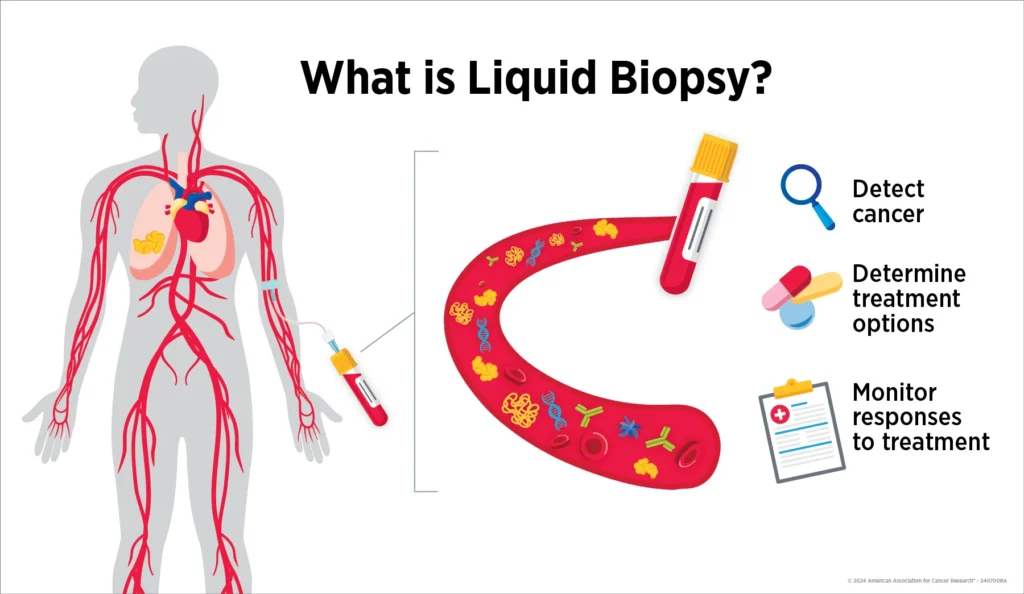
A biopsy is something doctors do to help figure out what is going on with our bodies. They take a piece of tissue or some cells from the part of the body that does not look right and they look at it really closely in a special lab. We can use things like ultrasound, CT, MRI and X-ray to see if something is wrong. These things can not always tell us exactly what that something is. The biopsy is what tells us for sure what is going on. It often gives us answers that we can not get from just looking at the pictures, from those other tests.

Biopsy testing may be advised for thyroid nodules, breast lumps, enlarged lymph nodes, liver lesions, lung nodules, kidney masses (case-dependent), bone lesions, and many other suspicious findings. In many cases, biopsy helps avoid unnecessary surgery because once the lesion is proven benign, treatment can be planned calmly and correctly.

Biopsy Testing Centre

Why choose an image-guided biopsy centre in Jaipur?

Some lumps are really easy to find and take a sample from. Others are inside the body or in places that are hard to reach so taking a sample without looking can be risky and not very accurate. This is where special tools like image guidance come in handy. Using ultrasound and CT scans to guide us allows doctors to target the lump exactly which makes the process more precise and safer for the patient. Image guidance with ultrasound and CT scans is very helpful, for finding these hard to reach lumps.

At a dedicated Biopsy Testing Centre in Jaipur like VascuCare Diagnostics & Interventions, the process is usually structured: your reports are reviewed, the safest approach is chosen, the biopsy is performed under sterile precautions, and you receive clear post-procedure instructions. This organised workflow matters because it reduces anxiety, improves sample quality, and lowers the chances of repeat biopsy due to an inadequate sample.

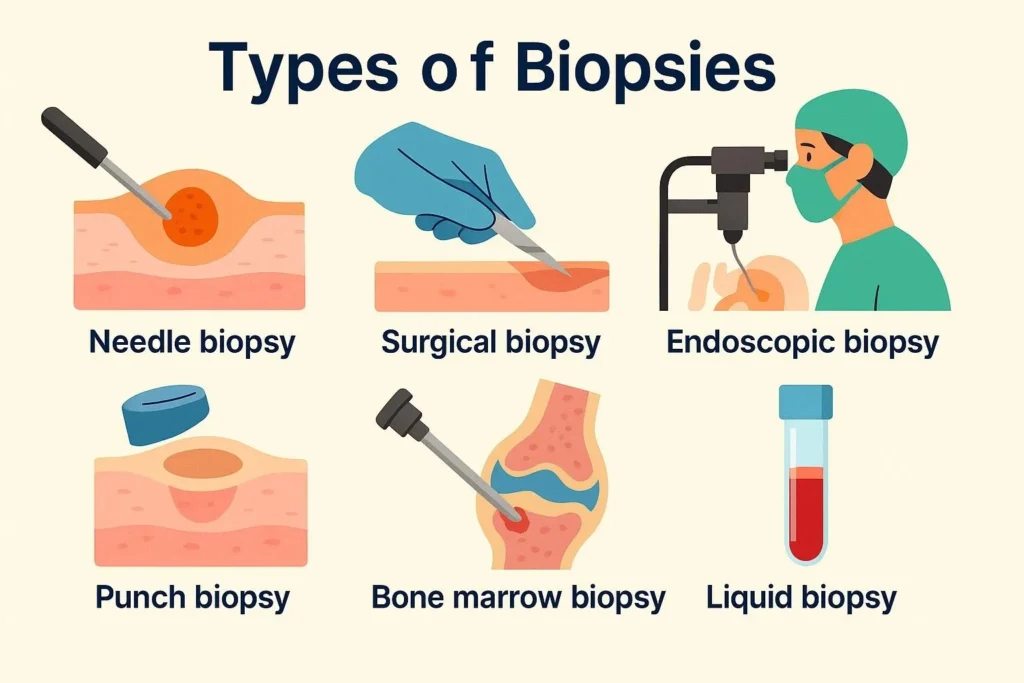
There are kinds of biopsy testing that doctors usually do.

Biopsy testing is when the doctor takes a sample of tissue from the body to check for diseases.

The types of biopsy testing commonly done include:

* Surgical biopsy

* Needle biopsy

* Bone marrow biopsy

Biopsy testing is an useful tool for doctors to find out what is wrong with the patient.

The doctor will choose the type of biopsy testing that’s best, for the patient based on the patients condition and the type of disease they think the patient may have. Biopsy testing like needle biopsy and surgical biopsy are commonly done to check for cancer and other diseases.

There are ways to do a biopsy. This is because we need to use methods for different parts of the body and, for different kinds of lesions. The doctor chooses which biopsy method to use based on where the problem’s how big it is how deep it is and what they need to find out from the biopsy sample. The doctor selects the biopsy type based on the location of the biopsy the size of the biopsy the depth of the biopsy and what information is needed from the biopsy sample.

FNAC (Fine Needle Aspiration Cytology)

Fine Needle Aspiration Cytology uses a needle to collect cells from a lump or nodule. Fine Needle Aspiration Cytology is commonly used for thyroid nodules, lymph nodes and many superficial lumps. The Fine Needle Aspiration Cytology procedure is quick often done under local measures and may be performed with ultrasound guidance if the Fine Needle Aspiration Cytology target is small or not clearly palpable. Fine Needle Aspiration Cytology provides a cell-based diagnosis, which’s often enough, in many common Fine Needle Aspiration Cytology conditions.

Core Needle Biopsy (Tru-cut biopsy)

A core biopsy is a procedure that uses a needle that’s a little bigger to get a small sample of tissue. This sample is like a core that has a lot of information in it. The doctors who look at this tissue called pathologists can see how the tissue is organized which makes it easier for them to figure out what is going on. Core biopsy is often used when someone has a lump in their breast or a problem with their lymph nodes or a weird spot on their liver or a soft tissue mass that does not feel right or any other growth that the doctors want to take a look, at. Core biopsy helps the doctors get an understanding of what is going on with the core biopsy tissue samples.

Ultrasound-guided biopsy

Ultrasound guidance is a method that doctors use a lot. This is because it does not use radiation it shows what is happening in time and it is very practical to use. Doctors often use ultrasound guidance for problems with the thyroid, breast, lymph nodes, liver, abdomen and soft tissues that are under the skin. The image from the ultrasound helps guide the needle to the spot inside the problem area. This is especially helpful when the problem area has both fluid filled parts. Ultrasound guidance is very good at helping the doctor get the needle to the area, inside the lesion, which is the problem area that the doctor is trying to treat.

CT-guided biopsy

The doctor likes to use CT guidance when the problem’s deep inside the body or hard to see with an ultrasound. This is the case with some lung nodules, lesions, in the abdomen or pelvic area certain bone lesions and deep lymph nodes. CT guidance helps the doctor find the spot and plan a safe path for the needle to avoid hurting other organs near the lesion. The doctor wants to use CT guidance to make sure the lesion is targeted correctly.

Stereotactic biopsy (breast)

Some breast problems show up better on a mammogram than, on an ultrasound like when there are calcium deposits or very small changes. In these situations the doctors who are treating the breast problems may suggest doing a kind of biopsy called a stereotactic biopsy.

Endoscopic biopsy

When something is not inside the digestive tract the doctor may take a sample during an endoscopy or colonoscopy. The doctor who does this is called a gastroenterologist. This is usually done when the doctor sees something that does not look right like growths or ulcers or polyps or inflammatory bowel conditions. The doctor will take a sample of the tract to check for these things. The digestive tract is where the doctor will look for problems, like bowel conditions.

Surgical biopsy

Occasionally, surgical biopsy is recommended if needle biopsy is not feasible, if a complete removal is needed, or if needle biopsy results are inconclusive but clinical suspicion remains high. Surgical biopsy is more invasive and has longer recovery, but it remains important in selected cases.

Biopsy Testing Centre

Common areas where biopsy testing is advised

There are some areas where doctors usually advise people to get a biopsy test. These areas are:

* The skin

* The liver

* The lungs

* The kidneys

* The breast

Biopsy testing is often recommended for these areas because it can help doctors figure out what is going on with the breast or the liver or the lungs or the kidneys or the skin. Biopsy testing can be very useful for people who have a problem, with their skin or their liver or their lungs or their kidneys or their breast.

Patients typically seek biopsy testing when scans show lesions in the thyroid, breast, lymph nodes, liver, lungs, kidneys (case-dependent), soft tissues, or bones. The best biopsy approach depends on the lesion’s position and the information required. In many cases, imaging-guided biopsy makes sampling safer and more accurate, especially for deep lesions.

What to expect during biopsy testing

Needle biopsies are pretty straightforward. First the doctor looks at your reports to make sure they do the biopsy the right way. They want to know which method and route to use for the needle biopsy. Sometimes the doctor will tell you to get some blood tests done. This is to see if you might bleed a lot during the needle biopsy. They do this for needle biopsies that go deeper into your body or, for core needle biopsies.

On the day you have the procedure the doctor makes sure your skin is really clean. They use sterile precautions to do this. The doctor will probably give you anaesthesia so you do not feel any pain and you can stay comfortable. The doctor may use a machine or a CT scan to help guide the needle to the right spot then they carefully put the needle in the right place and take a sample of the tissue. After that the doctor puts a dressing on the area where the needle was inserted. You might have to wait around for a while so the doctor can keep an eye on you and this depends on what kind of biopsy you had and where on your body it was done.

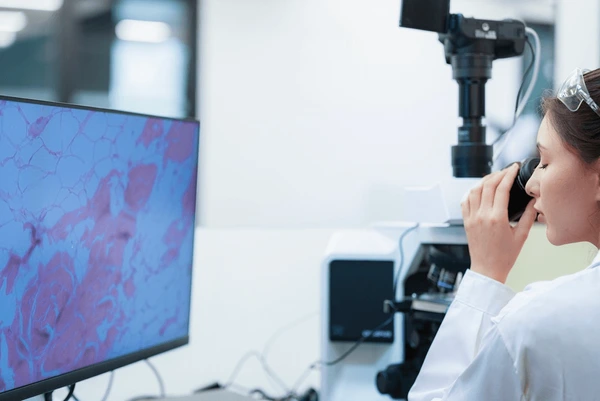
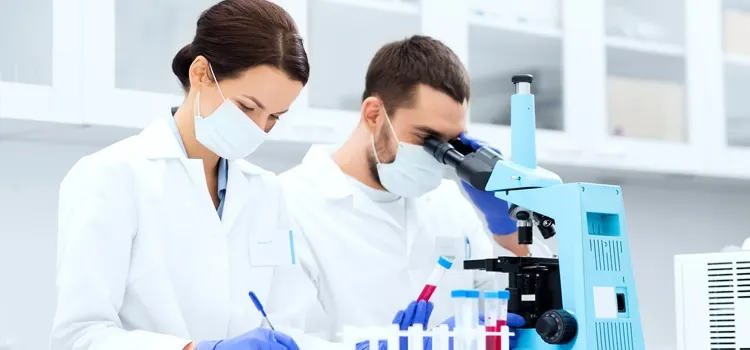
Most patients return home the same day. The collected sample is sent to the pathology lab, where it is processed and examined under the microscope. Sometimes additional tests are done for complete accuracy, depending on what the pathologist sees.

Biopsy Testing Centre

Is biopsy testing safe?

When doctors who are trained to do this job perform a biopsy it is usually a thing to do. They use tools that are clean and they look at pictures to make sure they are doing it right. You might feel a pain or get a bruise especially if you have a core biopsy.. Really bad problems do not happen very often if the doctors do everything the way they are supposed to. Biopsy is a test when the doctors follow the rules and use the right equipment. Biopsy testing like this is something that doctors do all the time. It is very rare to have any serious issues with biopsy.

Common temporary effects include mild pain, tenderness, or a small bruise. Minor bleeding is usually easy to control. Infection is rare and is minimised with proper sterility. For deeper biopsies—such as lung or liver—planning and observation become more important, which is why a structured centre process matters.

How to prepare for biopsy testing in Jaipur

When you are getting a biopsy there are some things you need to do to get ready. The biopsy site is important. There are some basic things that are the same for most biopsies. You should tell the doctor about all of your reports the medicines you are taking now and if you have ever had any problems with bleeding.

If you take medicines that thin your blood, such as aspirin, clopidogrel, warfarin or other medicines like these you need to tell the doctor of time. If you need to make any changes to your medicines you must do this with the help of a doctor.

Some biopsies require you to not eat for a while especially if the biopsy is going to be deep or if you are going to be sedated. Biopsy preparations can vary,. The biopsy site and the type of biopsy you are having will determine what you need to do to get ready, for your biopsy. Many patients also prefer coming with one attendant for comfort and convenience.

After biopsy: recovery and care

Needle biopsies are pretty easy to recover from. The doctor will tell you to keep the bandage clean and dry for a while and not do anything too physical like heavy lifting or hard exercise for a short time after the biopsy especially if you had a core biopsy. You should also pay attention to needle biopsies. Watch for things like the area getting really swollen bleeding that does not stop fever pus coming out or really bad pain from needle biopsies. These things do not happen often to people who have needle biopsies but it is a good idea to tell the doctor right away if you notice any of these things so you do not have any problems, with your needle biopsies.

The recovery timeline depends on the biopsy site. Superficial biopsies heal quickly. Deep biopsies may require slightly longer rest and occasionally a short observation window as per protocol.

Why a dedicated Biopsy Testing Centre in Jaipur matters

A biopsy is an important test that can change what the doctors decide to do. If the biopsy report is correct then the doctors can give the treatment. Sometimes this test can even stop the patient from having surgery that they do not need.

This is why it is very important to choose a centre that does things in an organised way. The centre should have imaging guidance when it is needed. The centre should also have a clean and sterile environment. The doctors and staff at the centre should be very skilled and good at what they do. The centre should also give the patient clear instructions, on what to do.

VascuCare Diagnostics & Interventions is a Biopsy Testing Centre in Jaipur focused on precision-based biopsy sampling and patient-friendly care, with imaging guidance used where it improves accuracy and safety.

Biopsy Testing Centre

15+ Years of Experience Delivering Trusted Healthcare

With over 15 years of experience, VascuCare Diagnostics & Interventions is committed to providing accurate diagnostics and patient-focused care. Our expertise, modern technology, and professional medical support help ensure reliable reports and effective treatment for every patient. Experience dependable healthcare and compassionate service at VascuCare.

title icon
Fill Details and

Book Your Appointment

For Appointments & Consultation: Kindly fill out form or contact us at (+91) 88900 28272. Our team will get back to you within 24 hours.

    title icon
    Common

    Frequently Asked Questions

    When the doctor does a biopsy test they take a piece of tissue or some cells from the part of the body that does not look right. Then they look at this piece under a special tool called a microscope. This helps the doctor figure out what is going on and if the diagnosis is correct. The biopsy testing is a way to check the tissue or cells. See if everything is okay or if there is a problem. The doctor uses biopsy testing to get a look at the tissue or cells, from the suspected area.

    So a biopsy is actually a way to figure out what is going on. It can tell us if we have growths, which are not that bad. A biopsy can also diagnose infections which’re like when our body gets invaded by bad things. Diseases those are like when our body gets all swollen and sore.. A biopsy can even diagnose cancer, which is a really serious thing. A biopsy is really helpful, for finding out about all these things, including growths and cancer.

    FNAC collects cells from the body. On the hand core biopsy collects a small piece of tissue that still has its structure. So when it comes to choosing between FNAC and core biopsy the best choice really depends on the type of lesion that needs to be checked and what kind of information the doctors need to find out about the lesion. FNAC is good for some things. Core biopsy is better for other things and it is all, about the lesion and what the doctors want to know about the lesion.

    Biopsies are usually done with anesthesia. When they do a biopsy you might feel some pressure or a little bit of discomfort. Biopsies do not usually cause bad pain. Biopsies are simple. Biopsies do not hurt that much.

    Sometimes it is not necessary but for small or sensitive spots or ones that are deep inside using an ultrasound or a CT scan to help guide the biopsy makes it more accurate and safer for the patient. The biopsy is a procedure where a small sample of tissue is taken from the body and the ultrasound or CT scan helps the doctor find the spot to take the sample from, which is especially important, for deep lesions or small lesions. This is because the lesions can be hard to find and the ultrasound or CT scan gives the doctor a view of where they are so the biopsy can be done with more accuracy and safety.

    The sampling process can take a while but the total time it takes will be different for each site. This is because the site itself the way we guide the sampling and what we need to observe all play a role, in how it takes. The sampling time varies because of these things.

    Some biopsies need you to not eat for a while like when the biopsy’s really deep or when the doctor is going to give you sedation. The doctor who is taking care of you will tell you what to do.

    You need to tell the doctor. Some biopsies require the doctor to change the medicine you are taking. You should never stop taking your blood thinners by yourself. The doctor needs to say it is okay to stop taking the blood thinners.

    I want to know when the biopsy report will be ready. The biopsy report is really important to me, so I am waiting to see what the biopsy report says.

    Timelines for getting the results depend on how the lab processes the sample. In some cases, the lab may need to perform additional tests to ensure the report is accurate. The processing time is important because the lab wants to make sure the biopsy results are correct.

    You should know that some people get bruises or a little bleeding. Really bad problems are not common when the doctor does the procedure in a very clean way and tells you what to do. The procedure is usually done right when the doctor follows the rules and you get guidance. Minor bruises and a little bleeding are the common risks.

    You should not do exercise and lifting for a short time especially after you have a core biopsy. You need to follow the advice that the doctor gives you. The doctor will tell you what to do after a core biopsy so you have to do what the doctor says about exercise and lifting.

    Yes, if the sample is insufficient or results are unclear. Proper image guidance reduces the need for repeat biopsy.

    Call Now Whatsapp